Appropriate Topics of Conversation Worksheets
About This Worksheet Collection
This collection of Appropriate Topics of Conversation worksheets offers educators a range of activities designed to help students navigate everyday communication with confidence and respect. Each worksheet presents realistic scenarios, short stories, or practical decision-making tasks that guide learners toward understanding how context, audience, and environment shape the conversations they choose to have. The variety of formats-reading passages, sorting tasks, rewriting exercises, and reflective writing-keeps students engaged while providing multiple entry points for practicing social awareness.
As students move through the collection, they build skills in identifying friendly and appropriate topics, staying on-task in discussions, and recognizing when a subject may feel uncomfortable or off-limits. The materials strengthen reading comprehension, listening skills, and thoughtful written expression while reinforcing important social-emotional competencies such as empathy, boundary-setting, and responsible communication. Teachers can use these worksheets to support classroom behavior expectations, community-building lessons, or broader units on interpersonal communication.
Detailed Descriptions Of These Worksheets
Playground Chat Choices
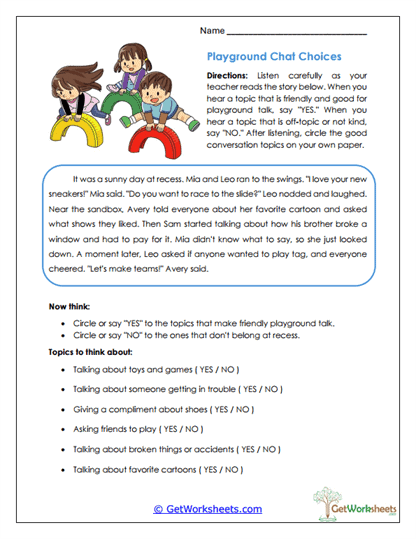
Students listen to a brief story about playground conversations and use what they hear to evaluate a list of potential discussion topics. They decide which topics feel friendly and appropriate for recess and which might be too personal or unkind. This activity sharpens listening comprehension while helping learners distinguish between light, positive talk and subjects that may create discomfort. It also encourages thoughtful choices that support healthy peer relationships.
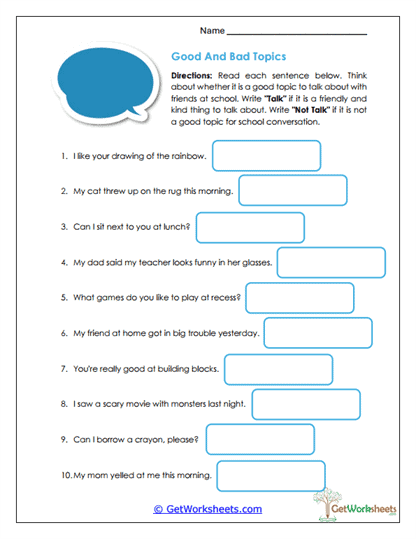
Good and Bad Topics
Learners read short statements and label each one as an appropriate or inappropriate topic for school conversation. The task invites students to think critically about tone, sensitivity, and social boundaries. By evaluating what is polite to share with classmates, they gain awareness of how certain topics may affect others. The worksheet enhances comprehension skills while promoting respectful communication.
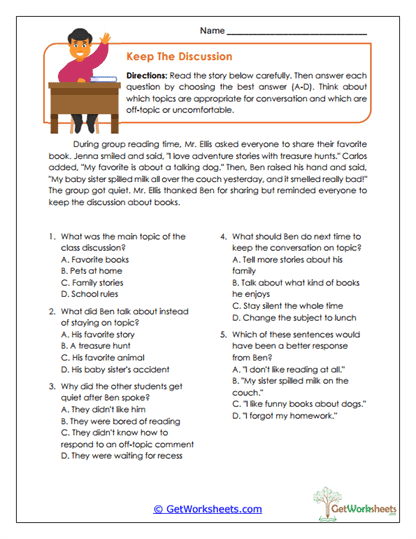
Keep the Discussion
This reading comprehension worksheet features a story about a classroom discussion and a student who veers off-topic. Students answer questions that highlight which comments support productive conversation and which ones interrupt it. The activity helps learners understand how staying focused benefits group work. It also reinforces comprehension of main ideas and character behavior.
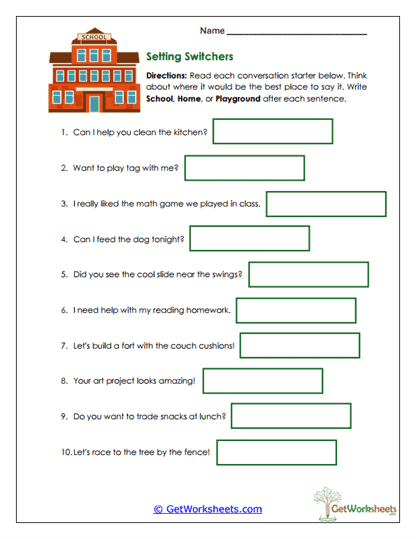
Setting Switchers
Students decide whether each of ten conversation starters belongs at school, at home, or on the playground. This comparison encourages them to think about how surroundings shape what is appropriate to say. As they categorize each statement, learners build awareness of audience and social context. The activity strengthens both reading and situational judgment skills.
Setting and Topic Match
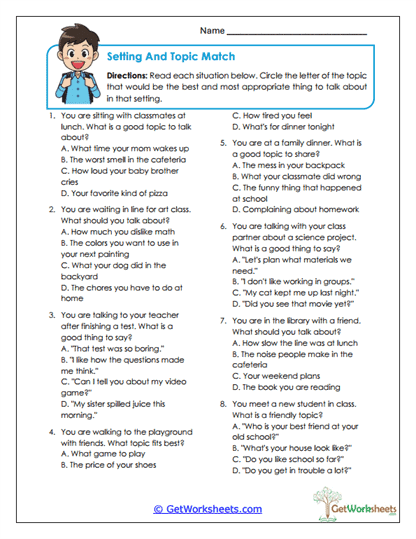
This worksheet presents everyday scenarios from school and community settings and asks students to choose a topic that fits each situation. Learners analyze context clues to make selections that are friendly and appropriate for the people involved. The task encourages careful reading while reinforcing awareness of comfort levels and communication expectations. It supports the development of stronger interpersonal skills.
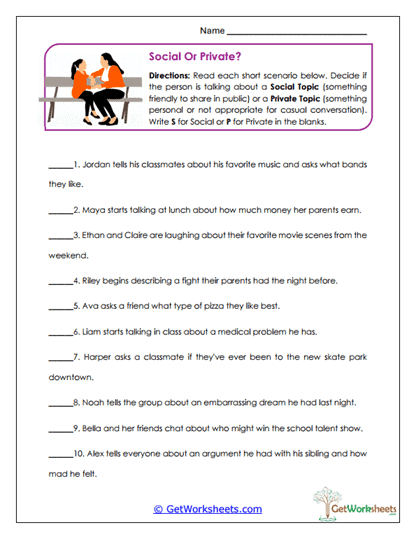
Social or Private?
Students read ten brief examples and determine whether each describes a topic suitable for public conversation or one better kept private. They consider boundaries, sensitivity, and how personal information might affect others. This activity deepens social awareness by prompting learners to distinguish between casual talk and private matters. It also promotes careful decision-making about what to share.
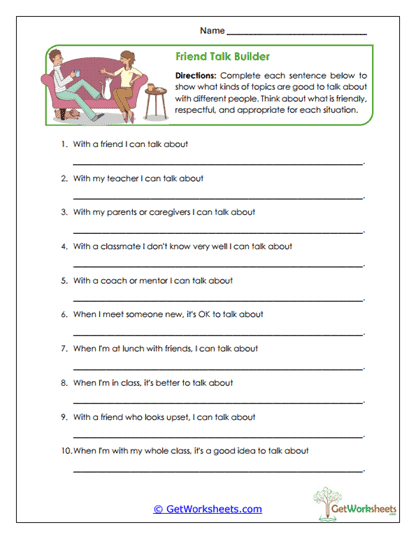
Friend Talk Builder
In this worksheet, students complete sentence prompts that guide them in choosing appropriate topics for different people in their lives. They reflect on how communication changes depending on whether they are speaking to a friend, teacher, parent, or coach. The activity encourages students to consider relationships and comfort levels as they write. It also supports sentence-level writing skills and respectful interactions.
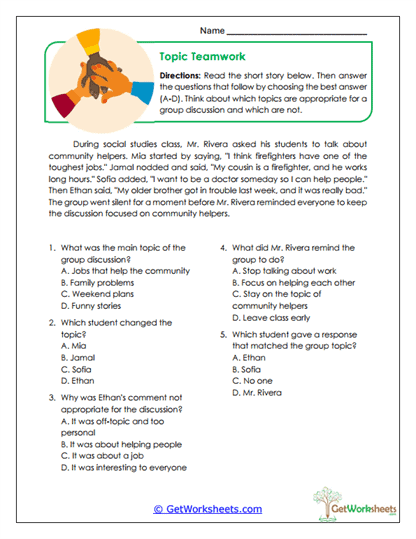
Topic Teamwork
Students read a story about a classroom discussion on community helpers and answer questions about when students drift off-topic. Through this exercise, they learn how staying focused supports collaboration and keeps group conversations on track. The worksheet helps students identify relevant versus irrelevant contributions. It also builds comprehension and attentive participation skills.
Office Talk Tips
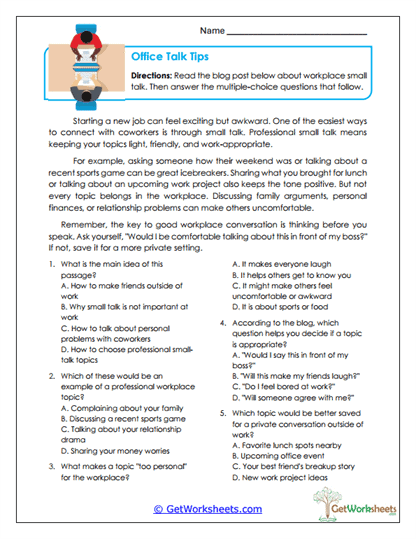
In this informational reading worksheet, students explore workplace small talk and the expectations of professional communication. They answer comprehension questions that reinforce the importance of choosing neutral, appropriate conversation topics. The passage teaches learners to avoid overly personal or sensitive subjects in professional environments. It supports career readiness while strengthening informational text comprehension.
Respectful Rewrites
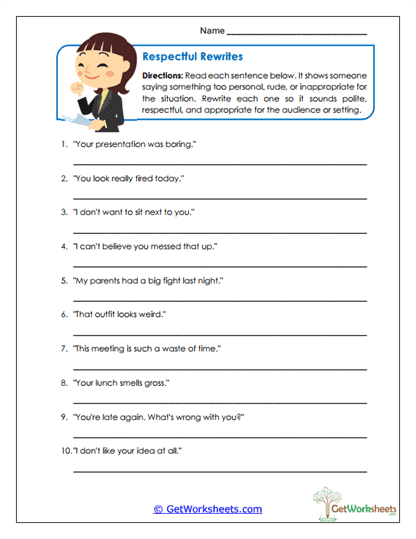
Students transform rude or overly personal comments into sentences that are respectful and suitable for the situation. They practice considering tone, kindness, and audience as they revise each statement. This exercise builds empathy and encourages students to choose words that support positive relationships. It enhances rewriting skills while fostering thoughtful communication.
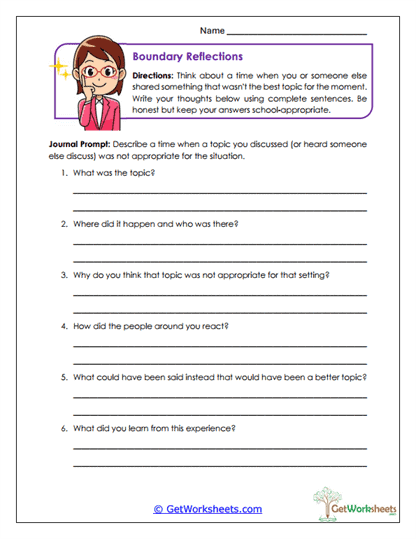
Boundary Reflections
Learners write about a time when they or someone else shared an inappropriate topic for the setting. Using guided questions, they explain why the topic wasn't suitable, how others responded, and what could have been said instead. The activity promotes self-awareness and thoughtful written expression. Students practice recognizing conversational boundaries and their effect on social comfort.
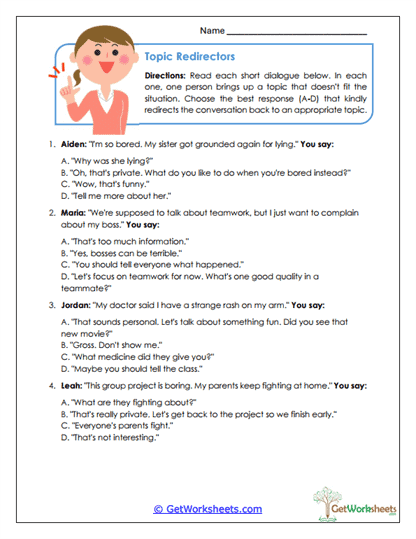
Topic Redirectors
In this worksheet, students read dialogues where someone introduces an off-topic or overly personal subject and choose the most respectful way to redirect the conversation. The scenarios help learners understand how to maintain polite boundaries without sounding rude. By analyzing the response options, students strengthen their comprehension and communication judgment. The activity encourages tactful, empathetic conversation skills.
Bookmark Us Now!
New, high-quality worksheets are added every week! Do not miss out!