Alone vs. Lonely Worksheets
About This Worksheet Collection
The Alone vs. Lonely worksheet collection offers a sensitive and thoughtful way to help students understand two commonly confused words with very different emotional meanings. Across narrative passages, dialogue, illustrations, and reflective writing prompts, learners explore how language conveys both physical situations and inner feelings. This variety ensures that students engage with the topic from multiple angles, deepening their comprehension while keeping activities fresh and accessible for different learning styles.
As students move through the collection, they strengthen vocabulary knowledge, practice interpreting emotional context, and refine their ability to express themselves clearly. The activities build skills in reading comprehension, written expression, critical thinking, and social-emotional understanding. By the end of the set, learners have had ample practice distinguishing between the experiences of being alone and feeling lonely-an important nuance for both literacy development and personal growth.
Detailed Descriptions Of These Worksheets
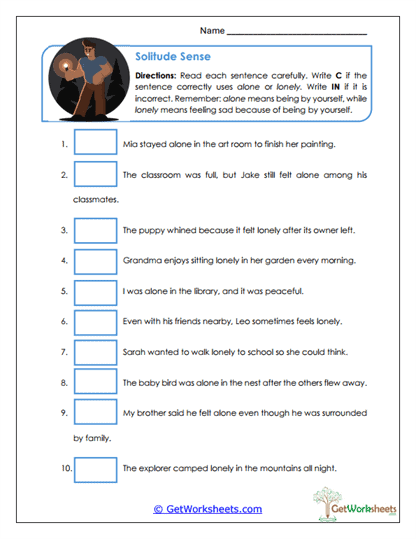
Solitude Sense
This activity invites students to evaluate whether sentences correctly use alone or lonely, prompting careful attention to context. Learners must distinguish between physical solitude and emotional states as they label each example. The worksheet promotes precise vocabulary use and fosters stronger comprehension by encouraging students to question how word choice shapes meaning.
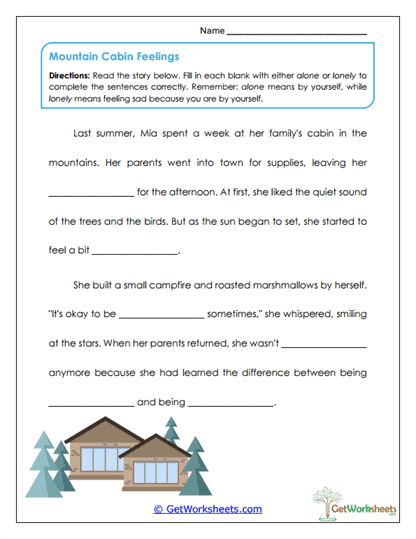
Mountain Cabin Feelings
Students read a brief story about a character spending time in a quiet cabin and choose which word best fits each moment in the narrative. As feelings shift throughout the passage, learners decide whether the character is experiencing solitude or loneliness. This task deepens understanding of tone and reinforces the importance of selecting vocabulary that reflects emotional nuance. Through close reading, students gain practice interpreting how a character's mood evolves.
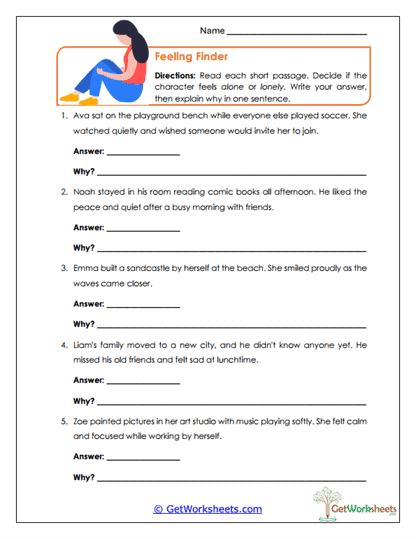
Feeling Finder
In this worksheet, students analyze short character vignettes to determine whether each individual feels alone or lonely. They then explain their reasoning, which encourages clear written communication and evidence-based thinking. The activity helps students recognize implied emotions and strengthens their ability to interpret subtle narrative cues.
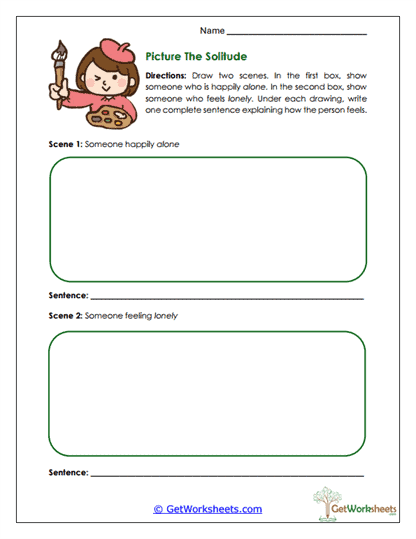
Picture the Solitude
Learners illustrate two contrasting scenes: one showing a person who is peacefully alone, and another portraying someone who feels lonely. After drawing, they add explanatory sentences to support their interpretations. This blend of art and writing gives students a creative way to explore emotional vocabulary. It also helps them practice identifying visual indicators of mood.
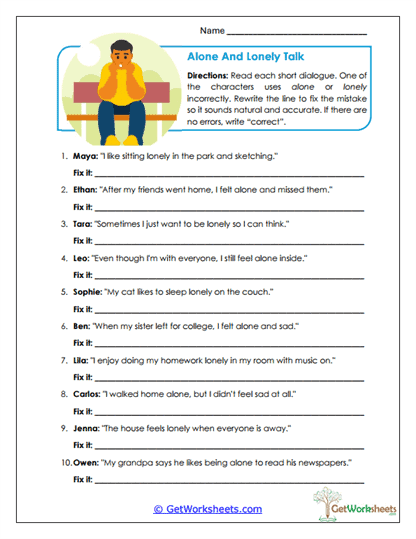
Alone and Lonely Talk
Students review lines of dialogue in which the words alone or lonely may be misused. Their task is to correct the wording or confirm that the original line is accurate. By analyzing conversational language, learners practice editing for meaning and tone. The exercise strengthens revision habits and encourages thoughtful consideration of emotional expression.
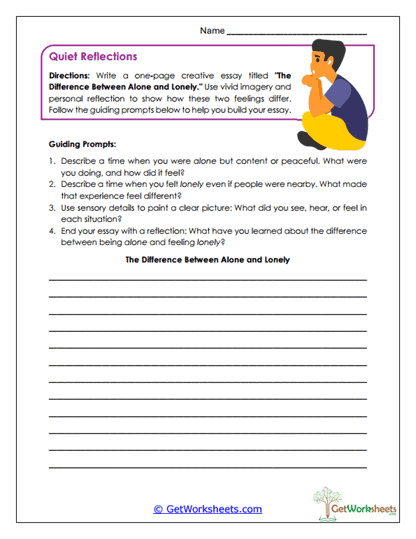
Quiet Reflections
This worksheet guides students through writing a one-page creative essay that explores the distinction between being alone and feeling lonely. Using prompts, learners draw on personal experiences to craft descriptive and reflective writing. The activity supports expressive language skills and encourages deeper emotional insight. It also helps students organize ideas into a cohesive composition.
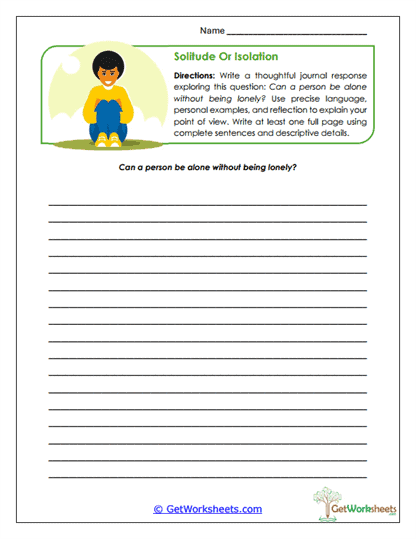
Solitude or Isolation
Students respond to the reflective question, "Can a person be alone without being lonely?" and develop their thoughts in a full-page journal entry. They are encouraged to use specific examples and articulate their perspective clearly. This assignment promotes critical thinking about emotional experiences and enriches students' ability to express abstract ideas in writing.
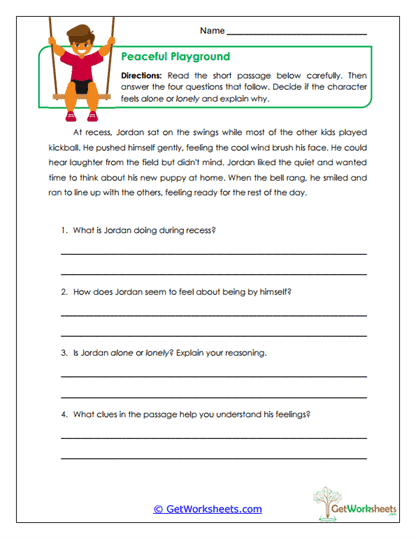
Peaceful Playground
In this activity, students read a brief passage about a child spending recess alone and answer comprehension questions. They must determine whether the character feels alone or lonely and justify their interpretations. The worksheet emphasizes textual evidence and helps students practice identifying emotional cues in narrative text. It also strengthens written response skills as learners explain their reasoning.
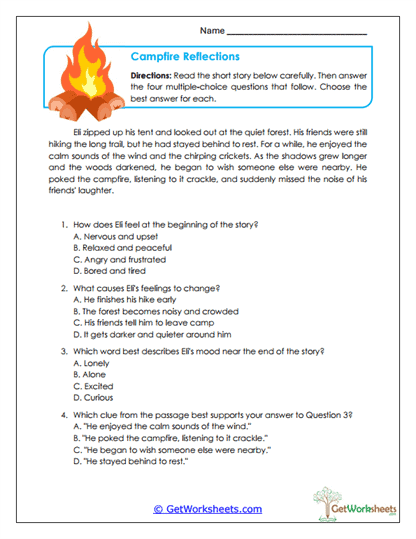
Campfire Reflections
Students read a short narrative about a boy camping by himself and answer multiple-choice questions focusing on vocabulary, mood, and character feelings. As they analyze the passage, learners identify the moment when the character begins to experience loneliness. The worksheet reinforces comprehension strategies and highlights how environment influences emotional states.
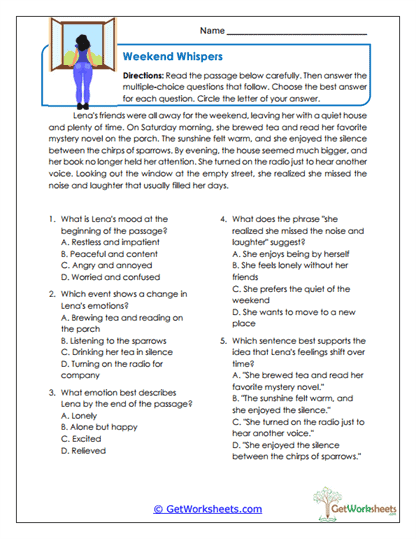
Weekend Whispers
This worksheet asks students to examine a passage about a quiet weekend and respond to questions that explore mood, figurative language, and emotional change. Learners evaluate how the character's feelings shift between enjoying solitude and confronting loneliness. The activity encourages deeper literary analysis and supports evidence-based thinking.
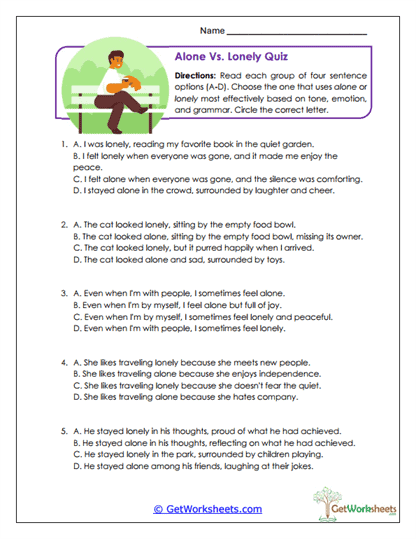
Alone vs. Lonely Quiz
Students compare sets of four sentences and select the one that uses alone or lonely most effectively. To make the correct choice, they must interpret tone, check grammatical accuracy, and consider emotional context. This quiz-style format strengthens vocabulary precision and fosters confident decision-making.
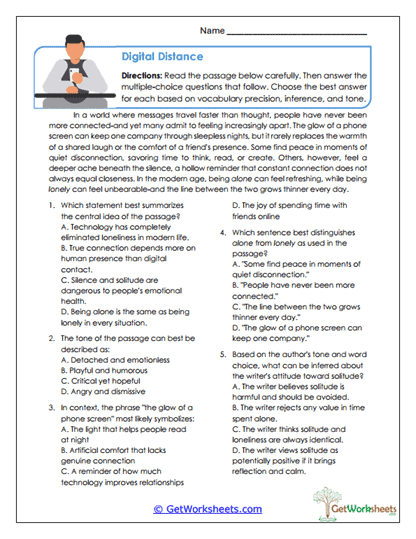
Digital Distance
Learners read an informational passage about the difference between digital connection and emotional loneliness. They answer multiple-choice questions that examine inference, vocabulary, and the author's viewpoint. The worksheet challenges students to think critically about modern communication and its emotional impact. It also reinforces key informational-text comprehension skills.
Bookmark Us Now!
New, high-quality worksheets are added every week! Do not miss out!