All vs. Whole Worksheets
About This Worksheet Collection
The All vs. Whole collection helps students master one of English's most subtle distinctions-knowing when to use all or whole to describe groups, quantities, and complete entities. Through a series of contextual, interactive, and reflective exercises, learners analyze how these two words change meaning depending on the nouns they modify. The activities combine grammar precision with reading comprehension, encouraging learners to think critically about how word choice affects tone, clarity, and emphasis.
Across this collection, students identify, correct, and apply all and whole in real-world sentences, dialogues, and short stories. They gain a deeper understanding of collective versus complete expressions, improve sentence fluency, and refine editing skills through guided and independent tasks. The worksheets also promote critical thinking and metalinguistic awareness by inviting students to explore how small shifts in phrasing influence meaning.
Detailed Descriptions Of These Worksheets
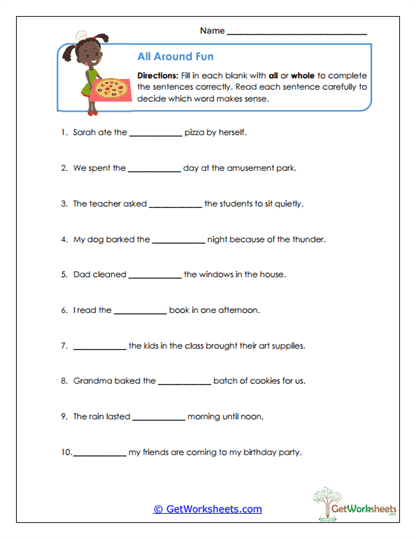
All Around Fun
Students fill in blanks with either all or whole to complete contextualized sentences. Each example includes clues that help learners understand quantity and completeness. The task strengthens grammar accuracy, reading comprehension, and vocabulary awareness. It's a clear, foundational introduction to this grammar concept.
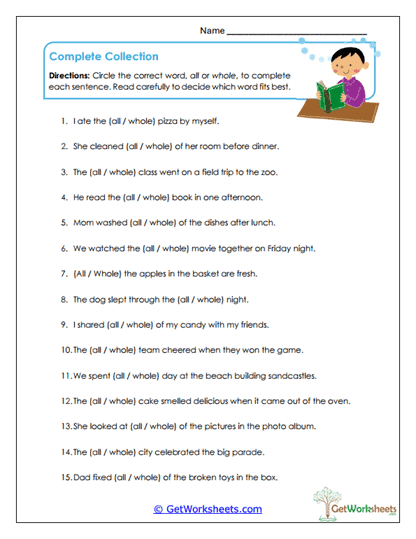
Complete Collection
Learners read sentences and circle the correct choice between all and whole. The real-world examples support grammar recognition and comprehension of countable versus uncountable nouns. The repetition builds fluency and supports independent grammar practice.
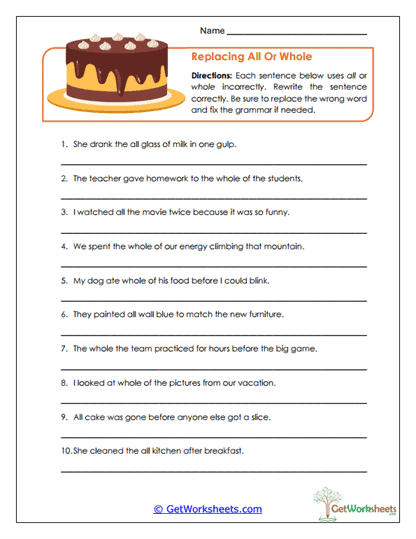
Replacing All or Whole
Students correct sentences that misuse all or whole by rewriting them properly. This editing-focused worksheet encourages analytical thinking and self-correction. It reinforces understanding through application, improving clarity and grammatical precision.
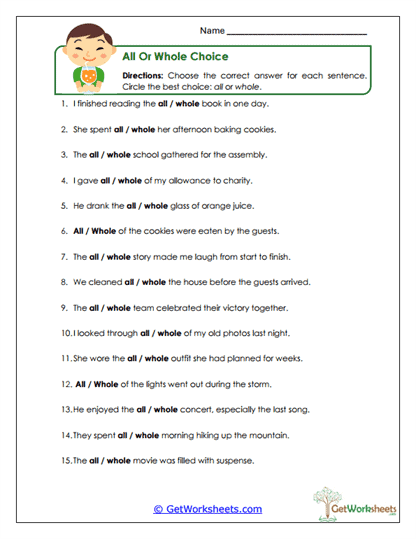
All or Whole Choice
Learners choose the correct term to complete realistic, everyday sentences. This exercise enhances decision-making about meaning and structure while reinforcing vocabulary accuracy. It's ideal for quick practice or review sessions.
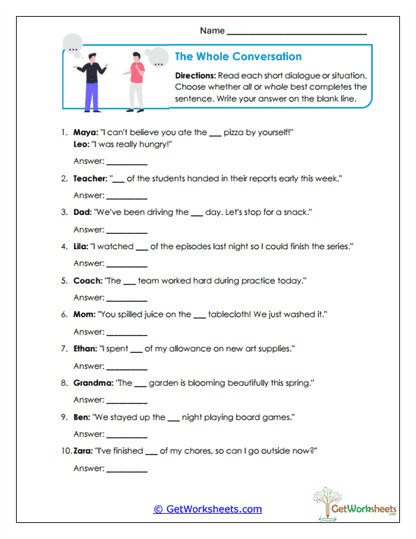
The Whole Conversation
Students complete short dialogues by choosing all or whole for each blank. The conversational format highlights natural usage and promotes reading fluency. Learners gain experience applying grammar rules within authentic communication.
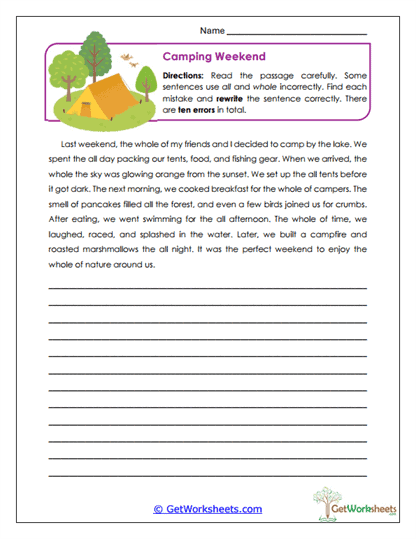
Camping Weekend
This passage-based task challenges students to find and correct ten misuses of all and whole. It builds editing accuracy and reading comprehension through narrative text. Students strengthen attention to detail while improving grammar awareness.
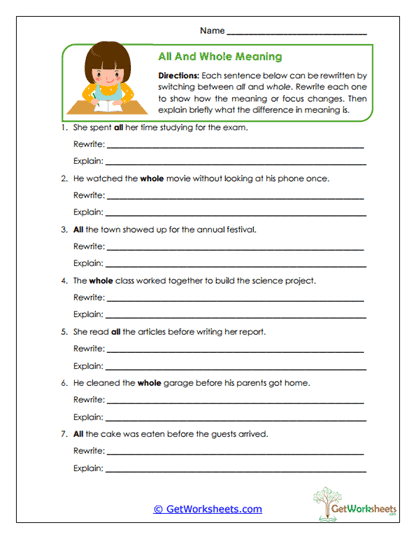
All and Whole Meaning
Learners rewrite sentences by swapping all and whole and explaining how meaning changes. The activity deepens vocabulary understanding and fosters metacognitive reflection. It's a higher-order thinking task that connects grammar to semantics.
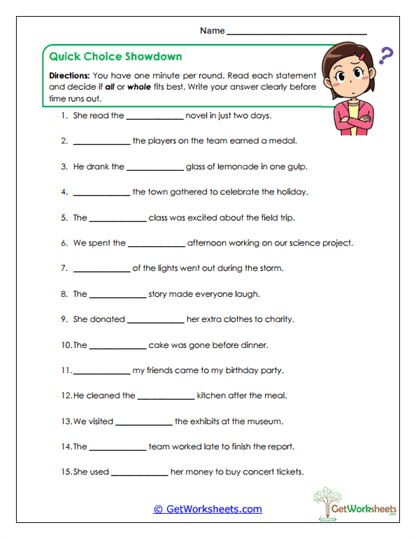
Quick Choice Showdown
Students quickly choose between all and whole in timed sentences, promoting both speed and accuracy. The challenge format builds grammatical fluency and reinforces confident decision-making. It's a lively, game-style activity ideal for classroom engagement.
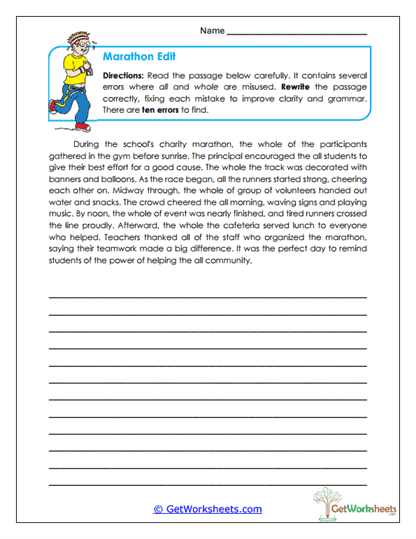
Marathon Edit
In this editing story, students fix ten errors in a passage about a school marathon. The extended text format helps learners apply grammar in realistic writing contexts. It strengthens proofreading, reading comprehension, and contextual vocabulary use.
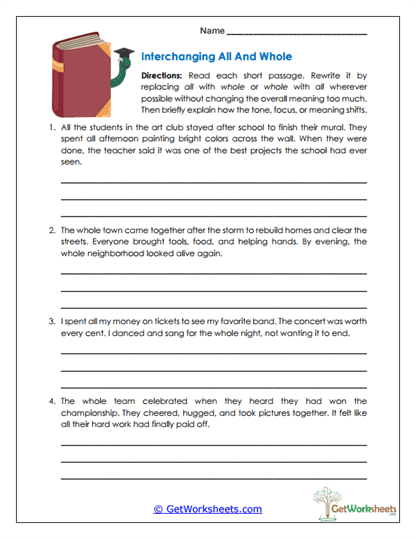
Interchanging All and Whole
Students rewrite short passages by interchanging all and whole where possible, then reflect on how tone or meaning shifts. This analytical task promotes advanced vocabulary reasoning and careful word choice. It's perfect for deeper language exploration.
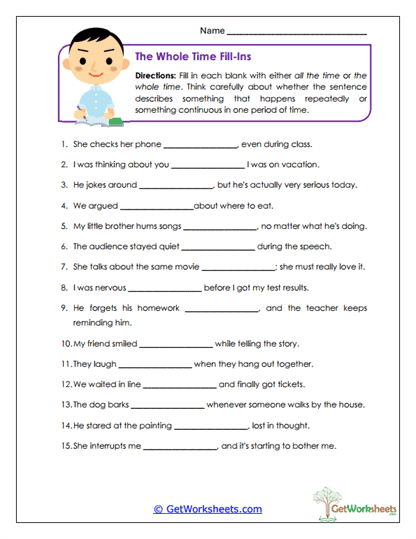
The Whole Time Fill-Ins
Learners fill blanks with all the time or the whole time based on context clues. The activity teaches how repeated versus continuous actions differ in meaning. It develops precision in using time-related expressions and encourages subtle grammatical reasoning.
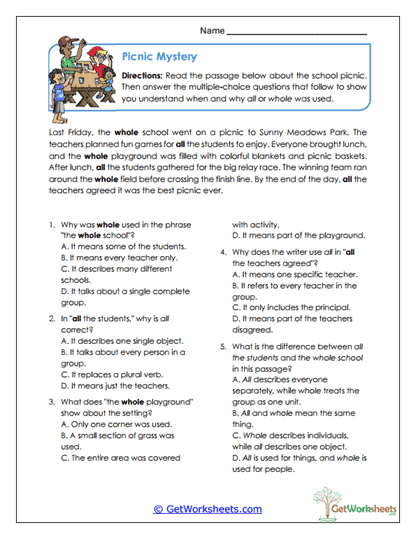
Picnic Mystery
Students read a short story about a picnic and answer comprehension questions that test understanding of all and whole in context. The multiple-choice format reinforces reading-for-meaning and grammar integration. It's an engaging assessment tool combining comprehension and grammar mastery.
Bookmark Us Now!
New, high-quality worksheets are added every week! Do not miss out!