AI Timeline Major Inventions Worksheets
About This Worksheet Collection
The AI Timeline Major Inventions collection introduces students to the groundbreaking discoveries, tools, and ideas that shaped artificial intelligence over the past century. Each worksheet highlights a different angle of AI history-from early problem-solving breakthroughs to modern large-language models-through activities that require matching, sequencing, summarizing, analogy-making, and creative interpretation. Students engage with inventions such as the Turing Test, Deep Blue, ELIZA, Roomba, ImageNet, self-driving cars, ChatGPT, CAPTCHAs, and more, building historical awareness through accessible, student-friendly tasks.
As students move through the collection, they strengthen essential skills such as chronological reasoning, informational reading, cause-and-effect analysis, creative writing, and concise summarization. They learn how innovations connect across decades, how major figures contributed to the field, and how specific inventions changed society. These worksheets help students understand AI not just as modern technology, but as a long pathway of ideas, challenges, and breakthroughs that continue to shape the world today.
Detailed Descriptions Of These Worksheets
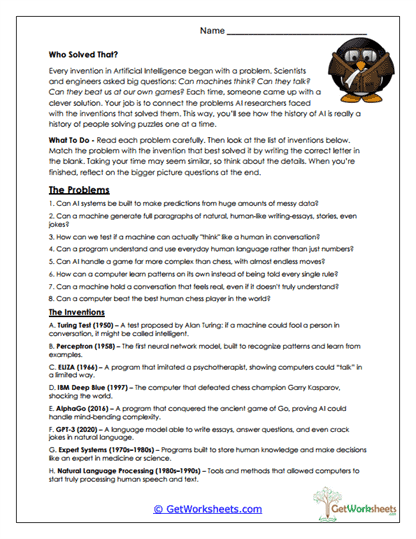
Problem-Invention Match
Students match historical AI problems with the inventions that solved them, using reasoning and context clues to find the connections. The activity deepens understanding of major AI milestones by showing why each breakthrough mattered. It strengthens pattern recognition and close reading skills. Students gain a clearer sense of how specific innovations addressed real technological challenges.
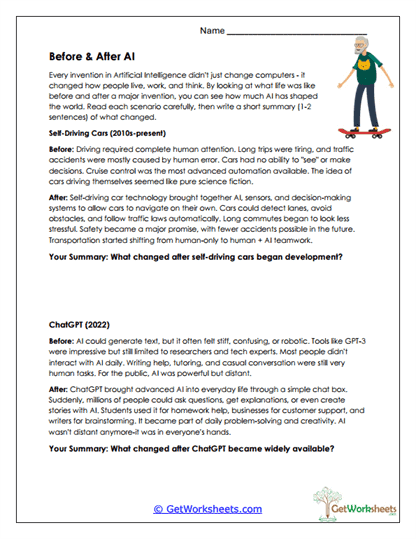
Before & After AI
Learners compare what life was like before and after major AI inventions such as self-driving cars and ChatGPT. They summarize the key changes brought by each innovation, focusing on cause-and-effect. This worksheet builds skills in comparing eras and understanding technological impact. Students reflect on how AI alters communication, transportation, and creative work.
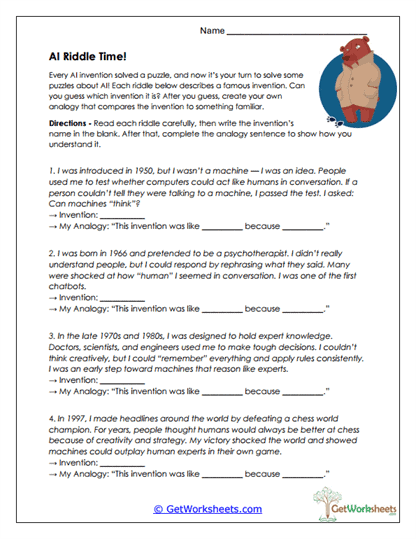
AI Invention Riddles
Students read riddles describing major AI inventions and identify each one based on clues. After naming the invention, they write an analogy that compares it to something familiar. The task sharpens inference skills and encourages creative explanation. It also helps students internalize key features of historical AI breakthroughs.
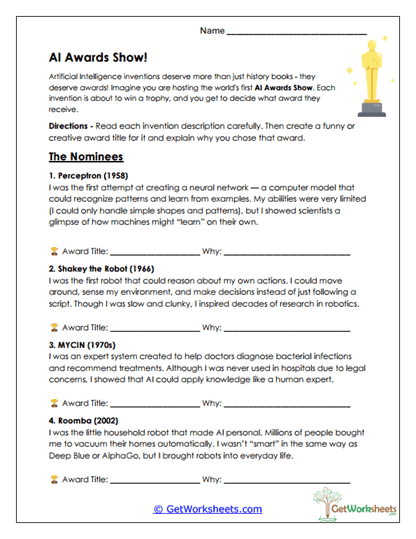
AI Awards Ceremony
Learners read short descriptions of pivotal AI inventions and create humorous or creative award titles that match each one. They explain their reasoning, demonstrating understanding of each breakthrough's impact. The activity blends comprehension with imaginative thinking. It encourages students to interpret technological contributions in engaging ways.
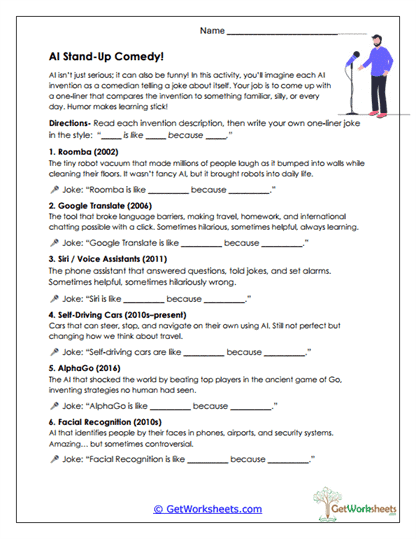
AI Comedy Comparisons
Students write one-line jokes comparing well-known AI inventions to everyday items, using a simple "___ is like ___ because ___" structure. They examine descriptions of tools such as Roomba, AlphaGo, and Google Translate before crafting humorous comparisons. This builds analogy-making skills and reinforces understanding of each invention's purpose. It also supports creative expression and concise explanation.
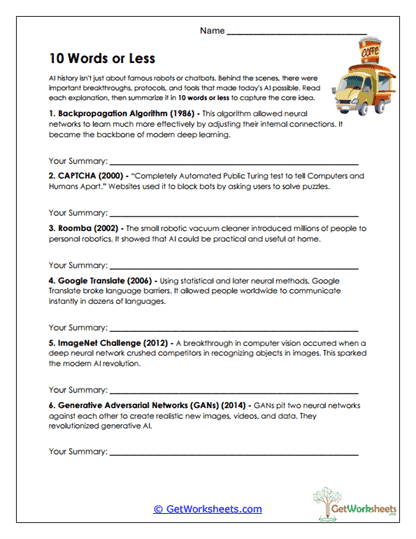
Ten-Word Summaries
Learners condense descriptions of AI breakthroughs-including CAPTCHA, GANs, and image recognition-into summaries of ten words or fewer. The exercise challenges them to identify essential information with precision. It strengthens vocabulary control and concise writing. Students develop a clearer understanding of each invention's core idea.
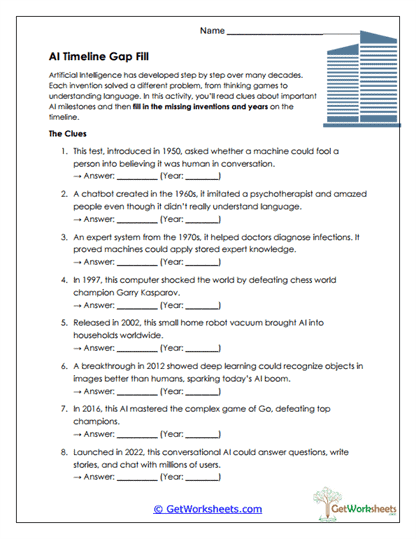
Timeline Gap-Fill
Students read clues about major AI inventions and fill in missing items and years on a timeline. They must match innovations like MYCIN, Deep Blue, and the Turing Test to their correct dates. The worksheet reinforces chronological thinking and interpretation of informational clues. It builds understanding of how AI technologies progressed across decades.
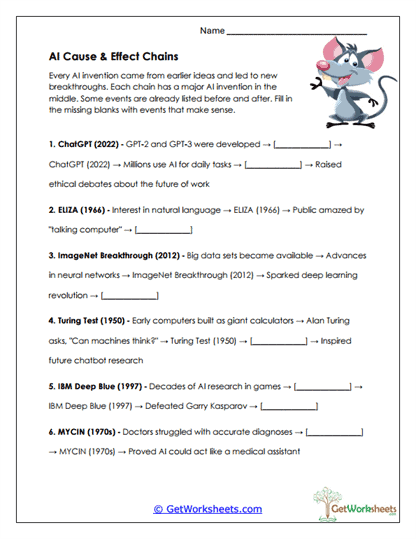
Cause & Effect Chains
This worksheet shows how major AI breakthroughs influenced later ones, and students fill in missing events before and after key milestones. They examine inventions such as ELIZA, ChatGPT, and ImageNet to map out developmental pathways. The task strengthens cause-and-effect reasoning in a historical context. It highlights how scientific progress depends on earlier discoveries.
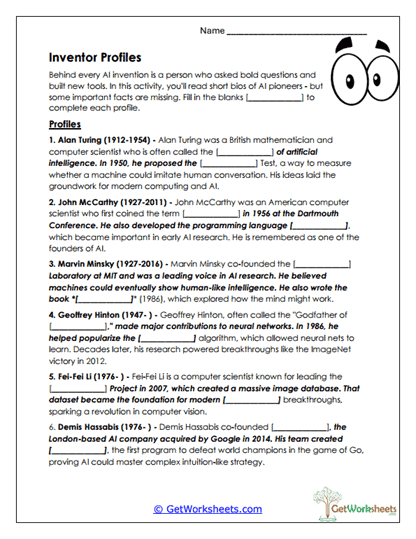
AI Inventor Profiles
Learners read short biographies of foundational AI figures and fill in missing key facts about their contributions. The activity reinforces comprehension of informational text and attention to detail. Students gain insight into pioneers like Turing, McCarthy, Hinton, Li, and Hassabis. It deepens understanding of how individual innovators shaped modern AI.
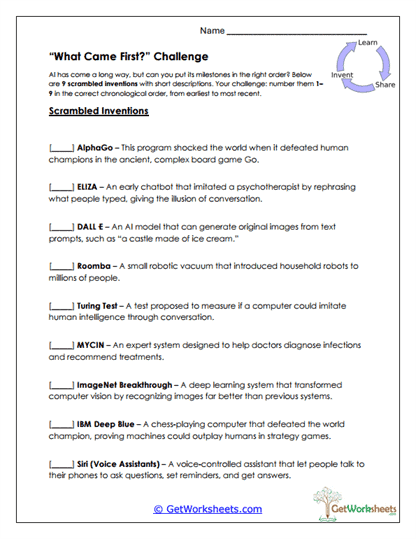
Ordering AI Inventions
Students arrange nine major AI inventions from earliest to most recent using provided descriptions. They rely on clues about technological development to determine proper sequence. This worksheet strengthens historical reasoning and reinforces understanding of AI evolution. It also encourages careful comparison of milestones across time.
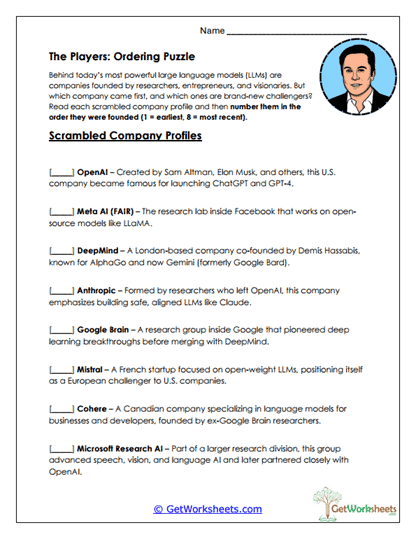
AI Company Ordering Puzzle
Learners read scrambled descriptions of major AI companies and research groups and place them in chronological order of founding. They analyze historical clues within each company profile to determine sequencing. The activity builds awareness of key organizations in AI research and development. It supports reasoning skills and interpretation of informational details.
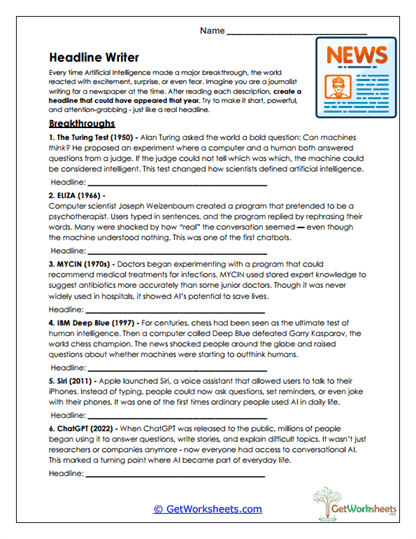
AI Headline Writing
Students read descriptions of major AI breakthroughs and write concise, engaging headlines summarizing their significance. They practice distilling complex information into clear, powerful statements. This worksheet reinforces summarization, creativity, and understanding of historical impact. It teaches students how to highlight the essence of major AI milestones.
Bookmark Us Now!
New, high-quality worksheets are added every week! Do not miss out!