A Raisin in the Sun Worksheets
About This Worksheet Collection
The A Raisin in the Sun Literature Study collection invites students to explore Lorraine Hansberry's groundbreaking portrayal of dreams, identity, and perseverance within the Younger family. Each worksheet helps learners analyze characters, themes, and moral dilemmas while connecting the play's historical context to modern social and personal struggles. Through creative, analytical, and reflective activities, students deepen their understanding of how hope and hardship shape human experience.
This collection balances literary interpretation with emotional engagement. Learners examine the impact of systemic racism, ambition, and family dynamics while practicing essential reading and writing skills. From quote analysis to personal reflection, these worksheets encourage empathy, self-expression, and critical thinking inspired by Hansberry's enduring message of resilience.
Detailed Descriptions Of These Worksheets
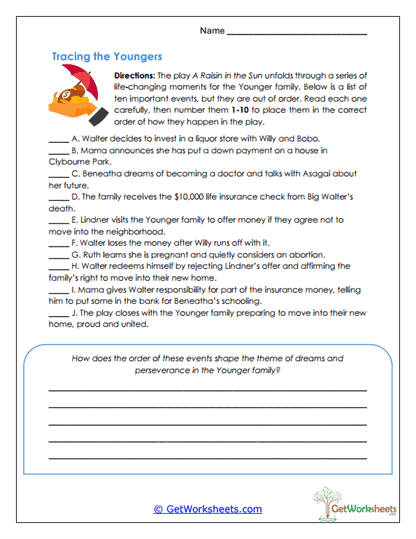
Tracing the Youngers
Students arrange ten key events from A Raisin in the Sun in chronological order to understand how each moment drives the Younger family's story forward. They examine cause-and-effect relationships, character development, and the unfolding of the family's dreams. A brief written reflection invites analysis of how the play's structure emphasizes perseverance and hope. The activity combines comprehension and higher-order thinking to reinforce narrative understanding.
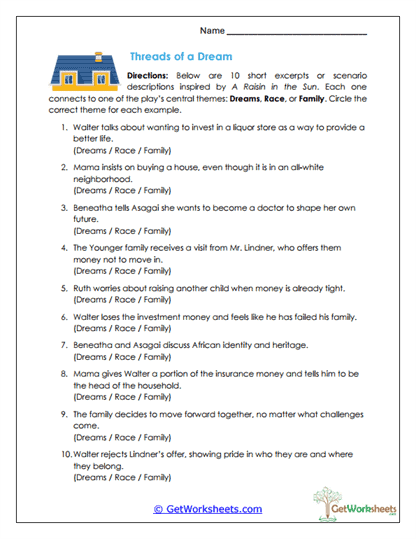
Threads of a Dream
Learners connect short scenarios to central themes-Dreams, Race, and Family-by identifying which concept each example reflects. This worksheet helps students recognize recurring motifs in the play and interpret how Hansberry intertwines them throughout the narrative. It encourages critical thinking about how social and emotional challenges interact with aspiration. By drawing thematic connections, students strengthen their interpretive and analytical reading skills.
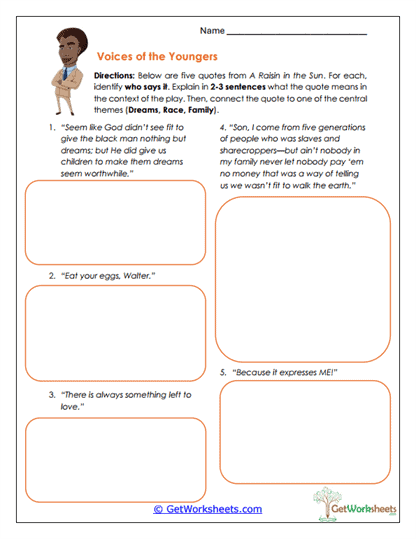
Voices of the Youngers
Students examine five important quotes, identifying speakers and explaining each line's meaning and thematic importance. The exercise deepens understanding of dialogue and how it reveals motivation and conflict. Learners interpret each passage's tone and connect it to broader themes like hope, pride, or injustice. It also fosters writing precision through concise evidence-based responses.
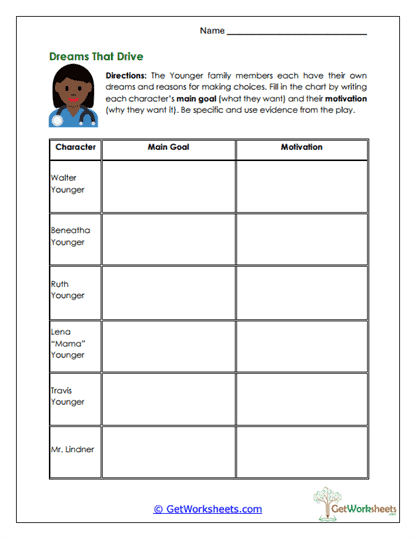
Dreams That Drive
In this chart-based worksheet, students list major characters and describe their personal dreams and motivations. They analyze how individual ambitions influence relationships and family dynamics. The task supports comprehension of character depth and thematic resonance. By reflecting on these dreams, learners connect the Younger family's struggles to universal human aspirations.
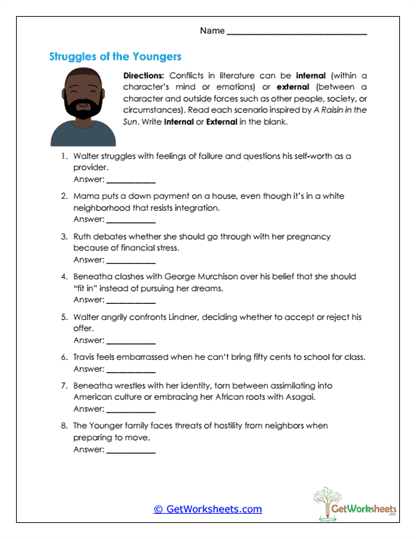
Struggles of the Youngers
Students identify internal and external conflicts within the play, classifying them into distinct categories. The activity builds comprehension of character motivation and emotional tension. It helps learners understand how personal desires collide with societal barriers. Through thoughtful classification, students analyze how conflict reveals resilience and unity in the Younger family.
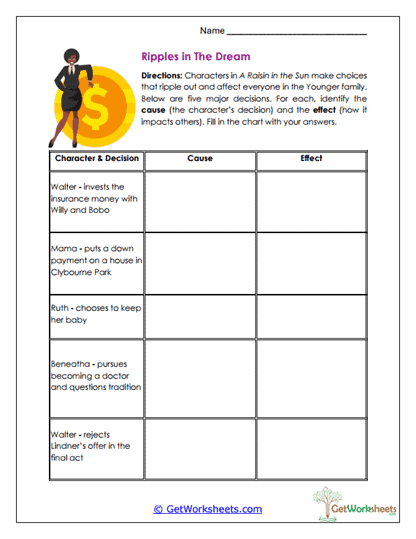
Ripples in the Dream
Learners complete a cause-and-effect chart tracing how key decisions impact the family's future. This activity develops awareness of consequence and interconnection within complex storylines. Students explore how one choice can alter multiple relationships, linking character growth to theme. It encourages synthesis of ideas and comprehension of plot causality.
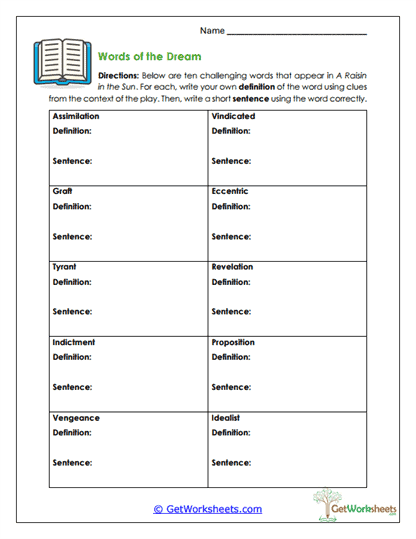
Words of the Dream
Students explore challenging vocabulary from the play, writing definitions and original sentences. The task reinforces contextual understanding and builds language precision. It promotes active learning as students apply new words to literary and personal contexts. This approach supports both comprehension and expressive writing development.
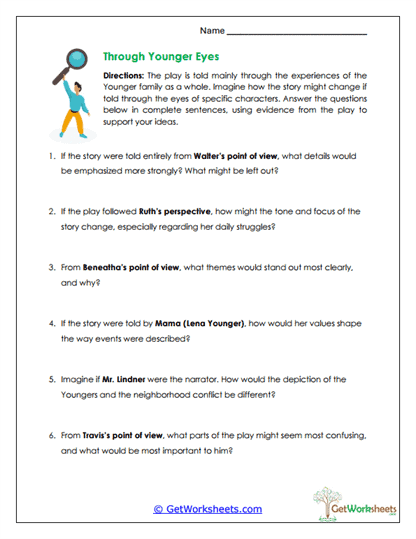
Through Younger Eyes
This activity asks students to reimagine the story through another character's viewpoint. Learners answer analytical questions about how perspective affects tone, emotion, and theme. It encourages empathy and understanding of character psychology. By considering different viewpoints, students strengthen interpretive reading and reflective writing skills.
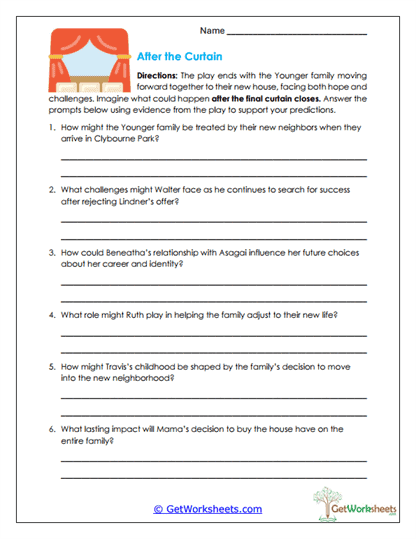
After the Curtain
Students imagine what happens after the play's conclusion, predicting the family's challenges and triumphs. They infer outcomes based on textual evidence and thematic cues. The exercise blends creativity with analysis, helping learners explore hope, perseverance, and change. It builds inference skills while allowing personal engagement with the story.
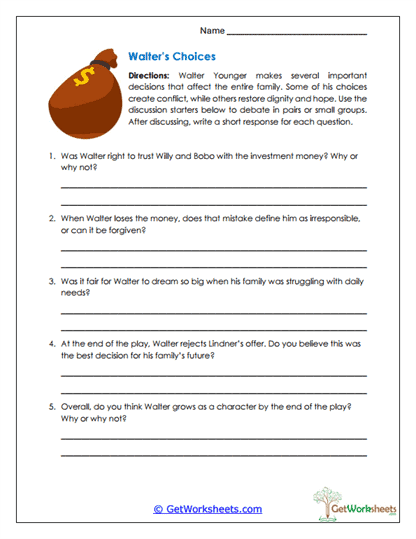
Walter's Choices
Learners examine Walter Younger's major decisions, analyzing their moral, emotional, and social implications. Guided questions lead students to interpret how Walter's choices define his growth and the family's future. The worksheet promotes discussion, ethical reasoning, and deeper understanding of character motivation. It encourages reflective analysis and written articulation of complex ideas.
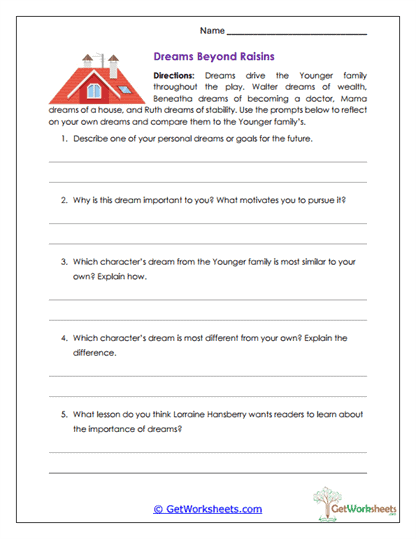
Dreams Beyond Raisins
Students connect the play's central theme of dreams to their own lives through reflective writing prompts. They explore their goals, motivations, and values while comparing them to the Younger family's aspirations. The activity fosters personal connection to literature and insight into Hansberry's message about perseverance. It encourages expressive writing and thoughtful self-reflection.
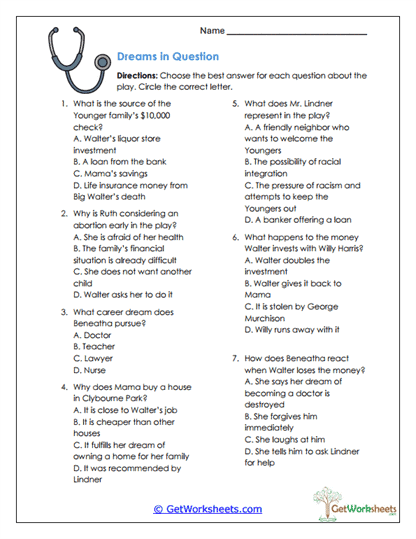
Dreams in Question
This comprehension quiz checks understanding of characters, plot events, and themes through multiple-choice questions. Students review key details such as Beneatha's ambitions and Walter's moral evolution. The assessment reinforces recall, interpretation, and text-based analysis. It serves as an engaging review tool that consolidates understanding of the play's central ideas.
Bookmark Us Now!
New, high-quality worksheets are added every week! Do not miss out!