1984 Worksheets
About This Worksheet Collection
The 1984 Literature Study collection invites students to engage deeply with George Orwell's dystopian masterpiece through reading comprehension, analysis, discussion, and creative expression. Each worksheet focuses on a specific aspect of the novel-from understanding the Party's manipulation of truth to exploring the psychology of rebellion and the power of language. The activities encourage learners to read critically, connect ideas across themes, and reflect on the lasting significance of Orwell's warnings about totalitarianism.
By combining textual evidence, historical awareness, and personal reflection, this collection helps students build both analytical and empathetic understanding of 1984. Learners develop essential literary skills such as interpretation, comparison, vocabulary mastery, and persuasive writing, while exploring moral and social questions still relevant today.
Detailed Descriptions Of These Worksheets
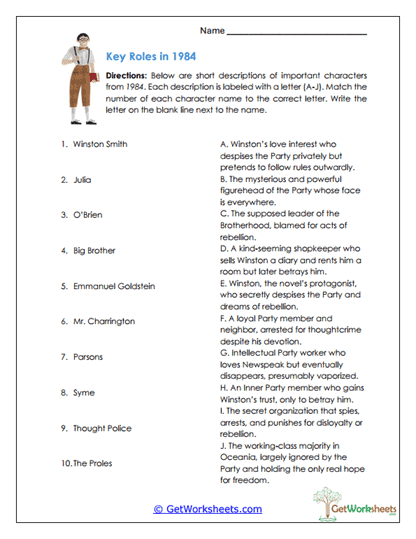
Key Roles Matching
Students match major characters to their correct descriptions, reinforcing knowledge of roles, motivations, and relationships in the novel. The task strengthens comprehension while connecting individual characters to Orwell's broader themes of control and resistance.
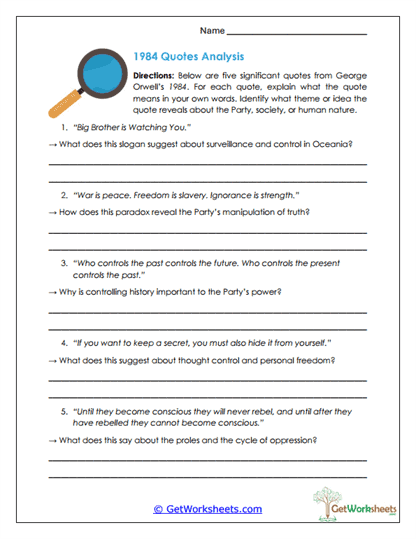
Quote Analysis
Learners analyze five pivotal quotes and explain their meanings in context. The exercise encourages critical interpretation, connecting Orwell's language to recurring themes of truth, power, and human autonomy.
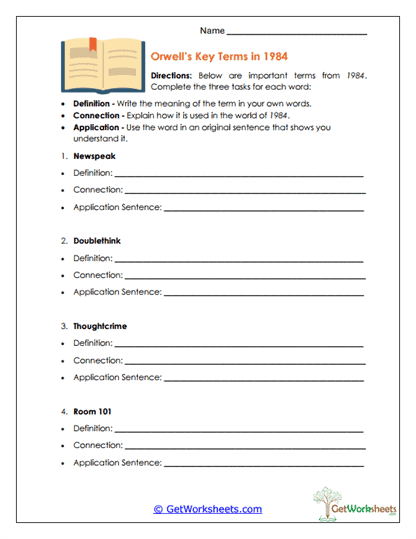
Key Terms Exploration
Students define, explain, and apply Orwell's political vocabulary-terms like Newspeak, Doublethink, and Thoughtcrime. This vocabulary study deepens understanding of language as a tool of manipulation and ideological control.
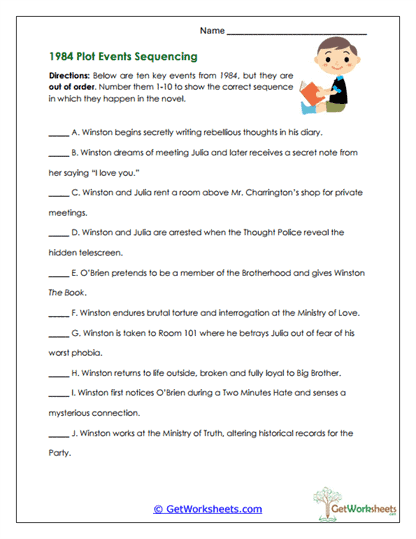
Plot Sequencing
Learners arrange ten major events in order to trace Winston's journey from rebellion to submission. The task develops recall and comprehension while illustrating cause-and-effect progression in the story's structure.
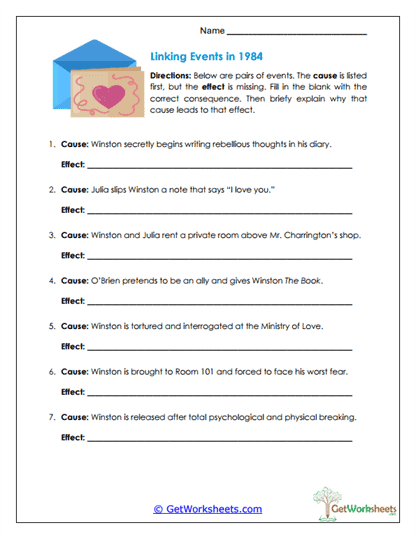
Cause and Effect
Students connect causes and consequences in the novel's events, analyzing how the Party's systems maintain power. This worksheet strengthens inferential reasoning and reinforces understanding of Orwell's commentary on oppression.
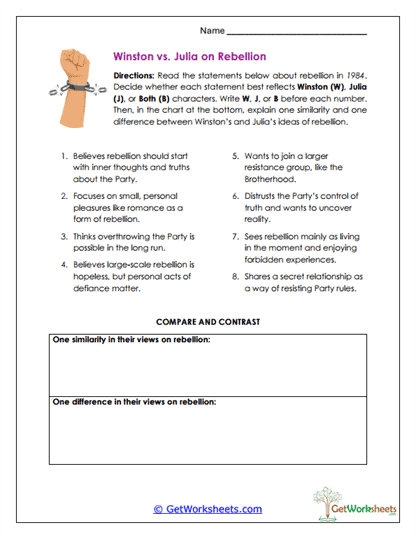
Comparing Rebellion
Through comparing Winston and Julia, students examine two distinct philosophies of rebellion. The exercise builds analytical depth and comprehension of how personal motivations shape resistance.
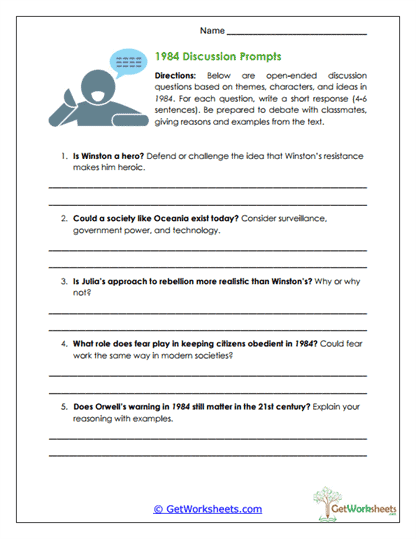
Discussion Prompts
Learners respond to open-ended questions and prepare for classroom discussions about 1984's major ideas. This reflective activity connects literature to ethical, political, and social debates in today's world.
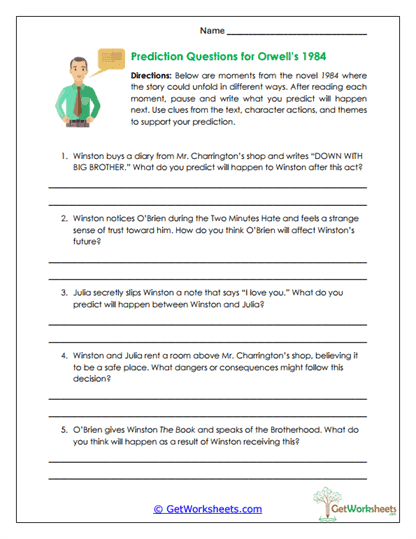
Prediction Practice
Students make evidence-based predictions about turning points in the story. This exercise builds engagement, inference skills, and understanding of narrative tension and foreshadowing.
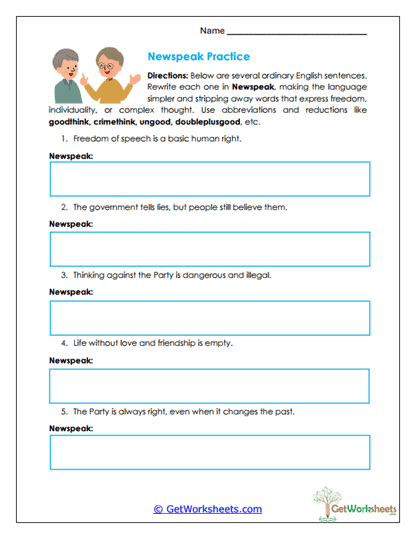
Newspeak Practice
Learners translate standard English phrases into Newspeak, exploring Orwell's invented linguistic system. The creative task illustrates how restricted language limits thought and expression.
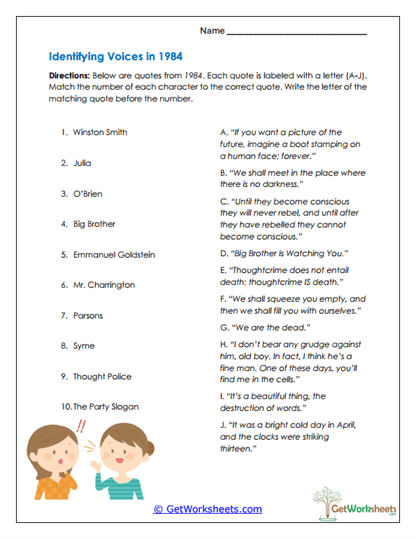
Identifying Voices
Students match significant quotes to the characters who spoke them. The activity reinforces tone recognition, character understanding, and familiarity with key themes and symbols.
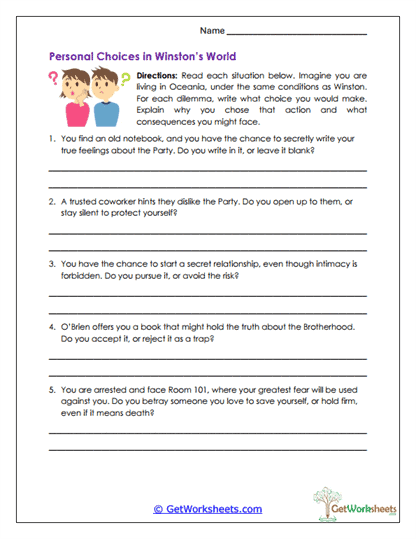
Personal Choices Reflection
Students imagine themselves in Winston's position and describe the choices they would make under the Party's rule. This reflective task promotes empathy, ethical reasoning, and personal connection to the novel's moral conflicts.
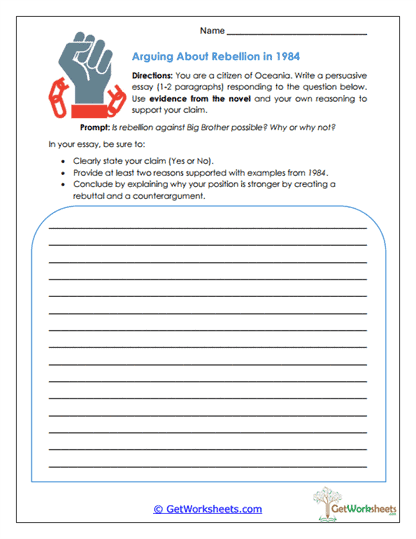
Arguing About Rebellion
In this persuasive writing task, students craft a short essay arguing whether rebellion against Big Brother is possible. Using textual evidence and logical reasoning, they practice argumentative structure and critical literary analysis.
Bookmark Us Now!
New, high-quality worksheets are added every week! Do not miss out!