Inner vs. Outer Planets
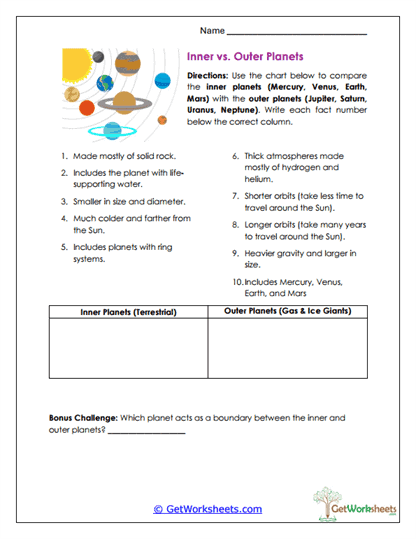
This comparison and classification worksheet supports students in Grades 4, 5, and 6 as they analyze the differences between inner (terrestrial) and outer (gas and ice giant) planets. Using a list of factual statements, students sort characteristics into a two-column chart, strengthening understanding of planetary composition, size, atmosphere, and orbital position. A bonus challenge encourages deeper reasoning about why the asteroid belt serves as a boundary between the inner and outer planets, promoting critical thinking and scientific explanation.
Learning Goals
- Planet Classification (Grades 4-6) – Distinguish between inner and outer planets based on key characteristics
- Comparative Analysis – Analyze differences in composition, atmosphere, size, and orbits
- Categorization Skills – Organize scientific information into meaningful groups
- Critical Reasoning – Explain why physical boundaries exist within the Solar System
Instructional Benefits
- Teacher-Created Resource – Designed by educators to align with Earth and space science and ELA standards
- Clear Two-Column Chart Format – Supports visual organization and comparison
- Bonus Reasoning Question – Extends learning beyond sorting to conceptual understanding
- Flexible Use – Ideal for science units, review lessons, assessments, or homeschool instruction
This inner vs. outer planets worksheet helps students strengthen analytical thinking and scientific understanding through structured comparison. By sorting characteristics and reflecting on Solar System organization, learners build deeper insight into planetary science concepts. It’s a no-prep resource for both classroom and homeschool settings that supports science literacy, critical thinking, and content mastery.
This worksheet is part of our The Solar System collection.
Bookmark Us Now!
New, high-quality worksheets are added every week! Do not miss out!