Emotion Matching
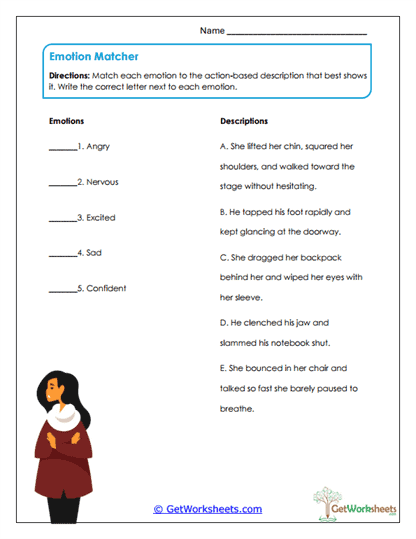
This interpretation and analysis worksheet helps students understand how emotions are revealed through body language and behavior rather than direct labels. Students match each named emotion to the action-based description that best demonstrates it. The descriptions include physical reactions, movements, facial expressions, and posture that signal how a character feels without explicitly stating the emotion.
By connecting actions to emotions, students learn how writers communicate feelings subtly and effectively.
Learning Goals
- Interpreting Body Language in Text
Recognize how physical cues reveal emotional states. - Matching Emotional Cues to Feelings
Connect specific actions and reactions to the correct emotion. - Character Development Through Actions
Understand how behavior builds believable characters. - Showing vs. Telling Identification
Identify examples of showing emotion instead of naming it.
Instructional Benefits
- Builds Emotional Literacy in Reading
Helps students interpret subtle emotional cues in text. - Supports Stronger Narrative Writing
Provides models students can apply in their own writing. - Encourages Close Reading & Inference
Strengthens attention to detail and interpretive thinking. - Flexible Classroom Use
Ideal for narrative units, reading comprehension lessons, writing mini-lessons, or intervention.
The Emotion Matching worksheet helps students become more perceptive readers and more effective writers. By learning how actions communicate feelings, learners strengthen character understanding and develop essential show-don’t-tell skills for narrative writing.
This worksheet is part of our Show, Don’t Tell Techniques Worksheets collection.
Bookmark Us Now!
New, high-quality worksheets are added every week! Do not miss out!