Emotion Through Dialogue
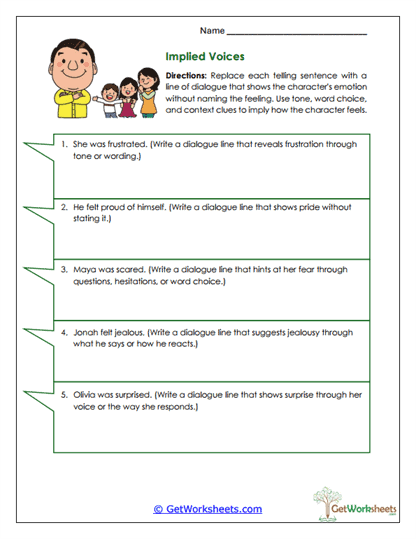
This narrative writing worksheet teaches students how to reveal emotion through dialogue instead of stating feelings directly. Students are given simple telling sentences that name an emotion, then rewrite each one as a line of dialogue that implies the emotion through word choice, tone, pacing, and context.
By crafting spoken lines that suggest feelings like frustration, pride, fear, jealousy, or surprise, students learn how dialogue can communicate emotion and deepen character development.
Learning Goals
- Dialogue as a Narrative Tool
Use spoken lines to advance emotion and character. - Inferring Emotion Through Word Choice
Select language that implies feelings without naming them. - Showing Emotion Without Labels
Replace emotion words with indirect cues. - Character Voice & Tone
Develop distinctive voices that reflect emotional states.
Instructional Benefits
- Builds Stronger Narrative Writing
Helps students create more natural, engaging scenes. - Strengthens Understanding of Subtext
Teaches how meaning can exist beneath the words spoken. - Encourages Creative Expression
Allows multiple valid ways to convey the same emotion. - Flexible Classroom Use
Ideal for narrative units, writing workshops, dialogue lessons, or enrichment activities.
The Emotion Through Dialogue worksheet helps students master the craft of showing emotion through character speech. By learning how tone and word choice reveal feelings, learners gain essential tools for vivid storytelling and realistic character interactions.
This worksheet is part of our Show, Don’t Tell Techniques Worksheets collection.

Bookmark Us Now!
New, high-quality worksheets are added every week! Do not miss out!