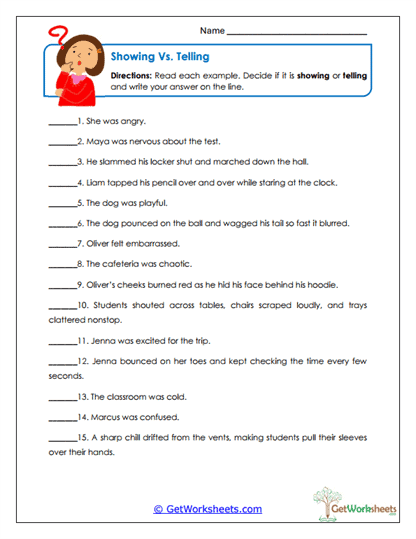
Showing vs. Telling Sort
This worksheet is designed for students in Grades 4, 5, and 6 to practice identifying key differences between showing and telling in narrative writing. By evaluating short examples, learners analyze author choices, emotional expression, descriptive language, and implied meaning to better understand how strong writing engages the reader.
Academic Focus
- Identifying Showing vs. Telling (Grades 4-6)
Distinguish between direct emotional statements and descriptive lines that imply meaning. - Narrative Technique Analysis
Examine how writers use action, detail, and description to create engaging scenes. - Descriptive Writing Development
Build awareness of vivid language that supports imagery and reader engagement. - Character and Scene Understanding
Recognize how showing techniques strengthen character reactions and setting details.
Instructional Support
- Teacher-Created Resource
Developed by educators to align with common writing and reading standards. - Quick to Implement
Works well as a warm-up, literacy center activity, or independent practice. - Supports Writing Revision
Helps students apply analytical thinking to improve their own narrative drafts. - Clear, Student-Friendly Format
Simple sorting structure keeps the focus on skill development rather than directions.
This activity strengthens critical thinking, narrative awareness, and revision readiness by helping students clearly recognize how writing techniques affect meaning and engagement. Through repeated exposure to short examples, learners gain confidence identifying effective description and are better prepared to apply show-don’t-tell strategies in both classroom writing assignments and homeschool language arts instruction.
This worksheet is part of our Show, Don’t Tell Techniques Worksheets collection.
Bookmark Us Now!
New, high-quality worksheets are added every week! Do not miss out!