Sense Identification
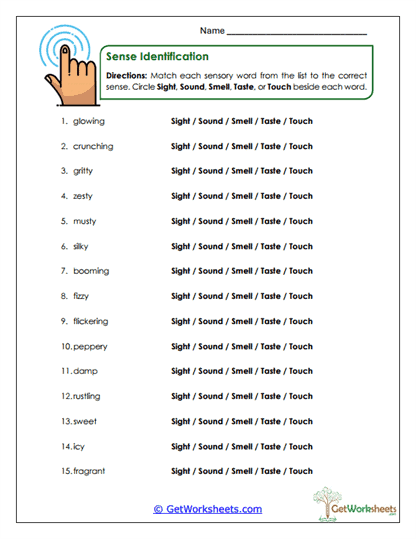
This worksheet supports students in Grades 2 and 3 as they practice identifying which sense a descriptive word appeals to. By reading sensory vocabulary and matching each word to sight, sound, smell, taste, or touch, learners build stronger vocabulary awareness and a clearer understanding of how descriptive language creates sensory experiences for the reader.
Skills Reinforced
- Sensory Word Identification (Grades 2-3)
Match descriptive words to the correct sense they represent. - Vocabulary Development
Strengthen understanding of descriptive language and word meaning. - Language and Word Choice Awareness
Recognize how specific words affect imagery and reader experience. - Interpreting Descriptive Text
Analyze vocabulary to determine sensory impact.
Instructional Benefits
- Teacher-Created Literacy Practice
Designed to support early reading and writing development. - Clear, Student-Friendly Format
Simple circling activity keeps focus on skill mastery. - Supports Analytical Thinking
Encourages careful consideration of word meaning and usage. - Flexible Classroom Use
Works well for independent practice, small groups, review, or assessment.
This activity helps students become more intentional readers and writers by sharpening their awareness of sensory language. By identifying which sense each word targets, learners gain confidence interpreting descriptive text and applying sensory vocabulary in their own writing. It fits naturally into classroom and homeschool language arts instruction focused on vocabulary growth and descriptive comprehension.
This worksheet is part of our Sensory Details (Five Senses) Worksheets collection.
Bookmark Us Now!
New, high-quality worksheets are added every week! Do not miss out!