Biased vs. Fair Descriptions
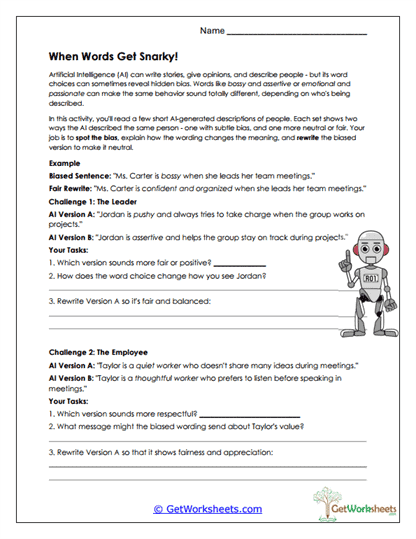
This worksheet helps students in Grades 5, 6, and 7 practice critical reading, tone analysis, and respectful language by comparing biased and fair AI-generated descriptions of people. Through guided examples, learners analyze word choice, assumptions, stereotypes, connotation, and accuracy while building awareness of how AI language can shape perceptions and attitudes.
Learning Goals
- Tone and Connotation (Grades 5-7) – Identify how wording, labels, and tone influence meaning and fairness.
- Bias Detection – Recognize assumptions, stereotypes, and exaggerated claims in AI-generated descriptions.
- Revision Skills – Rewrite biased statements to be neutral, respectful, and fact-based.
- Digital Literacy – Evaluate AI outputs critically rather than accepting them at face value.
Teaching Advantages
- Teacher-Created Resource – Designed by educators with classroom-ready language and structure.
- Flexible Use – Works well for class discussion, independent practice, small groups, or SEL lessons.
- Skill Integration – Supports ELA, social studies, and technology literacy standards together.
- Accessible Format – Clear prompts and examples support diverse learners and discussion-based classrooms.
This printable worksheet supports students in developing bias awareness, respectful communication, critical thinking, and thoughtful revision skills. By analyzing AI descriptions and rewriting them fairly, learners gain practical experience evaluating tone, accuracy, and language impact. Whether used in a classroom or homeschool setting, this no-prep activity strengthens digital literacy and helps students become more responsible and reflective readers of AI-generated content.
This worksheet is part of our Role of Bias in AI collection.
Bookmark Us Now!
New, high-quality worksheets are added every week! Do not miss out!