Same Question, Different Words
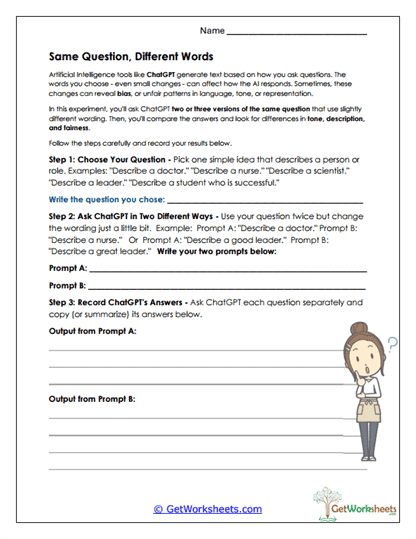
This worksheet helps students in Grades 4, 5, and 6 explore how language choices, wording structure, descriptive detail, question framing, and tone can influence AI-generated responses. Through hands-on comparison and reflection, students build critical thinking skills while learning how small prompt changes can affect fairness, clarity, and interpretation in technology-based tools.
Learning Goals
- Prompt Sensitivity (Grades 4-6): Understand how minor wording changes can lead to different AI outputs.
- Language Analysis: Compare tone, detail, bias, and emphasis across AI-generated responses.
- Critical Evaluation: Identify unintended bias or shifts in meaning caused by phrasing.
- Purposeful Writing: Practice crafting clear, intentional questions for accurate results.
Instructional Benefits
- Teacher-Created Resource: Designed by educators with classroom-ready structure and clarity.
- Hands-On Technology Literacy: Encourages active use of AI tools in a guided, reflective way.
- Flexible Use: Works well for class discussion, small groups, independent work, or homeschool lessons.
- No-Prep Friendly: Simple setup with clear instructions and student recording spaces.
- Supports Diverse Learners: Builds awareness without requiring advanced technical knowledge.
This printable worksheet helps students develop awareness of prompt design, language precision, and responsible AI use while strengthening reading comprehension and analytical thinking. By comparing responses side by side, learners gain insight into how wording impacts technology outcomes and fairness. It’s an engaging, discussion-ready activity that fits seamlessly into both classroom instruction and homeschool technology literacy lessons.
This worksheet is part of our Role of Bias in AI collection.
Bookmark Us Now!
New, high-quality worksheets are added every week! Do not miss out!