Slang Matching
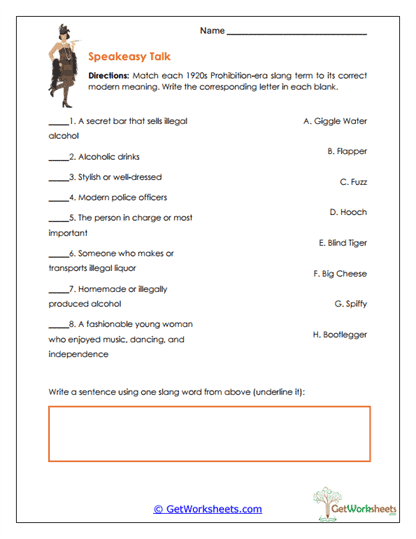
This worksheet helps students in Grades 4 and 5 strengthen vocabulary, reading comprehension, cultural understanding, and written expression by exploring 1920s Prohibition-era slang. Students match historical slang terms with their modern meanings, then apply one term in a sentence to demonstrate understanding of context and usage.
Learning Goals
- Vocabulary Development (Grades 4-5) – Students learn and reinforce culturally specific historical terms.
- Understanding Cultural Language & Context – Learners explore how slang reflects social behaviors and attitudes during Prohibition.
- Application of Vocabulary in Writing – Students practice using terms correctly in a sentence to show comprehension.
- Historical Literacy – The activity connects language to broader historical events and societal norms.
Instructional Benefits
- Teacher-Created Resource – Designed by educators to align with elementary ELA and social studies standards.
- Engaging Matching Format – Encourages active thinking and careful interpretation of historical language.
- Reinforces Comprehension and Retention – Matching and applied writing help solidify understanding of terminology.
- Flexible Classroom Use – Works well for independent practice, literacy centers, review lessons, or enrichment.
- Low-Prep Printable – Ready for classroom or homeschool use with minimal preparation.
This Slang Matching worksheet helps students connect Prohibition-era vocabulary to its historical context while building comprehension and writing skills. By interpreting slang and using it in a sentence, learners strengthen cultural literacy, historical understanding, and creative application of language.
This worksheet is part of our Prohibition Era Worksheets collection.
Bookmark Us Now!
New, high-quality worksheets are added every week! Do not miss out!