Power in Few Words
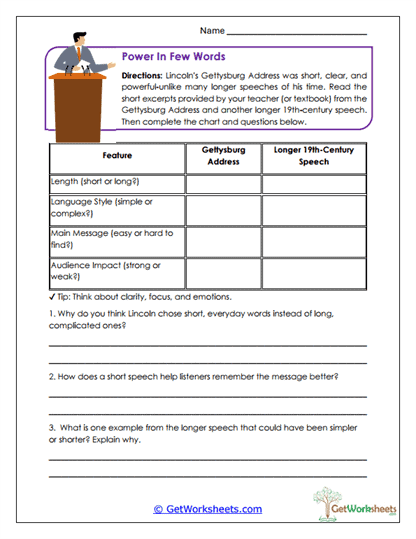
This analytical worksheet supports students in Grades 5 and 6 as they practice close reading, comparison, tone analysis, and critical thinking through the study of the Gettysburg Address. By comparing Lincoln’s brief, powerful speech to longer 19th-century speeches, students examine how brevity, clarity, focus, and emotional impact can strengthen persuasion and meaning in historical communication.
Learning Goals
- Comparing Writing Styles (Grades 5-6) – Analyze differences between concise and lengthy speeches to understand effectiveness.
- Tone & Focus Analysis – Identify how word choice, clarity, and emotional appeal shape audience response.
- Historical Speech Understanding – Examine why the Gettysburg Address remains influential despite its short length.
- Critical Thinking – Evaluate how structure and simplicity contribute to persuasive power.
Instructional Benefits
- Teacher-Created Resource – Designed by educators to align with upper elementary ELA, social studies, and civics standards.
- Comparison Chart Included – Visual organizer helps students analyze brevity, tone, and purpose side by side.
- Reflection Questions – Encourage deeper thinking about why fewer words can sometimes carry greater meaning.
- Flexible Use – Ideal for speech analysis lessons, writing units, discussion starters, or formative assessment.
This printable worksheet helps students strengthen analytical reading, writing style comparison, and civic understanding by exploring how Lincoln used concise language to deliver a lasting message. By focusing on clarity and emotional impact, learners gain insight into the persuasive strength of simplicity. It’s a thoughtful, no-prep resource that works well in both classroom instruction and homeschool learning.
This worksheet is part of our Gettysburg Address collection.
Bookmark Us Now!
New, high-quality worksheets are added every week! Do not miss out!