AI or Not AI? Sorting Game
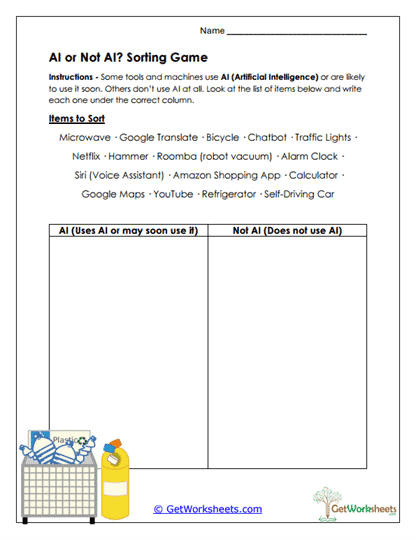
This worksheet is designed for students in Grades 3-5 to build reading comprehension, critical thinking, and digital literacy by sorting everyday objects into two categories: tools that use (or may soon use) artificial intelligence and tools that do not. By analyzing familiar items, learners practice classification, comparison, and reasoning while developing a clearer understanding of what makes a technology “smart.”
Learning Goals
- Understanding AI Concepts (Grades 3-5) – Recognize basic features that distinguish AI-powered tools from traditional devices.
- Sorting & Classification Skills – Categorize items accurately based on shared characteristics.
- Reading & Following Directions – Interpret task instructions and apply them correctly.
- Digital Literacy Awareness – Discuss how AI affects everyday life and future technologies.
Instructional Benefits
- Teacher-Created Resource – Designed by educators to align with elementary science, ELA, and technology standards.
- Hands-On Sorting Format – Encourages active engagement and discussion.
- Real-World Examples – Uses familiar objects to make abstract ideas accessible.
- Flexible Use – Ideal for literacy centers, STEM lessons, small groups, or homework.
This printable worksheet helps students build a foundational understanding of artificial intelligence by comparing smart and non-smart tools in a concrete, relatable way. By sorting and discussing everyday items, learners strengthen reasoning, classification, and digital awareness skills. Suitable for classroom or homeschool use, this no-prep activity supports thoughtful conversations about technology while reinforcing essential reading and critical thinking strategies.
This worksheet is part of our Everyday Examples of AI collection.
Bookmark Us Now!
New, high-quality worksheets are added every week! Do not miss out!