Cause and Effect
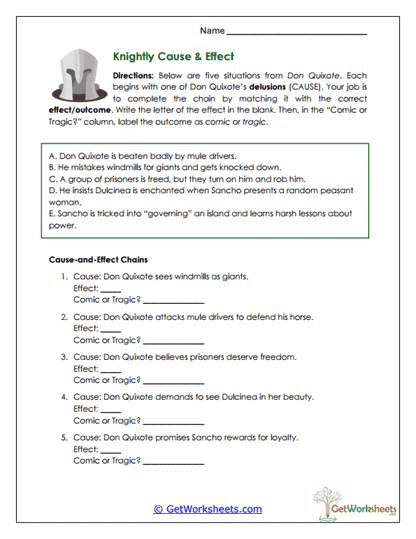
This analytical worksheet is designed for Grades 7-10 and helps students examine how Don Quixote’s delusions drive both the humor and the conflict of the novel. Students analyze five situations that begin with Don Quixote’s misunderstandings and match each cause to its correct effect, then identify whether the outcome is comic or tragic. This dual focus strengthens comprehension of plot mechanics while highlighting Cervantes’ tonal balance between satire and seriousness.
Learning Goals
- Cause-and-Effect Analysis (Secondary ELA) – Trace how character beliefs lead to specific outcomes
- Tone & Outcome Classification – Distinguish between comic and tragic consequences
- Character Motivation Understanding – Analyze how Don Quixote’s illusions shape his actions
- Reading Comprehension – Accurately interpret events and their results
Instructional Benefits
- Teacher-Created Resource – Aligned with middle and early high school literature standards
- Clear Analytical Structure – Matching format supports logical reasoning and accuracy
- Tone Awareness – Helps students see how humor and harm coexist in the novel
- Builds Toward Theme Analysis – Prepares students to discuss illusion vs. reality and satire
- Flexible Use – Ideal for comprehension checks, guided practice, or discussion prep
- Low Prep – Print-and-use worksheet with concise directions and focused tasks
This cause-and-effect worksheet helps students understand Don Quixote as a novel where misperception fuels both laughter and loss. By matching delusions to consequences and evaluating tone, learners strengthen plot comprehension, character analysis, and interpretive skills. Whether used early in the unit or as a review, this activity supports thoughtful engagement with Cervantes’ enduring exploration of illusion, motivation, and consequence.
This worksheet is part of our Don Quixote Worksheets collection.
Bookmark Us Now!
New, high-quality worksheets are added every week! Do not miss out!