Sense-to-Setting Match
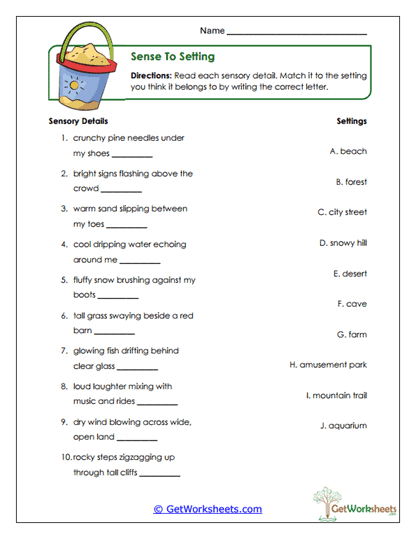
This worksheet helps students in Grades 3, 4, and 5 strengthen reading comprehension and descriptive understanding by matching sensory details to the settings they best describe. Students analyze clues related to sight, sound, smell, and touch, then connect each detail to the correct environment, building skills in inference, imagery interpretation, and vocabulary-in-context.
Learning Goals
- Matching Sensory Details to Settings (Grades 3-5) – Identify which environments align with specific sensory clues.
- Inferencing from Descriptive Language – Use implied information to determine setting without it being named directly.
- Reading Comprehension of Imagery – Interpret how sensory details help create a sense of place.
- Vocabulary and Context Use – Understand descriptive words by applying them to realistic settings.
Instructional Benefits
- Teacher-Created Resource – Designed by educators to support foundational reading and descriptive analysis skills.
- Engaging Matching Format – Encourages active thinking and close reading rather than passive recall.
- Supports Setting Awareness – Helps students see how writers use sensory clues to establish place.
- Flexible Classroom Use – Works well for literacy centers, small groups, independent practice, or warm-ups.
This printable worksheet helps students recognize that settings are often revealed through sensory language rather than direct labels. By matching descriptive clues to environments, learners build confidence in inference, imagery comprehension, and vocabulary use. It is a simple, no-prep resource for classroom and homeschool settings that strengthens descriptive reading skills and understanding of how sensory details create setting.
This worksheet is part of our Describing Places (Real and Imaginary) Worksheets collection.

Bookmark Us Now!
New, high-quality worksheets are added every week! Do not miss out!