Sounds of the Saga
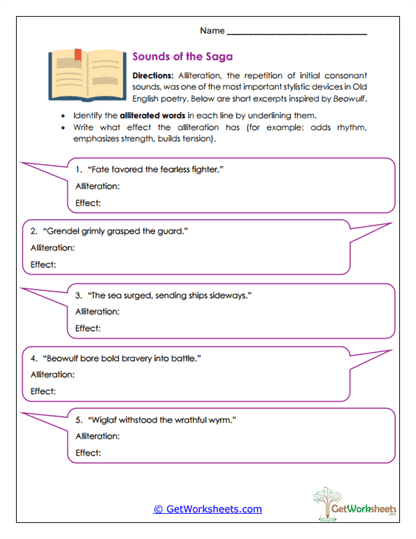
This poetry analysis worksheet is designed for Grades 7-10 and helps students explore alliteration, a defining sound device in Old English literature and a key feature of Beowulf. Students read short, Beowulf-inspired excerpts and underline examples of alliteration, focusing on repeated beginning consonant sounds. After identifying each instance, learners explain the effect of the alliteration, such as how it contributes to rhythm, tone, emphasis, or memorability.
By pairing identification with explanation, the activity moves students beyond spotting devices to understanding how sound shapes meaning in oral and written poetry.
Learning Goals
- Poetry Analysis (Secondary ELA) – Examine how sound devices function in epic poetry
- Identifying Literary Devices – Recognize and analyze alliteration accurately
- Sound & Structure Understanding – Understand how repetition supports oral tradition and rhythm
- Textual Evidence & Explanation – Support interpretations with specific examples
Instructional Benefits
- Teacher-Created Resource – Aligned with middle and early high school ELA standards
- Focused Skill Practice – Targets one key poetic device in depth
- Connects to Oral Tradition – Reinforces why sound mattered in Anglo-Saxon storytelling
- Builds Analytical Writing – Requires students to explain why a device is effective
- Flexible Use – Ideal for poetry units, epic studies, mini-lessons, or assessment
- Low Prep – Print-and-use worksheet with clear directions and concise excerpts
This Sounds of the Saga worksheet helps students appreciate Beowulf as a spoken, rhythmic poem, not just a story on the page. By identifying and explaining alliteration, learners strengthen poetry analysis skills and gain insight into how sound devices enhance meaning, mood, and storytelling power in epic literature.
This worksheet is part of our Beowulf worksheets collection.
Bookmark Us Now!
New, high-quality worksheets are added every week! Do not miss out!