Figurative Hunt
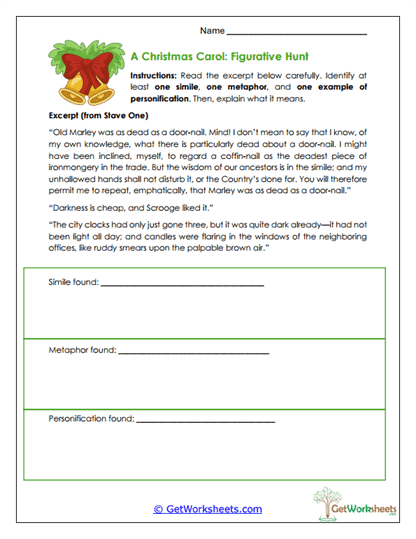
This figurative language hunt worksheet supports students in Grades 5, 6, and 7 as they strengthen close reading, literary analysis, and interpretation skills through Charles Dickens’s A Christmas Carol. By examining a selected excerpt, learners identify and explain examples of simile, metaphor, and personification, deepening their understanding of how Dickens’s language creates mood, meaning, and vivid imagery.
Skills Reinforced
- Figurative Language Identification (Grades 5-7): Students locate examples of simile, metaphor, and personification within the text.
- Literary Device Analysis: Learners explain how each figurative device contributes to meaning and emotional impact.
- Close Reading & Interpretation: Students read carefully to recognize nuanced language and implied meaning.
- Author’s Craft & Style: Learners analyze Dickens’s descriptive techniques and use of imagery.
Instructional Benefits
- Teacher-Created Resource: Designed by educators to align with upper elementary and middle school ELA standards.
- Guided Analysis Format: Prompts support both identification and explanation of figurative language.
- Builds Literary Vocabulary: Helps students confidently use and recognize literary terms.
- Flexible Use: Suitable for guided reading, independent work, enrichment, assessment, or homeschool lessons.
This figurative hunt worksheet helps students develop a deeper appreciation for Dickens’s writing style while strengthening analytical reading skills. By identifying and explaining figurative language, learners improve comprehension, interpretive reasoning, and understanding of author’s craft. Whether used in a classroom or homeschool setting, this printable activity offers an engaging, low-prep way to explore imagery and literary devices in A Christmas Carol.
This worksheet is part of our A Christmas Carol collection.
Bookmark Us Now!
New, high-quality worksheets are added every week! Do not miss out!