Writing from Observation Worksheets
About This Worksheet Collection
The Writing from Observation Worksheets collection helps students strengthen their descriptive writing by focusing on what they can truly see, hear, or notice, rather than what they imagine. Through careful visual study, real-time observation, and detail-based revision tasks, learners develop the essential skill of grounding their writing in concrete evidence. These worksheets encourage close looking, accurate recording, and the transformation of raw sensory details into polished descriptive sentences and paragraphs.
As students work through the collection, they practice identifying meaningful details, distinguishing observation from inference, and choosing precise verbs and adjectives. They also learn to revise vague writing, compare settings, craft character descriptions, and build full scenes using only observable cues. Together, these activities help students develop clarity, accuracy, attention, and descriptive control-skills that elevate both narrative and informational writing.
Detailed Descriptions Of These Worksheets
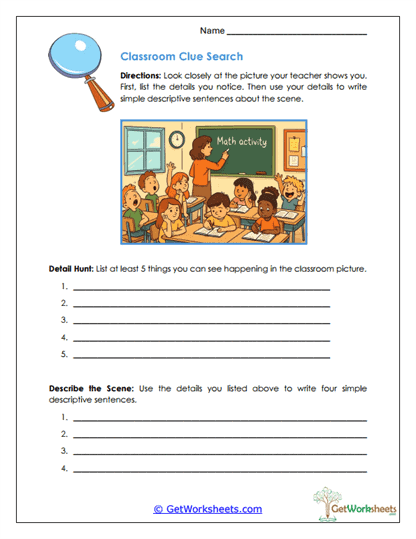
Classroom Clue Search
Students examine a classroom picture and record at least five concrete details before using them to write descriptive sentences. This teaches them to focus on observable facts rather than assumptions. They practice converting visual cues into clear, accurate writing. The activity strengthens attention to detail and foundational observational skills.
Looking Closer
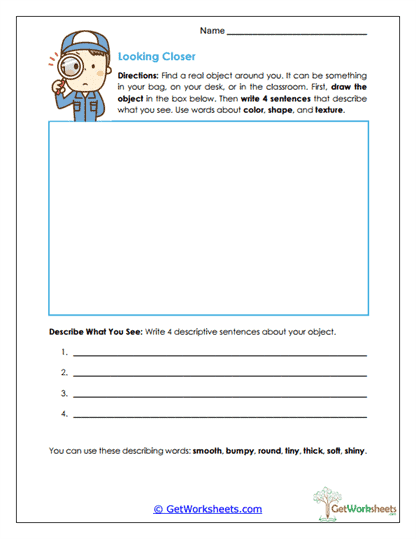
Learners choose a nearby object, sketch it, and write four sentences using descriptive vocabulary related to color, shape, and texture. This encourages careful visual study and precise language use. Students learn to create vivid descriptions based on firsthand observation. The worksheet integrates art and writing for a rich descriptive experience.
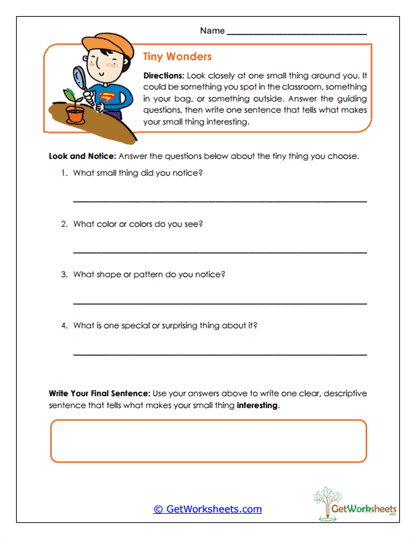
Tiny Wonders
Students select a small object or feature in their surroundings and answer guiding questions about its appearance before writing one strong descriptive sentence. The task encourages looking closely at everyday items. Learners practice identifying meaningful details and expressing them clearly. It supports early development of precise, detail-focused writing.
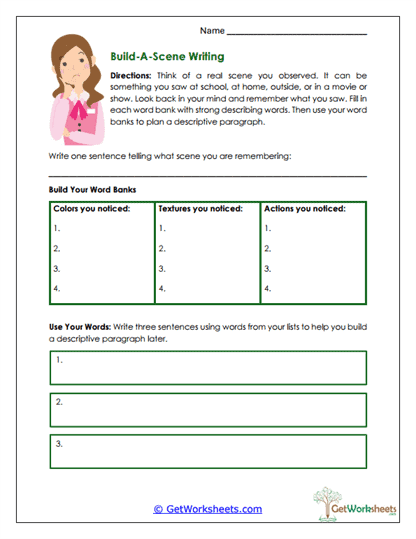
Build-A-Scene Writing
Students recall a real scene they observed and list colors, textures, and actions before writing descriptive sentences. This structured approach helps them gather vivid details before drafting. They practice organizing sensory cues that support a fuller scene. The activity enhances vocabulary selection and descriptive planning.
Clear Observations
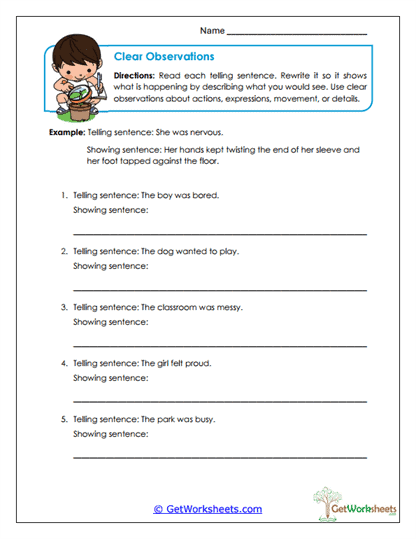
Learners revise telling sentences by rewriting them with observable actions or physical details. This teaches students to show through visible cues rather than rely on assumptions. They build descriptive clarity and narrative realism. The activity strengthens revision habits grounded in real observation.
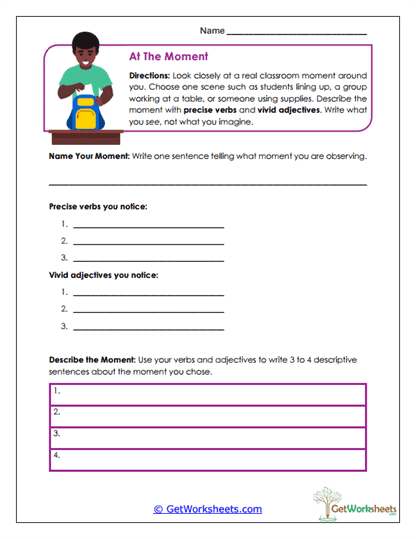
At the Moment
Students observe a real moment in the classroom, record strong verbs and adjectives, and write several descriptive sentences. This supports real-time awareness and improves precision in descriptive writing. Learners practice selecting vivid language that reflects what they truly see or hear. It strengthens concrete detail use and overall clarity.
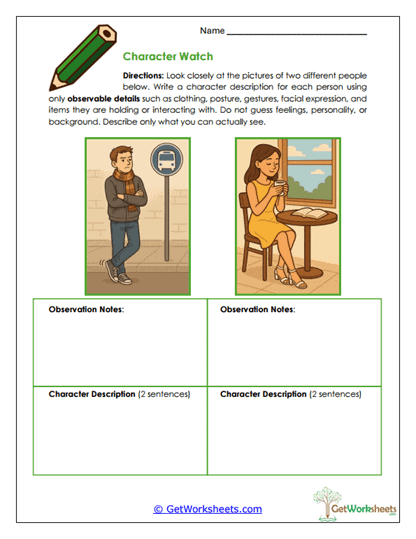
Character Watch
Students study two character illustrations and write descriptions based solely on observable traits such as posture, clothing, or expression. This trains them to avoid unsupported inferences. They develop sharper visual literacy and descriptive accuracy. The task supports clearer, evidence-based character writing.
A Kitchen Scene
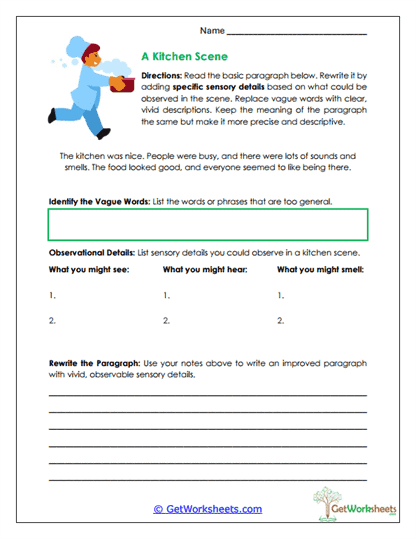
Students analyze a vague paragraph, list specific sensory details they might observe in a kitchen, and rewrite the paragraph with clearer imagery. They learn how strong observation improves descriptive quality. The activity builds skills in revision, sensory detail integration, and precise word choice. It reinforces the power of concrete detail.
Double View
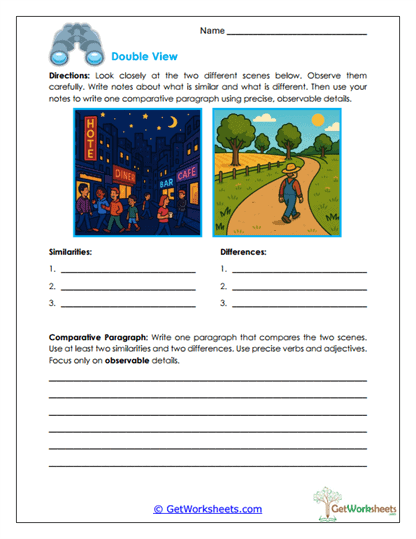
Learners compare two illustrated scenes-one busy city, one quiet countryside-and write a comparison paragraph using precise descriptive language. They practice gathering observable details before contrasting the settings. This sharpens comparative writing skills and descriptive precision. Students gain stronger attention to how environment shapes description.
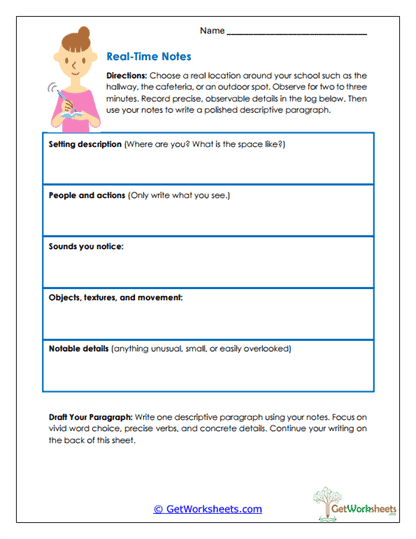
Real-Time Notes
Students observe a real location around the school and take detailed notes before writing a descriptive paragraph. This encourages focus on sensory cues and realistic detail gathering. Learners develop the habit of grounding writing in what they can directly observe. It supports accuracy and vivid paragraph construction.
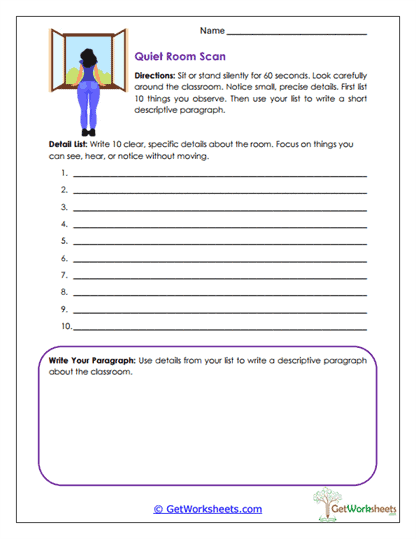
Quiet Room Scan
Students silently observe their classroom for one minute and record ten specific details before writing a descriptive paragraph. This builds close attention skills and reinforces precision in descriptive writing. Learners practice capturing subtle observations and using them effectively in their writing. The activity strengthens focus, sensory awareness, and clarity.
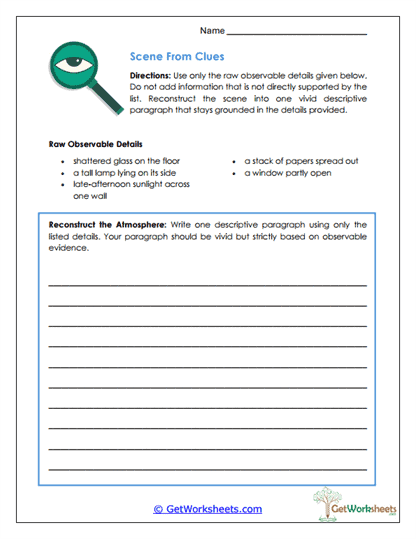
Scene From Clues
Students reconstruct a scene using only a provided list of observable details-no assumptions or invented information allowed. This teaches discipline in descriptive writing and reinforces the separation between observation and inference. They practice crafting vivid paragraphs based strictly on evidence. The activity builds accuracy, precision, and analytical thinking in descriptive work.
Bookmark Us Now!
New, high-quality worksheets are added every week! Do not miss out!