Writing By Point of View Worksheets
About This Worksheet Collection
The Writing By Point of View Worksheets collection gives students a comprehensive, hands-on understanding of how narration shapes a story. Through classification tasks, perspective rewrites, character-based writing, and analytical reading, learners engage with point of view from multiple angles. Teachers will appreciate how the collection gradually builds from simple identification to more complex tasks involving narrator reliability, omniscience, and strategic POV choice.
Across these worksheets, students learn to recognize pronouns, analyze narrative voice, interpret hidden perspectives, and craft their own writing in first, second, and third person. They also explore how viewpoint influences tone, information, and emotional distance. By practicing these essential skills, learners develop stronger narrative awareness, critical reading abilities, and more intentional writing craft.
Detailed Descriptions Of These Worksheets
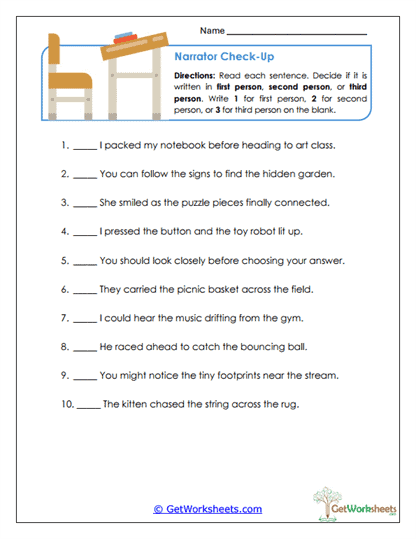
Narrator Check-Up
Students review ten sentences and label each one as first-, second-, or third-person based on pronouns and narration clues. This activity strengthens their ability to recognize narrative voice quickly and accurately. It reinforces understanding of how pronoun choice shapes perspective. Learners build foundational skills for analyzing and writing from different points of view.
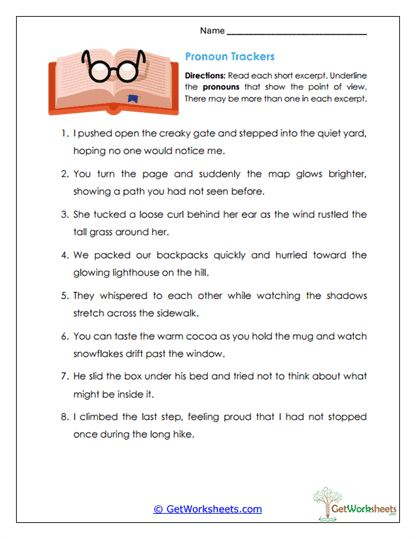
Pronoun Trackers
Students underline pronouns in short excerpts to determine the passage's point of view. This helps them see how specific words reveal who is telling the story. They practice close reading and attention to grammatical detail. The worksheet prepares students for writing with consistent narrative viewpoints.
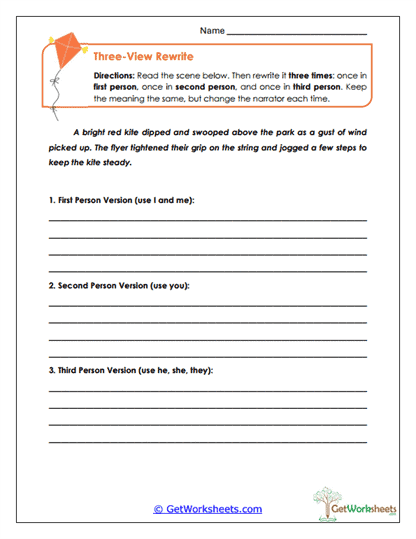
Three-View Rewrite
Learners rewrite the same kite-flying scene in first, second, and third person. By keeping the meaning the same while changing pronouns and voice, students explore how perspective affects tone and reader experience. This activity deepens understanding of narrative flexibility. It also reinforces clear, correct pronoun use.
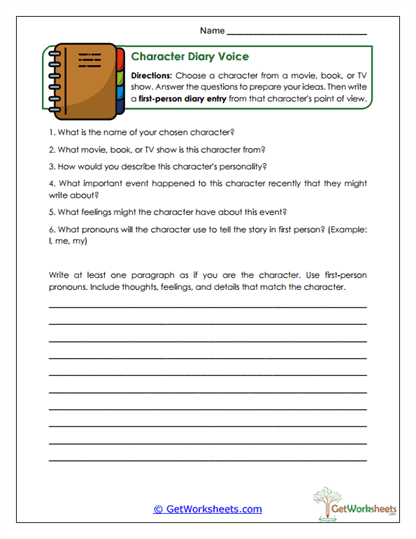
Character Diary Voice
Students select a character from media and write a diary entry from that character's first-person point of view. They consider personality, recent events, and emotions to craft an authentic voice. This exercise strengthens empathy and creative thinking. It builds deeper understanding of character perspective and tone.
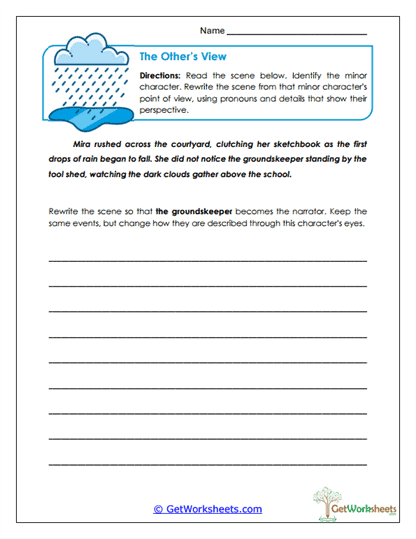
The Other's View
Learners read a scene told from Mira's viewpoint and rewrite it from the perspective of a minor character. This teaches how different characters interpret the same moment in unique ways. Students shift pronouns and add details that reflect the new narrator's experiences. The task supports viewpoint flexibility and imaginative revision.
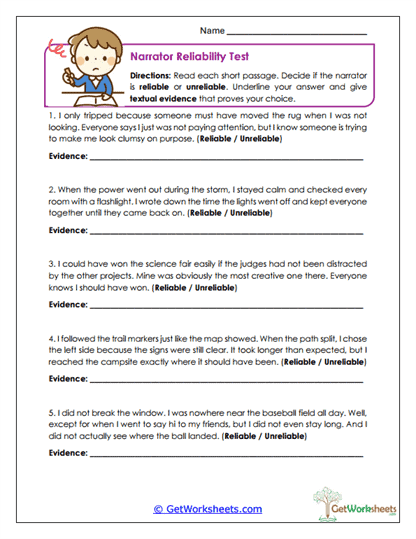
Narrator Reliability Test
Students decide whether each narrator is reliable or unreliable and support their answer with evidence. This activity introduces bias, exaggeration, and trustworthiness in storytelling. It strengthens close-reading and analytical reasoning. Learners practice justifying their interpretations with textual clues.
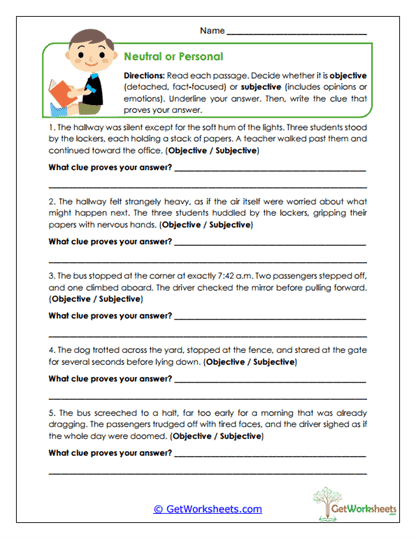
Neutral or Personal
Students determine whether short passages are objective or subjective and identify the clues that reveal the difference. This helps them recognize tone and interpret perspective-driven language. The activity builds critical reading and evidence-based thinking. It deepens understanding of how viewpoint influences meaning.
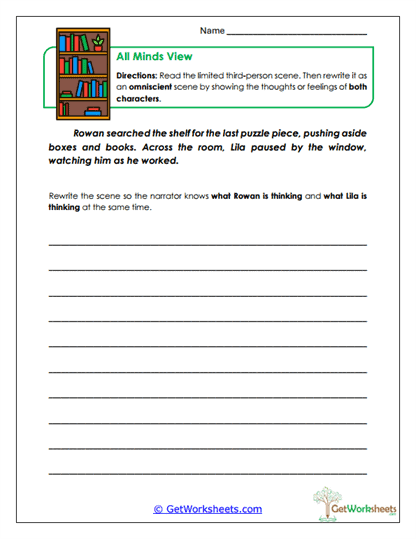
All Minds View
Learners rewrite a limited third-person scene as an omniscient narrator. They explore how adding characters' thoughts expands the narrative and shifts reader understanding. This strengthens knowledge of third-person variations. Students develop more advanced control of narrative voice.
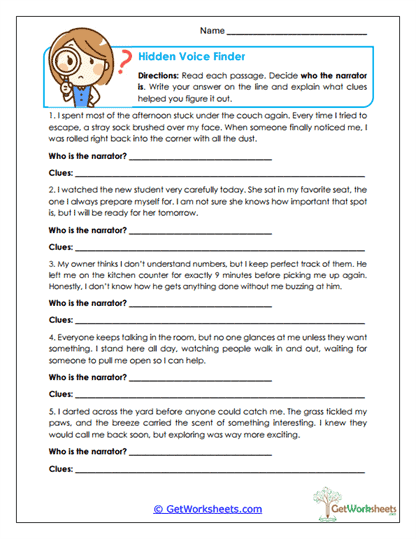
Hidden Voice Finder
Students infer the narrator's identity from textual clues in passages where the speaker is not named. They explain which details led them to their conclusion. This task strengthens inference, perspective awareness, and close reading. Learners gain insight into how narration shapes information.
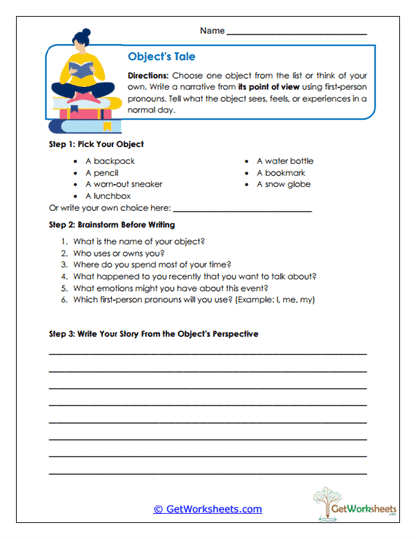
Object's Tale
Students choose an everyday object and write a first-person narrative from its perspective. They imagine what the object experiences, sees, or feels during a day. This encourages creative thinking and consistent pronoun use. The activity supports descriptive writing and unusual point-of-view exploration.
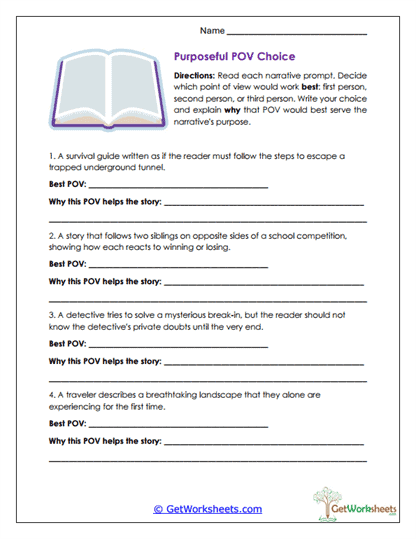
Purposeful POV Choice
Learners examine four narrative prompts and choose the most effective point of view for each. They justify why their selected perspective best serves the story. This helps students think strategically about how POV impacts emotion, tone, and access to information. It strengthens analytical reasoning and narrative awareness.
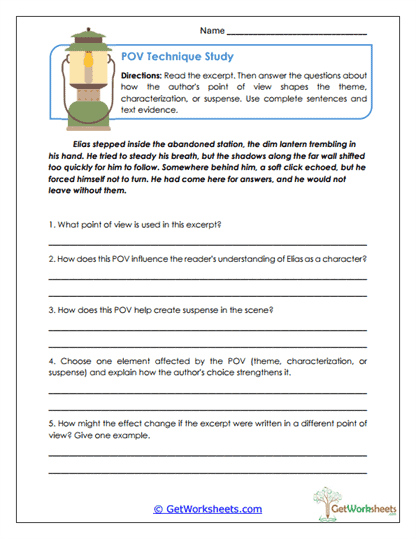
POV Technique Study
Students read a suspenseful passage and analyze how the author's point of view influences suspense, characterization, and theme. They cite evidence and consider how the scene would change under a different POV. This worksheet develops high-level literary analysis. It strengthens understanding of how perspective shapes the entire reading experience.
Bookmark Us Now!
New, high-quality worksheets are added every week! Do not miss out!