Writing Worksheets
-
Character Development
-
Classifying and Categorizing Information
-
Compare and Contrast Essays
-
-
Describing Characters
-
Describing Emotions
-
Describing Objects and Artifacts
-
Describing Places
-
Describing Settings
-
Descriptive Paragraph Structure
-
Descriptive Writing Prompts
-
Dialogue Writing
-
Editing and Revising Descriptive Passages
-
How To Process Writing
-
Narrative Voice and Tone
-
Narrative Writing Prompts
-
Organizing Ideas Logically
-
Personal Narratives
-
Plot Development
-
Sensory Details
-
Show, Don't Tell Techniques
-
Story Structure
-
Writing By Point of View
-
Writing from Observation
Writing Composition Worksheets Collection
Strong writing skills allow learners to express ideas clearly, creatively, and confidently. This Writing Worksheets collection provides structured activities that support the development of descriptive, narrative, and analytical writing. Each worksheet offers step-by-step guidance, models, and engaging prompts that make writing more approachable for learners at many levels.
These worksheets help students practice essential skills such as organizing ideas, describing with detail, developing characters, structuring stories, choosing strong vocabulary, and revising their work thoughtfully. Activities include scaffolded passages, guided exercises, targeted practice tasks, and creative prompts that encourage both imagination and clarity. Students grow as writers by learning to observe closely, think critically, and communicate effectively.
The subtopic collections below allow educators and families to focus on specific writing skills. Each one offers support for a different part of the writing process, helping learners build a strong foundation across multiple genres and styles.
Subtopic Worksheet Collection Descriptions
Character Development
These worksheets help learners create characters with clear traits, motivations, and growth. This builds deeper storytelling and richer narrative writing. It encourages students to think about how people change over time.
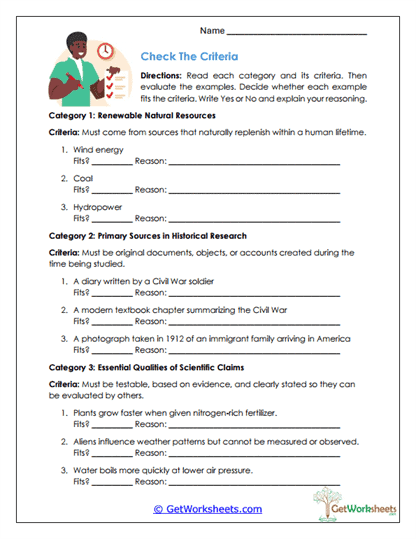
Classifying and Categorizing Information
Students organize ideas into groups or categories to strengthen clarity. This supports logical thinking and structured writing. It helps learners communicate information in a clear, organized way.
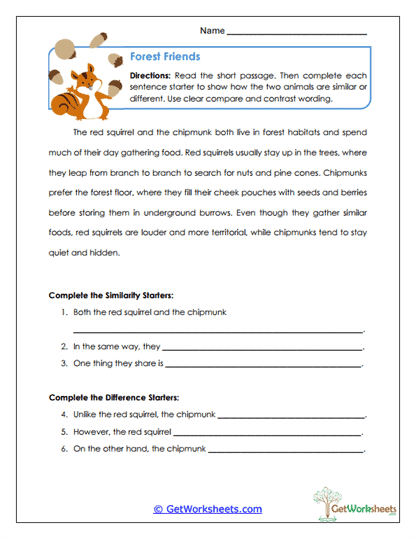
Compare and Contrast Essays
These worksheets guide students in identifying similarities and differences between two topics. This builds analytical thinking and structured essay writing. It helps learners develop balanced, clear arguments.
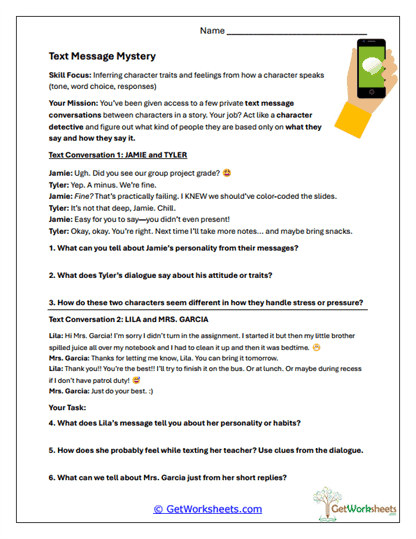
Describing Characters
Learners practice using traits, actions, and dialogue to describe characters. This improves detail-oriented writing and reader engagement. It helps students bring people in their stories to life.
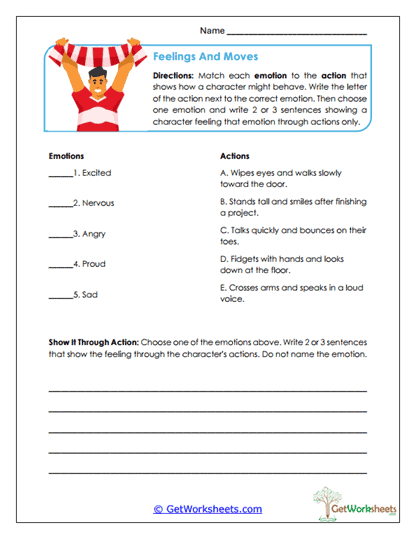
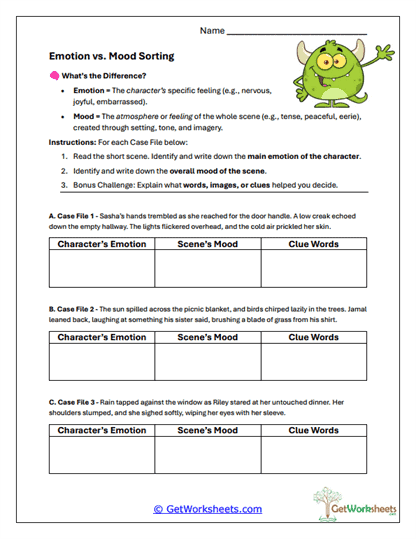
Describing Emotions
These worksheets teach students how to express feelings through actions, expressions, and sensory cues. This strengthens emotional clarity in writing. It helps learners create relatable and realistic moments.
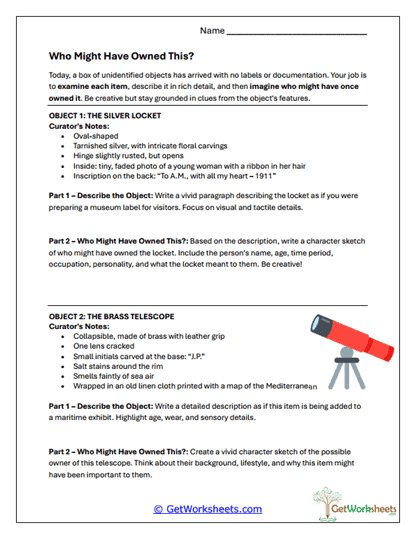
Describing Objects and Artifacts
Students learn how to observe and describe specific details about items. This builds precision and vocabulary. It helps learners write with clarity and vividness.
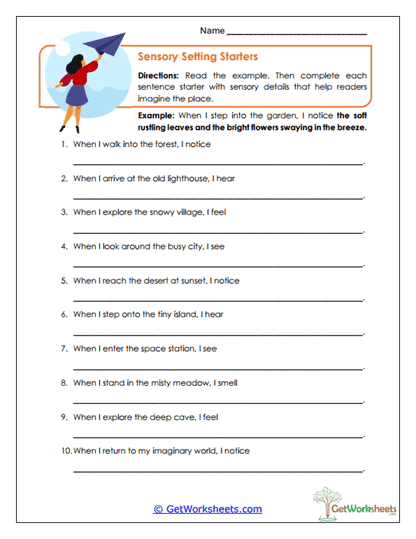
Describing Places
Learners practice painting a clear picture of locations using sensory details. This strengthens descriptive writing and setting development. It helps students create immersive environments in their stories.
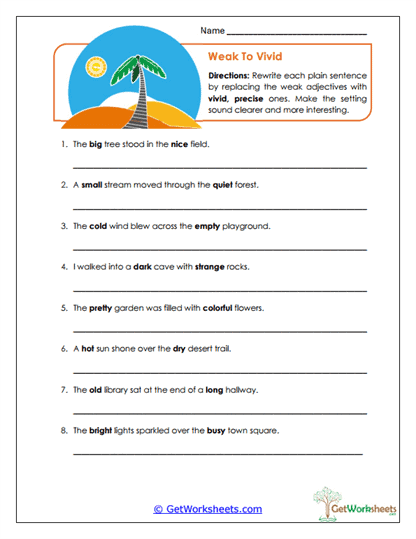
Describing Settings
These worksheets help students build settings that influence mood and story events. This deepens narrative structure and atmosphere. It helps writers understand how place shapes plot.
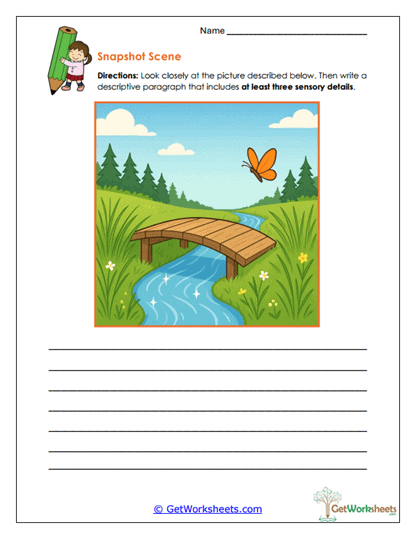
Descriptive Paragraph Structure
Students learn how to structure strong descriptive paragraphs with clear focus and detail. This supports writing fluency and organization. It helps learners communicate scenes effectively.
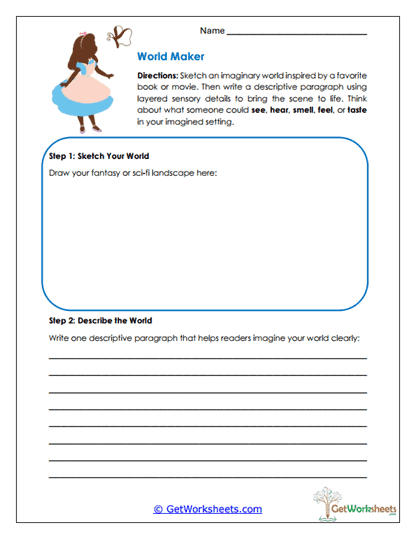
Descriptive Writing Prompts
Learners respond to prompts that encourage vivid, expressive writing. This builds creativity and observation skills. It helps students practice using descriptive language in flexible ways.
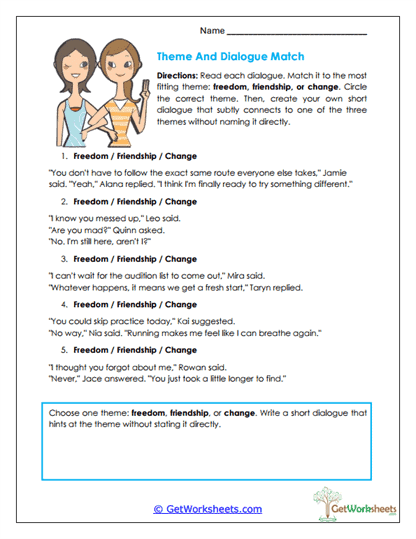
Dialogue Writing
These worksheets teach learners how to write believable conversations using proper punctuation. This strengthens character voice and pacing. It helps students make stories feel natural and engaging.
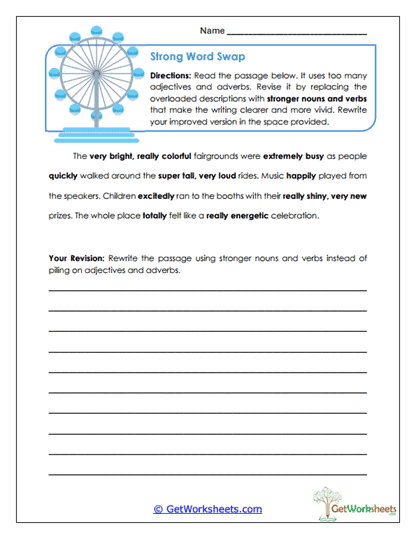
Editing and Revising Descriptive Passages
Students practice improving clarity, detail, and flow in existing paragraphs. This supports critical reading and thoughtful revision. It helps learners recognize how polishing writing enhances meaning.
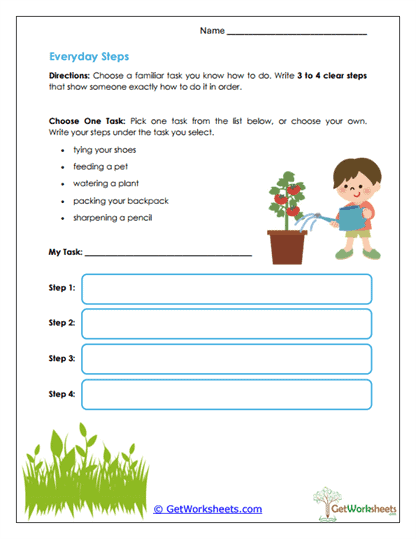
How To Process Writing
Learners follow steps such as brainstorming, drafting, revising, and editing. This builds strong writing habits and confidence. It helps students understand that good writing develops over time.
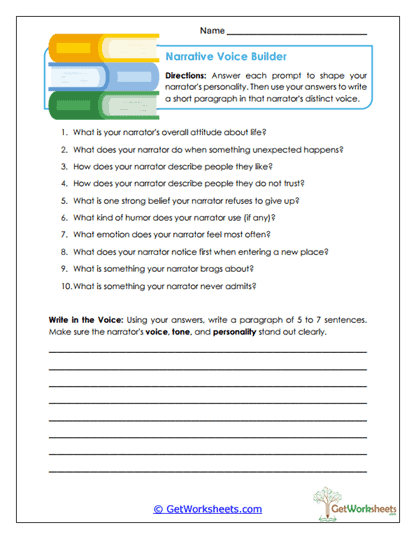
Narrative Voice and Tone
These worksheets introduce how voice and tone shape a story's personality. This develops stylistic awareness and expressive skill. It helps learners make intentional choices in storytelling.
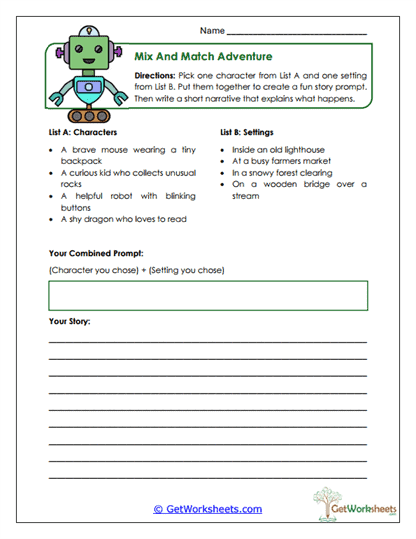
Narrative Writing Prompts
Students respond to prompts that spark imagination and plot creation. This develops creativity and narrative structure. It helps learners practice storytelling with direction and purpose.
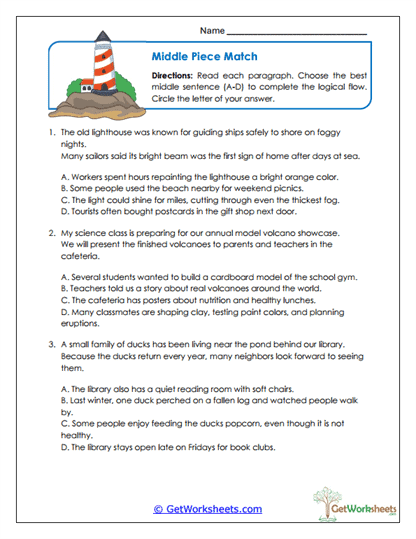
Organizing Ideas Logically
Learners practice grouping and sequencing ideas in clear ways. This supports strong paragraph and essay structure. It helps students communicate thoughts with coherence.
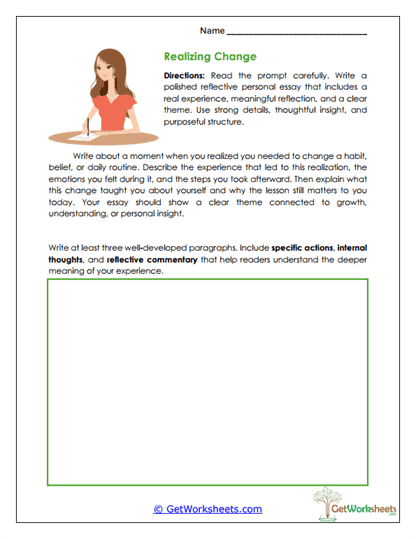
Personal Narratives
These worksheets focus on telling real-life stories with detail and reflection. This encourages thoughtful self-expression. It helps learners connect personal experiences to strong writing craft.
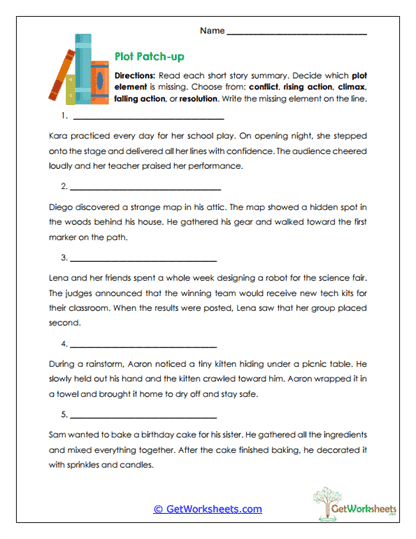
Plot Development
Students explore how stories move from beginning to middle to end. This builds understanding of conflict, rising action, and resolution. It helps learners create well-structured stories.
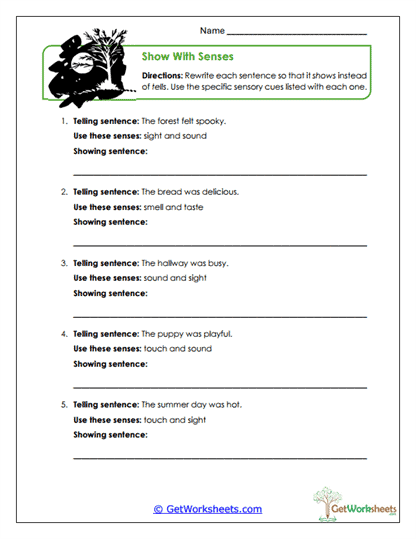
Sensory Details
These worksheets teach students to use sight, sound, smell, taste, and touch to enhance writing. This strengthens descriptive richness. It helps learners create vivid and memorable scenes.
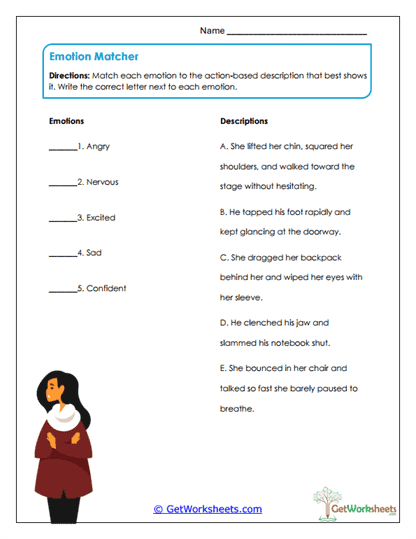
Show, Don't Tell Techniques
Learners practice expressing ideas through actions and details rather than explanation. This builds more engaging, dynamic writing. It helps students develop subtlety and depth in their narratives.
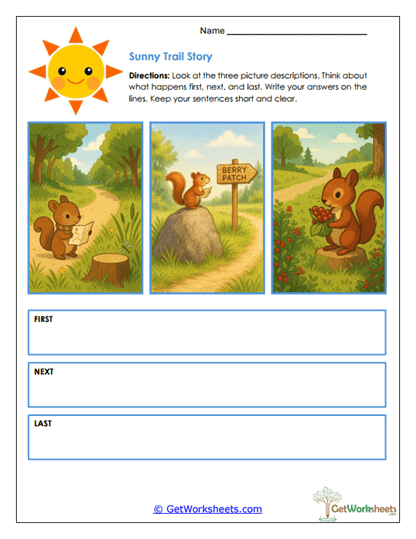
Story Structure
Students learn about elements like setting, characters, conflict, and resolution. This supports understanding of how stories are built. It helps learners write cohesive, complete narratives.
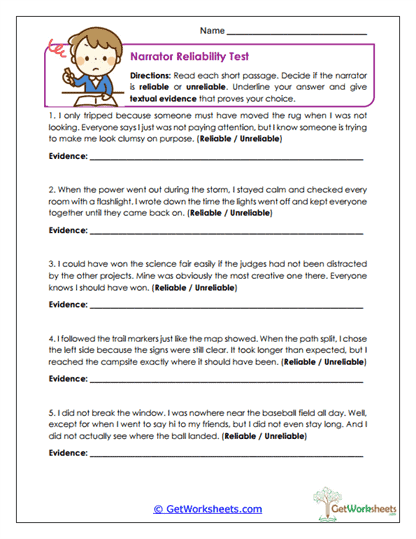
Writing By Point of View
These worksheets help students explore first-, second-, and third-person perspectives. This builds awareness of narrative angle and voice. It helps learners choose the best viewpoint for their story.
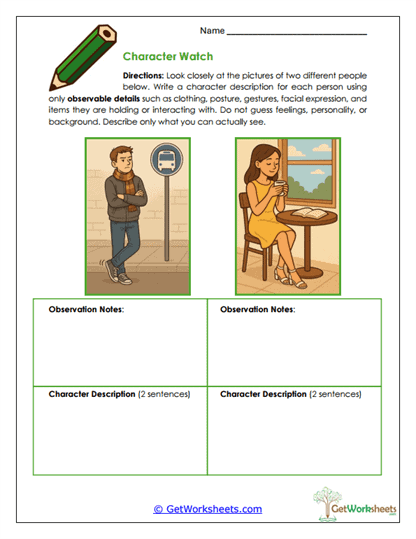
Writing from Observation
Students practice describing what they see through careful observation. This strengthens attention to detail and accuracy. It helps learners turn real-world moments into strong descriptive writing.
Bookmark Us Now!
New, high-quality worksheets are added every week! Do not miss out!