Weight & Mass Worksheets
About This Worksheet Collection
The Weight & Mass worksheet collection helps students build a clear understanding of how objects are measured, compared, and analyzed using metric units. Each worksheet introduces practical scenarios that connect math and science, guiding learners to estimate, convert, and calculate mass in meaningful ways. From everyday comparisons of groceries and luggage to exploring scientific principles like the conservation of mass, these activities promote accuracy, reasoning, and unit awareness.
Students develop fluency with metric relationships-milligrams, grams, and kilograms-while learning when and why to use each unit. The collection strengthens number sense, critical thinking, and real-world problem-solving skills, preparing learners to measure and interpret physical quantities with precision. It's ideal for linking classroom learning to real-life contexts such as cooking, science labs, and data collection.
Detailed Descriptions Of These Worksheets
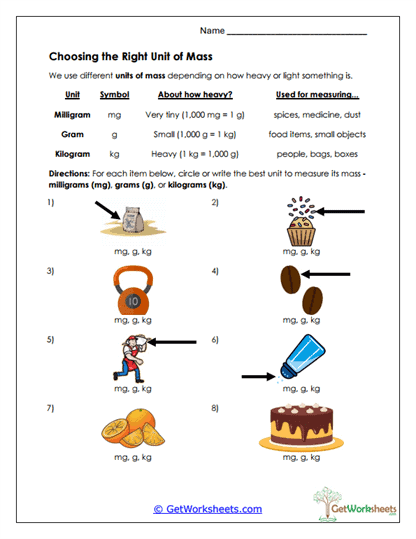
Choosing Units of Mass
Students decide whether milligrams, grams, or kilograms are the most appropriate units for measuring various everyday objects. The task builds reasoning about scale, magnitude, and precision. Learners strengthen logical thinking as they connect real-world examples to the metric system.
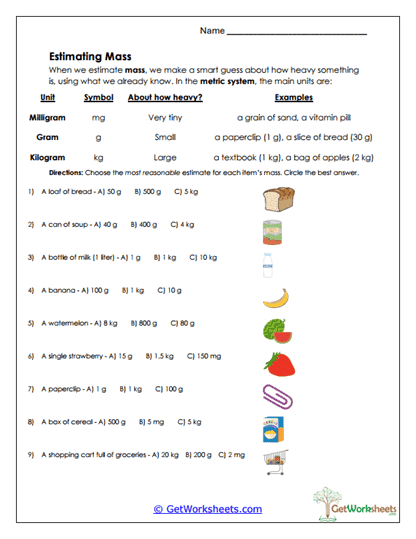
Estimating Mass
Learners estimate the mass of common items using metric units and choose the most reasonable measurement for each case. This activity encourages visual reasoning and comparison skills while helping students develop intuition for weight and size relationships in the real world.
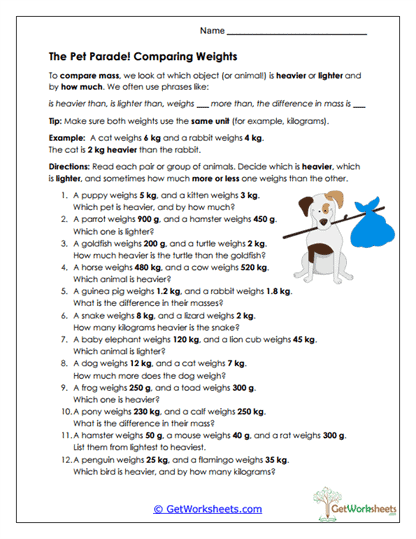
Comparing Weights
Students compare the masses of animals and objects, deciding which is heavier or lighter and by how much. They apply subtraction and logical reasoning to interpret data. The worksheet builds skills in comparative thinking and quantitative analysis.
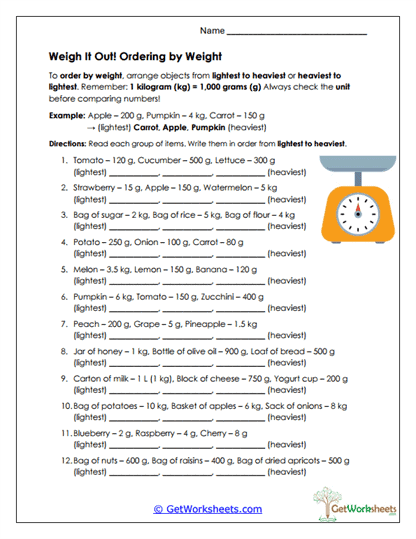
Ordering by Weight
Students arrange objects in order from lightest to heaviest using mass values given in grams and kilograms. The activity reinforces metric conversions, data organization, and logical sequencing. It helps learners connect numbers to physical quantities in practical ways.
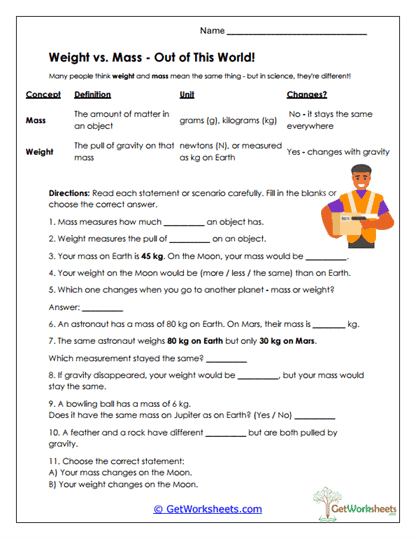
Weight vs. Mass
This worksheet explains the scientific difference between weight and mass, emphasizing that weight changes with gravity while mass remains constant. Students apply reasoning through short responses and real-world comparisons, strengthening conceptual understanding of physical properties.
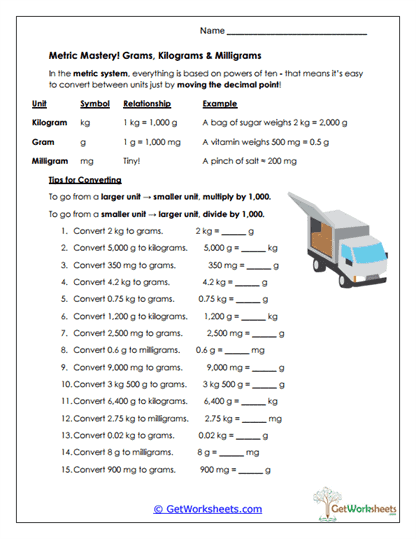
Metric Mastery
Students practice converting between kilograms, grams, and milligrams by multiplying or dividing by powers of ten. The worksheet develops procedural fluency and conceptual understanding of base-ten relationships in the metric system. Learners gain confidence in applying conversions consistently.
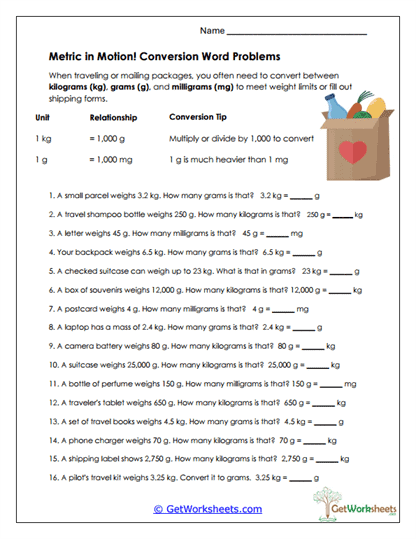
Conversion Word Problems
Learners apply metric conversions in real-world situations such as travel, packaging, and shipping. Each scenario requires reasoning about proportional relationships and accurate use of units. The worksheet reinforces critical thinking and connects math to practical contexts.
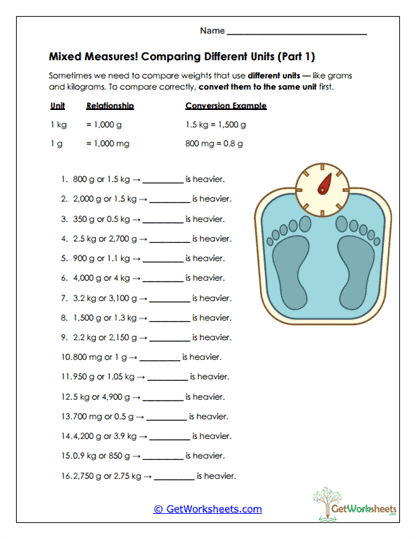
Comparing Different Units
Students compare masses written in different metric units by converting them to a common base. This activity highlights the importance of consistency in measurement and promotes numerical precision. Learners build fluency with metric equivalencies and data comparison.
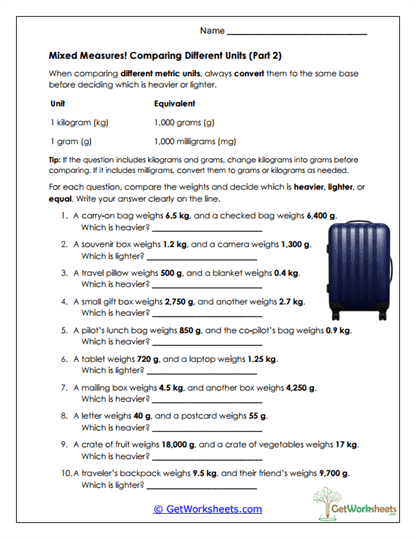
Comparing Mixed Units
Learners extend their understanding of conversions through real-world examples involving mixed units, such as boxes and luggage. They justify answers with reasoning and computation, improving both accuracy and interpretation of metric data.
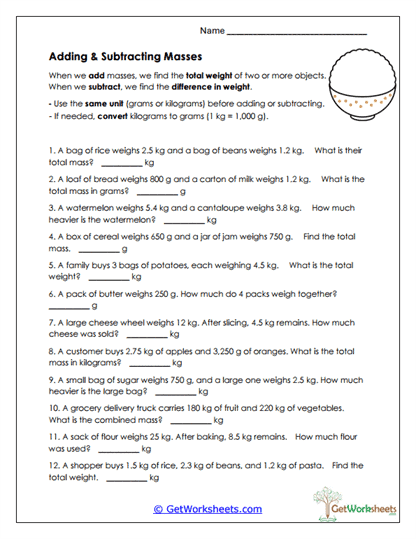
Adding and Subtracting Masses
Students calculate total and remaining mass by combining or comparing quantities expressed in metric units. They work through realistic examples involving food and packages, developing arithmetic fluency and awareness of how units relate to real-world quantities.
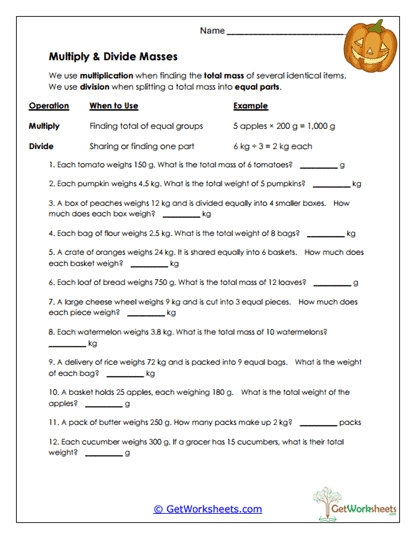
Multiply and Divide Masses
Learners use multiplication and division to find total or shared mass in everyday examples. The worksheet connects proportional reasoning to realistic contexts like groceries or baking. It reinforces computation skills and an understanding of parts and wholes in measurement.
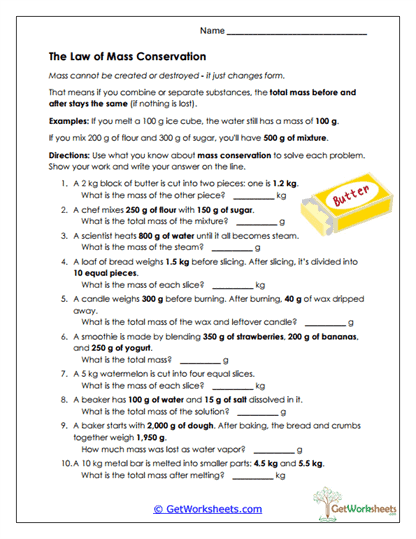
Law of Mass Conservation
Students explore the scientific principle that total mass stays the same when materials change form. Through problem-based scenarios, they demonstrate understanding of conservation and apply arithmetic reasoning. The activity blends science and math, promoting analytical thinking and precision.
Bookmark Us Now!
New, high-quality worksheets are added every week! Do not miss out!