Weathering and Erosion Worksheets
About This Worksheet Collection
This weathering-and-erosion worksheet collection helps students explore how Earth's surface is continually reshaped through natural forces and human influence. Through classification tasks, sequencing activities, vocabulary practice, matching exercises, scenario analysis, and short-answer writing, the collection offers a clear and engaging look at how rocks break down, how sediment moves, and how new landforms develop over time. Teachers can use these materials for introductory lessons, deeper Earth science study, or practical environmental discussions.
As students work through the worksheets, they strengthen essential skills such as distinguishing between weathering and erosion, analyzing real-world examples, interpreting geological change, and explaining Earth processes in their own words. They build vocabulary accuracy, develop cause-and-effect reasoning, and connect scientific concepts to practical issues like land-use decisions and erosion control. The variety of formats supports visual learning, scientific reading, explanatory writing, and systems thinking about Earth's changing surface.
Detailed Descriptions Of These Worksheets
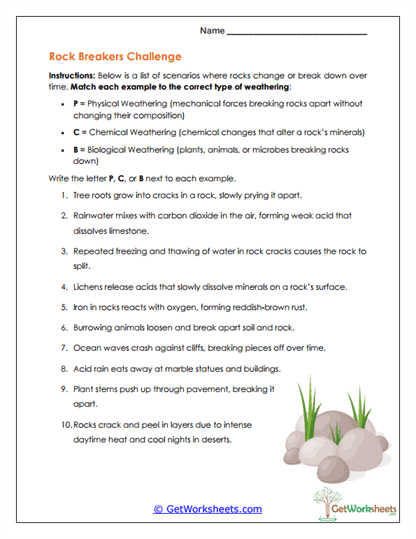
Weathering Types
Students read ten scenarios and identify each as physical, chemical, or biological weathering using a P, C, or B key. They analyze how rocks break down through processes such as freezing water, acid rain, rusting, and plant or animal interactions. The activity reinforces vocabulary and builds skill in interpreting evidence from real-world examples. Learners gain a clearer understanding of how weathering operates in multiple ways.
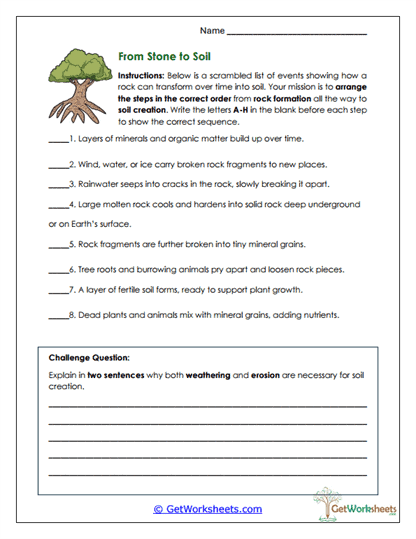
Soil Formation Sequence
Learners arrange eight scrambled soil-formation steps into the correct order, showing how rocks gradually transform into soil. They examine processes such as cracking, erosion, grain breakdown, and organic mixing. This strengthens cause-and-effect reasoning and helps students visualize soil development over long periods of time. A challenge question reinforces why both weathering and erosion must occur.
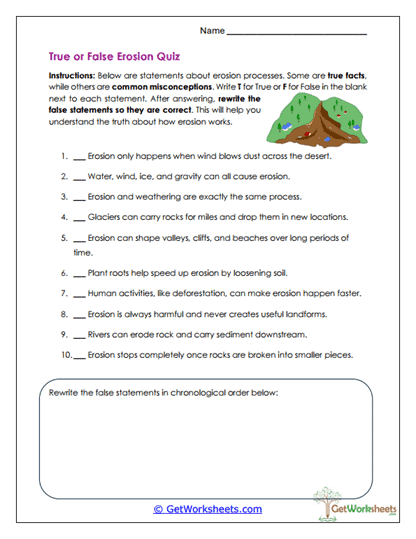
Erosion Truth Check
Students evaluate ten statements about erosion, marking them as True or False and rewriting any incorrect ones accurately. The activity deepens understanding of how glaciers, rivers, wind, gravity, and humans shape the landscape. Rewriting false statements in chronological order reinforces sequencing skills. This worksheet builds scientific accuracy and sharpens critical reading.
Landform Match
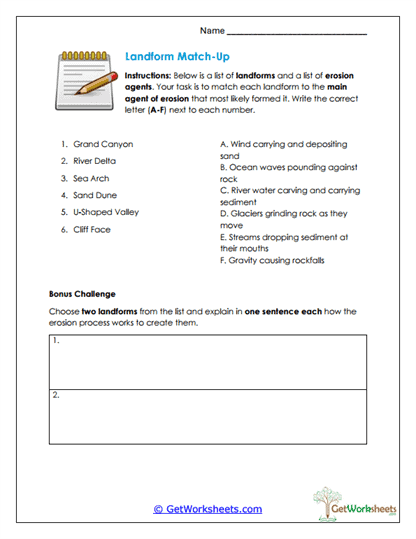
Learners match well-known landforms to the erosion agents responsible for shaping them. They compare features such as deltas, canyons, arches, dunes, valleys, and cliffs with forces like rivers, waves, glaciers, and wind. The task strengthens classification and helps students connect landforms to the processes that created them. A short written challenge builds explanatory skills.
Natural vs Human Erosion
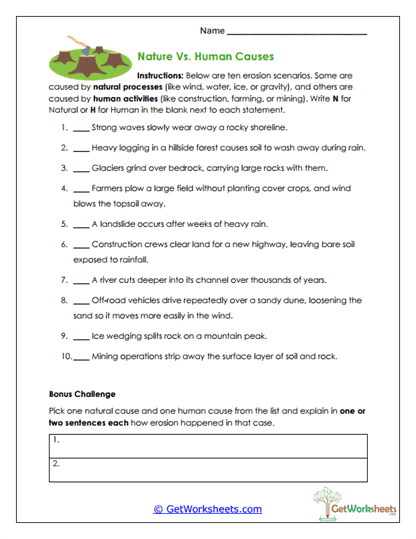
Students decide whether ten erosion events are caused by natural processes or by human actions. They analyze clues such as storms, mining, rivers, off-road vehicles, and landslides. The activity reinforces environmental reasoning and helps students identify human contributions to landscape change. A bonus writing task builds scientific explanation skills.
Process Vocabulary Builder
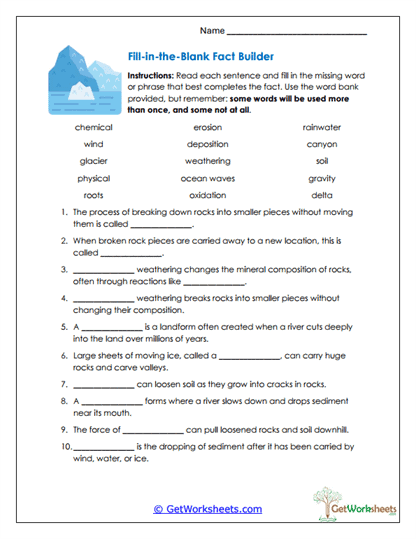
Learners use a word bank to complete ten sentences describing weathering, erosion, and deposition concepts. They distinguish among closely related terms and apply vocabulary accurately in context. Some items link processes to landform creation, reinforcing cause-and-effect relationships. This worksheet supports both conceptual clarity and reading comprehension.
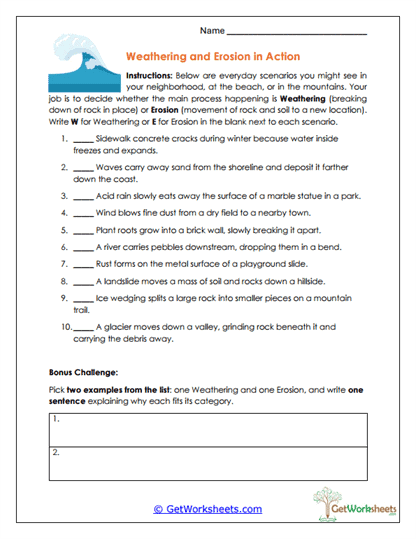
Which One?
Students label ten everyday scenarios as Weathering (W) or Erosion (E), examining whether rock is breaking down or being moved. Examples include waves, glaciers, rusting, acid rain, and wind transport. The task builds students' ability to differentiate Earth processes and strengthens vocabulary understanding. A bonus challenge requires students to justify one example of each.
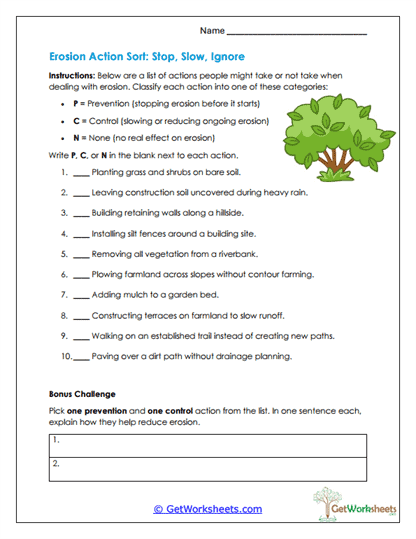
Erosion Action Sort
Learners classify ten human actions as Prevention (P), Control (C), or None (N) to determine how each affects erosion. They consider practices like planting vegetation, paving paths, and contour farming. The activity strengthens environmental problem-solving and applied science reasoning. A short writing task reinforces understanding of effective erosion management.
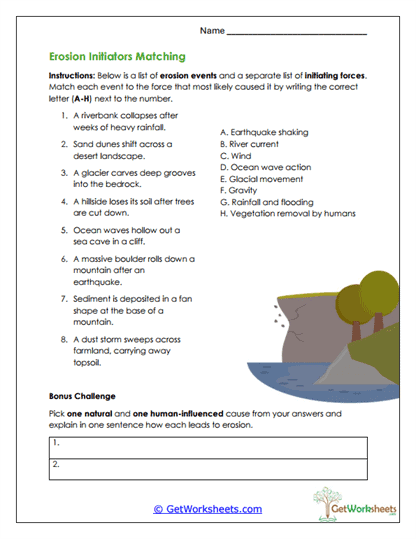
Forces Matching
Students match eight erosion events to the forces most likely responsible, such as wind, water, glaciers, gravity, or waves. This helps learners identify the drivers behind specific landform changes. The activity supports cause-and-effect understanding and builds skill in interpreting geological scenarios. A bonus explanation task reinforces written reasoning.
Process Flowchart Order
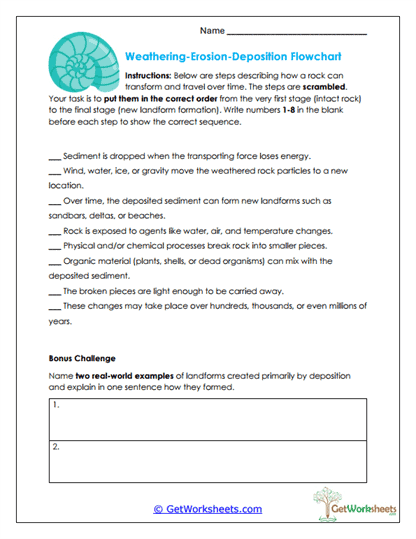
Learners sequence eight steps showing how rock becomes sediment and eventually contributes to new landforms through deposition. The activity highlights the relationship among weathering, erosion, transport, and deposition. A bonus question asks students to name two deposition-based landforms and explain their formation. This strengthens systems thinking about Earth's surface.
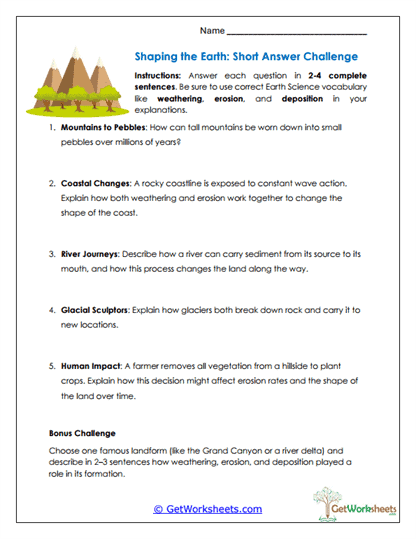
Earth Shaping Short Answers
Students write detailed explanations for five real-world scenarios involving weathering, erosion, and deposition. They describe how these processes interact to shape landscapes over time. The worksheet builds scientific writing fluency, reasoning, and vocabulary accuracy. A reflection prompt connects geological processes to a well-known landform.
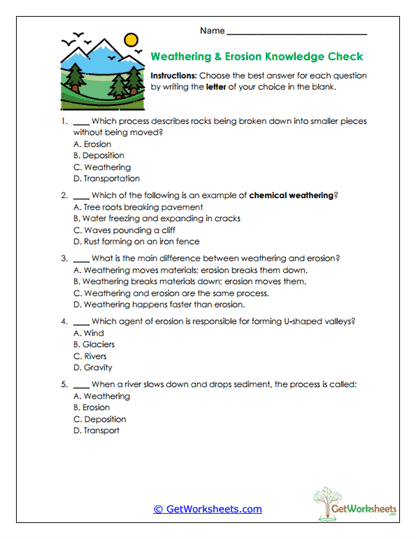
Weathering & Erosion Quiz
This multiple-choice quiz assesses understanding of weathering, erosion, deposition, and landform formation. Students evaluate examples and select scientifically accurate answers. The activity reinforces key vocabulary, conceptual clarity, and test-taking skills. It works well for review, checkpoints, or end-of-unit assessment.
Bookmark Us Now!
New, high-quality worksheets are added every week! Do not miss out!