Weather and Climate Worksheets
-
Climate Cause-and-Effect
-
Climate Zone Classifier
-
Cloud Identification Activity
-
-
El Niño vs. La Niña Comparison
-
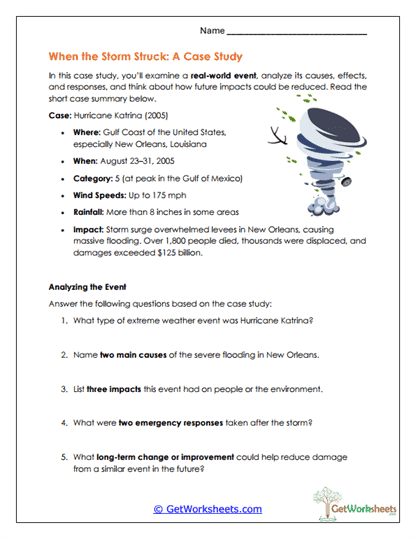
Extreme Weather Case Study
-
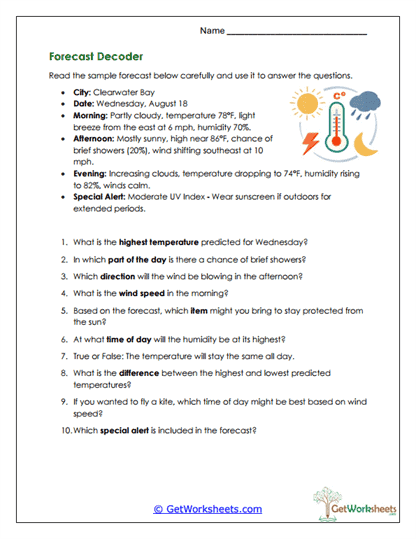
Forecast Decoder
-
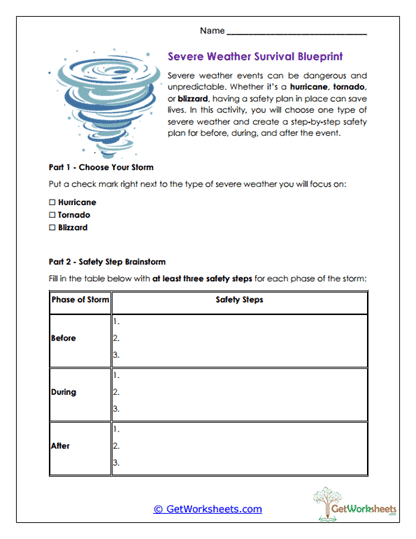
Severe Weather Safety Plan
-
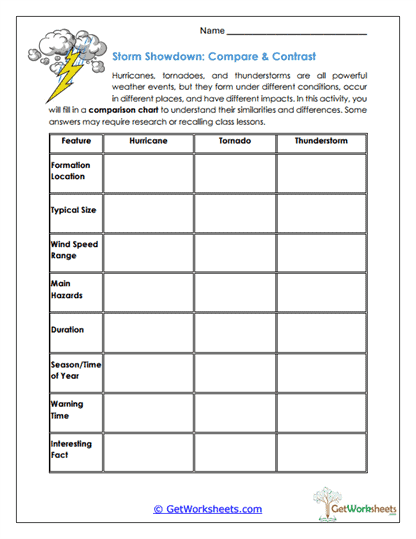
Storm Comparison Chart
-
Temperature Conversion Practice
-
Weather Clothing Selection
-
Weather Type Identification
-
Weather vs. Climate Analysis
About This Worksheet Collection
This weather-and-climate worksheet collection gives students a comprehensive look at atmospheric conditions, global climate systems, and the ways humans interact with weather on a daily and long-term scale. By blending classification tasks, forecast interpretation, cloud identification, temperature conversion, safety planning, comparative charts, and real-world case studies, the collection supports a well-rounded understanding of how weather works and how climate shapes environments around the world. These resources offer teachers flexible tools that can be used in foundational science lessons or expanded into deeper inquiry projects.
Students strengthen a variety of skills as they move through the collection, including reading informational text, interpreting meteorological data, using vocabulary in context, comparing large-scale climate patterns, and evaluating human impacts on global systems. Whether identifying cloud types, organizing storm information, distinguishing between weather and climate, or analyzing environmental case studies, learners apply critical thinking to real-world scenarios. The wide range of worksheet formats provides opportunities for visual learning, conceptual reasoning, practical safety preparedness, and scientific analysis.
Detailed Descriptions Of These Worksheets
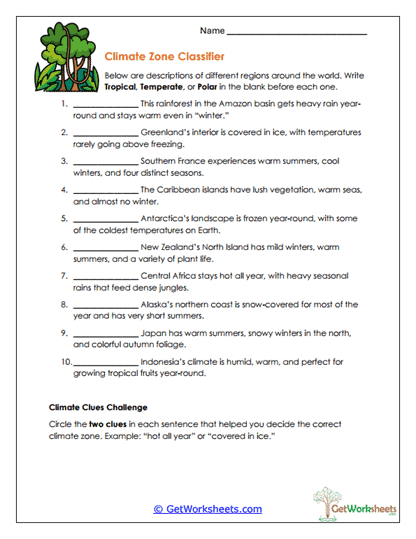
Climate Zone Classifier
Students classify ten regional descriptions as Tropical, Temperate, or Polar by analyzing clues about temperature, rainfall, and vegetation. The activity encourages thoughtful interpretation of environmental details and strengthens understanding of global climate patterns. Learners also identify which specific clues guided their decisions, reinforcing critical thinking. This worksheet supports geography skills and builds conceptual clarity in climate science.
Forecast Decoder
Learners examine a realistic weather forecast and answer questions about temperature changes, humidity levels, wind conditions, and alerts. The task builds meteorological literacy by helping students understand how forecasts communicate atmospheric information throughout the day. Students apply their knowledge to everyday decisions such as clothing choices or outdoor activities. This activity reinforces careful reading and applied reasoning.
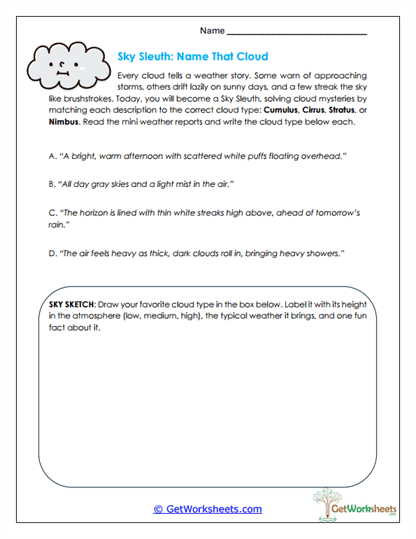
Cloud Identification Activity
Students read short descriptions and decide whether each example represents Cumulus, Cirrus, Stratus, or Nimbus clouds. The exercise strengthens observational reasoning and reinforces cloud-weather relationships. A drawing extension allows learners to sketch and label their favorite cloud type, supporting visual understanding. This activity builds confidence in identifying cloud characteristics.
Temperature Conversion Practice
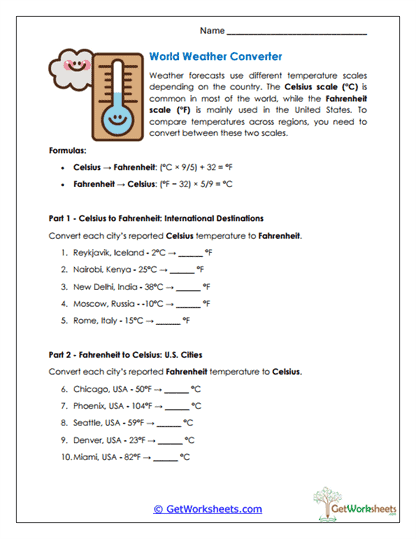
Students practice converting temperatures between Celsius and Fahrenheit using provided formulas. By working through both directions of conversion, learners build fluency with global temperature scales. The activity supports mathematical reasoning and scientific measurement skills. It also reinforces understanding of temperature's role in weather analysis.
Severe Weather Safety Plan
Learners choose a severe weather event-hurricane, tornado, or blizzard-and create a three-phase safety plan. They think through steps to take before, during, and after the event, strengthening decision-making and preparedness skills. This activity encourages students to consider both immediate safety measures and long-term recovery actions. It promotes responsibility and real-world awareness.
Storm Comparison Chart
Students compare hurricanes, tornadoes, and thunderstorms using a structured chart. They analyze factors such as formation, size, hazards, and duration, improving organizational and comparative reasoning skills. The activity helps learners synthesize information from class discussions or research. It supports deeper understanding of severe weather systems.
Weather vs. Climate Analysis
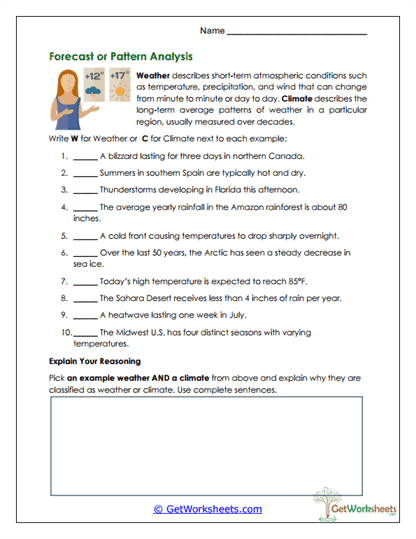
Learners classify examples as Weather (W) or Climate (C), distinguishing between short-term conditions and long-term patterns. After sorting the statements, they write short explanations for selected examples. This reinforces scientific reasoning and helps clarify a foundational concept in Earth science. It also builds students' ability to justify scientific decisions in writing.
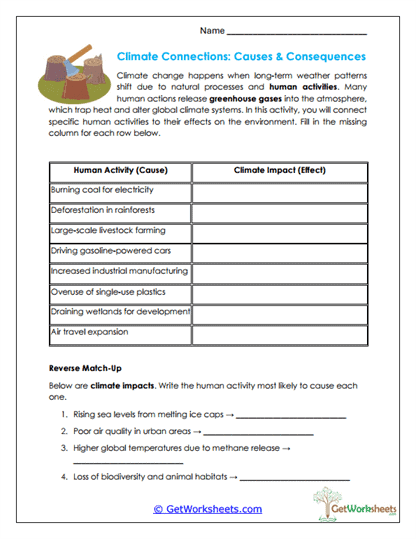
Climate Cause-and-Effect
Students examine human activities like deforestation and burning fossil fuels, and determine their related climate impacts. They complete a cause-and-effect chart and then reverse-match effects to their causes. This strengthens understanding of climate change processes and human influence on global systems. The task reinforces scientific literacy and environmental reasoning.
Weather Type Identification
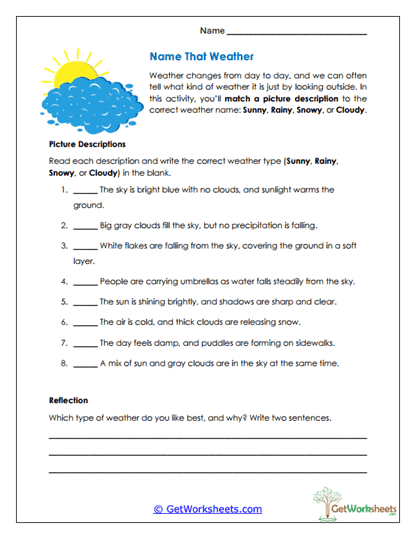
Students read brief description-style clues and choose between sunny, rainy, snowy, or cloudy conditions. The activity helps learners identify everyday weather based on observable features. A reflection prompt encourages personal connection by asking students to choose their preferred weather type. This worksheet supports foundational vocabulary and environmental observation skills.
Weather Clothing Selection
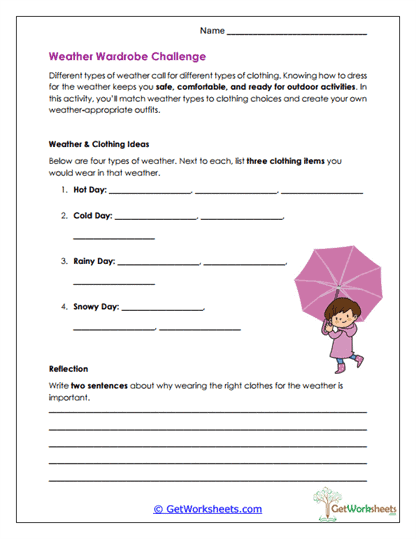
Learners match clothing choices to specific weather types-hot, cold, rainy, or snowy. They consider how temperature and precipitation affect safety and comfort. This task builds practical life skills while reinforcing weather knowledge. A reflection section highlights the importance of dressing appropriately for different conditions.
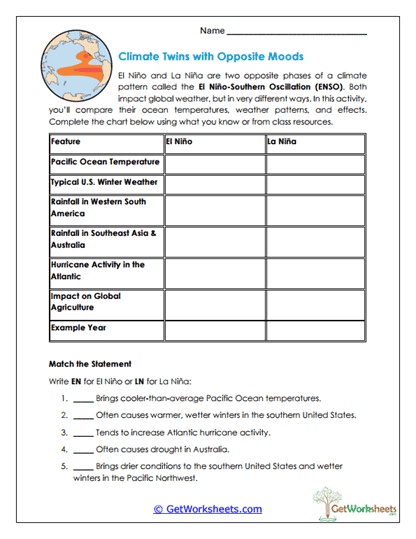
El Niño vs. La Niña Comparison
Students compare the characteristics of El Niño and La Niña using a detailed chart. They analyze differences in ocean temperatures, rainfall patterns, storm activity, and agricultural effects. A second section asks students to label statements as belonging to either climate phase. This worksheet supports understanding of global climate variability and strengthens data comparison skills.
Extreme Weather Case Study
Learners read a summary of Hurricane Katrina and answer questions about causes, impacts, human responses, and long-term solutions. The activity encourages students to connect scientific information to real human experiences. It strengthens critical thinking and comprehension of extreme weather events. A reflection prompt invites deeper reasoning about community resilience and preparedness.
Bookmark Us Now!
New, high-quality worksheets are added every week! Do not miss out!