Volcanoes Worksheets
About This Worksheet Collection
This volcano-themed worksheet collection gives students a dynamic look at how volcanoes form, erupt, and shape both Earth and other worlds. By combining diagram labeling, vocabulary practice, sequencing tasks, reading passages, comparison charts, and planetary geology activities, the collection offers a rich, multifaceted exploration of volcanic science. Teachers can use these resources to support Earth science units, natural hazards lessons, or cross-curricular explorations of space and geology.
Throughout the collection, students strengthen essential scientific skills such as interpreting diagrams, comparing geological systems, analyzing cause-and-effect relationships, and applying domain-specific vocabulary. They build understanding of volcanic structure, eruption processes, global distribution, and planetary differences in volcanic activity. The variety of worksheet formats encourages inquiry, critical thinking, and the ability to connect volcanic concepts to real-world safety, environmental impact, and scientific discovery.
Detailed Descriptions Of These Worksheets
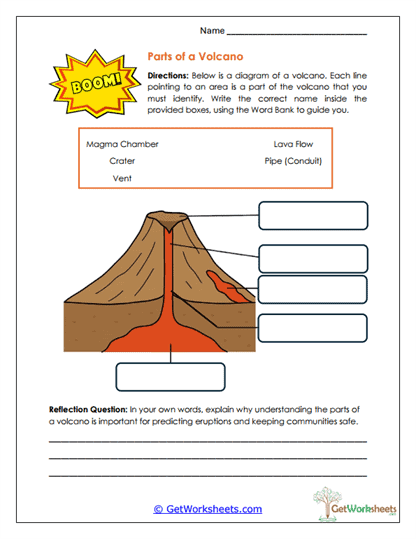
Volcano Parts Labeling
Students label key structural components of a volcano using a detailed diagram and a word bank. The activity strengthens visual interpretation skills and deepens understanding of how magma travels through vents, pipes, and chambers before reaching the surface. Learners build precise vocabulary knowledge through hands-on labeling. A reflection question encourages them to consider why understanding volcano structure is important for predicting hazards.
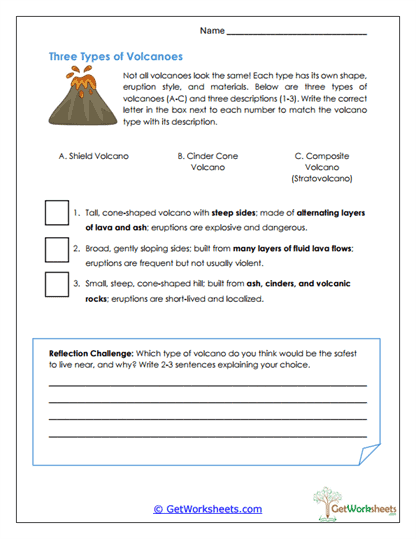
Volcano Types Matching
Learners match descriptions of shield, cinder cone, and composite volcanoes to the correct type. They analyze slope steepness, eruption style, and composition to make accurate distinctions. The worksheet reinforces classification skills and helps students see how structural differences influence volcanic behavior. A written reflection invites them to apply scientific reasoning to evaluate volcanic risk.
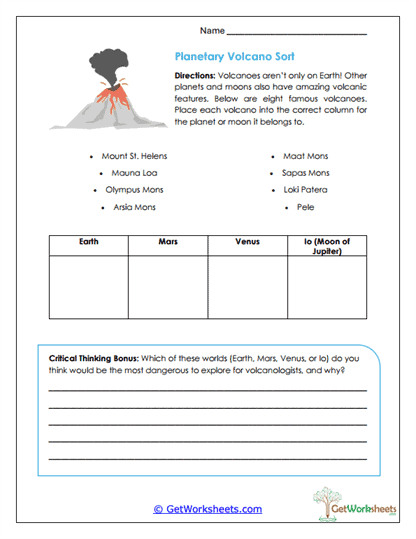
Planetary Volcano Sorting
Students sort well-known volcanoes into categories representing Earth, Mars, Venus, and Io. This introduces planetary geology and highlights the diversity of volcanic activity across the solar system. Learners hone categorization skills by identifying planetary clues and matching names to their correct worlds. The critical thinking question prompts evaluation of which environment poses the most danger for volcanologists.
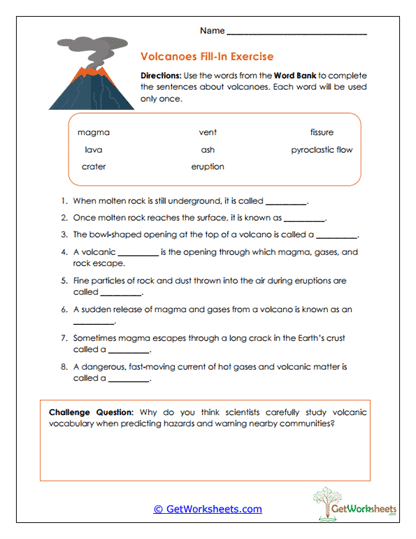
Vocabulary Fill-In
Using a word bank, students complete sentences describing volcanic processes and features such as lava, fissures, vents, and pyroclastic flows. This supports vocabulary mastery and reinforces comprehension of how volcanoes function. Careful reading ensures students match terms to accurate contexts. A challenge prompt emphasizes the role of precise terminology in natural hazard communication.
Eruption Sequencing Chart
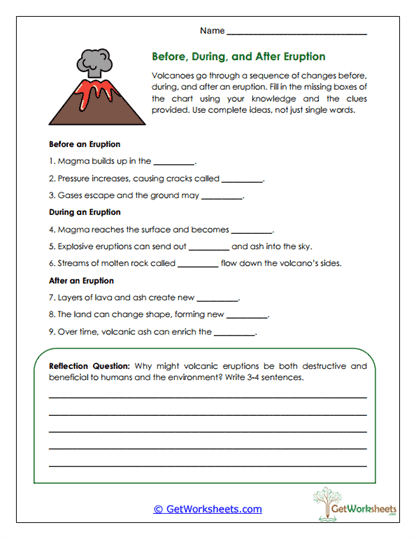
Students complete a three-section chart outlining events before, during, and after an eruption. They analyze how pressure, magma, gases, and explosive activity shape volcanic events over time. The exercise strengthens sequencing, cause-and-effect reasoning, and understanding of eruption dynamics. A reflection question helps them consider both positive and negative impacts of volcanic events.
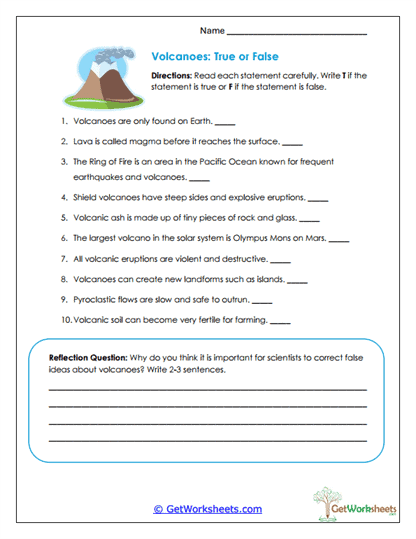
True or False
Learners evaluate ten statements about volcanoes, identifying misconceptions and correcting inaccurate claims. The task encourages critical thinking and strengthens scientific accuracy. Topics include eruption styles, volcanic ash, planetary volcanoes, and the Ring of Fire. A reflection question reinforces the importance of clear, reliable scientific communication.
Comparison Chart
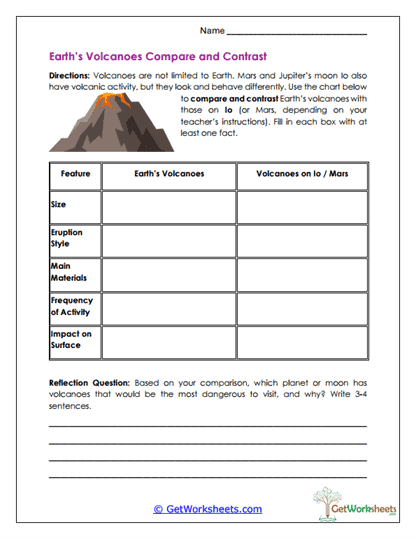
Students compare volcanoes on Earth with those on Io or Mars through a structured chart. They record information on eruption style, materials, activity frequency, and size. This strengthens comparative thinking and broadens understanding of geological diversity across planets. A reflection prompt encourages evaluation of which location presents the greatest volcanic danger.
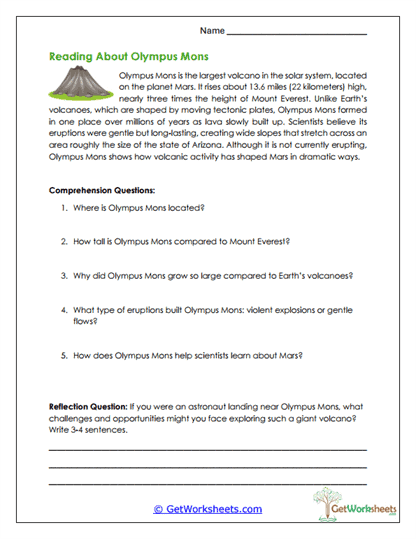
Reading About Olympus Mons
Students read an informational passage about Olympus Mons and answer comprehension questions. They explore the volcano's size, eruption history, and scientific significance. The reflection question encourages imaginative reasoning about exploring such an enormous volcanic feature. This worksheet reinforces reading comprehension and planetary volcanology concepts.
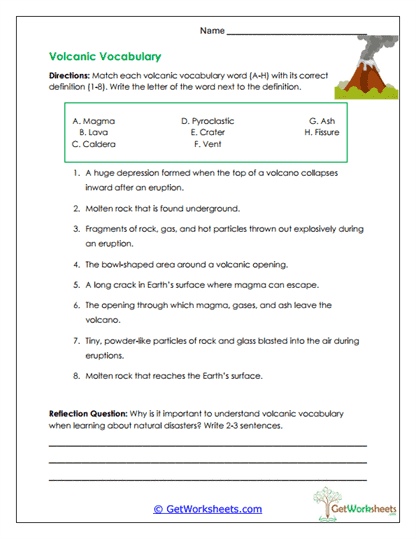
Volcanic Vocabulary Match
Learners match eight volcanic terms with their correct definitions, strengthening vocabulary precision and improving comprehension of volcanic features. Differentiating between similar terms helps refine scientific understanding. The reflection question encourages students to connect vocabulary accuracy to real-world hazard preparedness.
Causes of Volcanic Activity
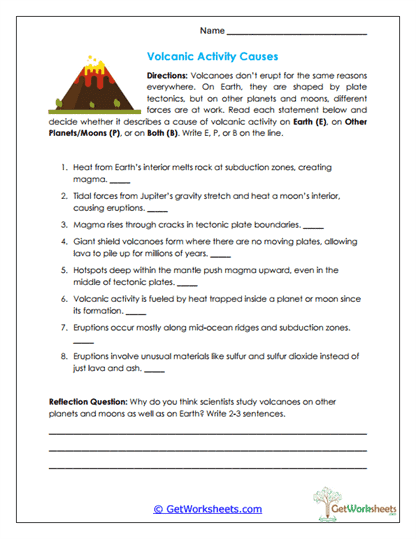
Students classify statements describing volcanic causes as Earth-based, planetary, or both. The activity builds knowledge of tectonic forces, hotspots, tidal stresses, and other geological drivers of activity. Learners strengthen comparative reasoning while exploring why volcanoes behave differently across planets. A reflection prompt encourages deeper thinking about the purpose of studying volcanoes beyond Earth.
Eruption Sequence Ordering
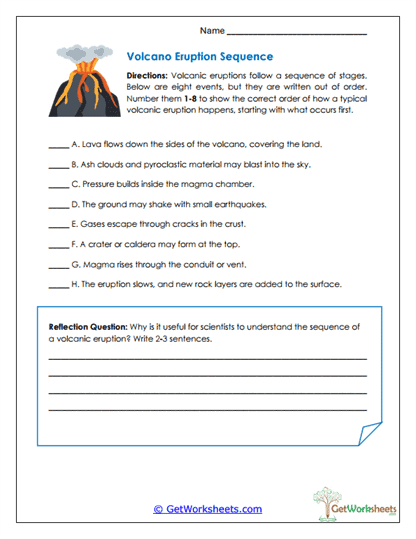
Students sequence eight out-of-order eruption events into correct chronological order. They analyze descriptions involving magma rise, pressure buildup, shaking, eruption, and lava flow. The task supports understanding of volcanic processes and the warning signs that precede eruptions. A reflection question links sequencing knowledge to public safety and hazard forecasting.
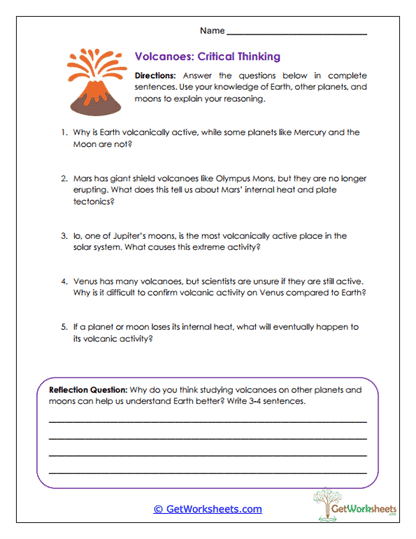
Critical Thinking
Learners respond to open-ended questions exploring why planets differ in volcanic activity, how internal heat shapes surfaces, and what scientists gain from studying extraterrestrial volcanoes. They use evidence and reasoning to explain complex geological phenomena. This worksheet promotes scientific writing fluency and encourages broader thinking about Earth and space systems.
Bookmark Us Now!
New, high-quality worksheets are added every week! Do not miss out!