Vocabulary Worksheets



Vocabulary Worksheets Collection
A rich vocabulary helps learners read with deeper understanding, write with clarity, and communicate more confidently. This Vocabulary Worksheets collection supports those skills by offering activities that explore word meanings, origins, relationships, and usage. Each worksheet helps students expand their language knowledge through engaging tasks that make words easier to understand and remember.
Learners practice analyzing word parts, comparing meaning, identifying context clues, and connecting unfamiliar words to ideas they already know. These worksheets support reading comprehension, writing strength, and verbal expression through targeted and accessible vocabulary activities. Whether students are exploring simple word relationships or diving into advanced linguistic patterns, these resources provide clear, structured support.
The subtopic collections below focus on different aspects of vocabulary learning, making it easy for educators and families to target specific skills. Together, they create a complete pathway for stronger word recognition, deeper meaning-making, and confident communication.
Subtopic Worksheet Collection Descriptions
Acronyms
These worksheets teach learners how to recognize and understand acronyms in everyday text. This builds awareness of abbreviated forms and their meanings. It helps students interpret information more efficiently.
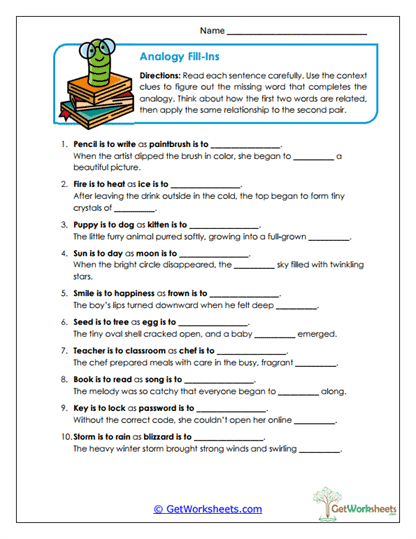
Analogy
Students practice identifying relationships between pairs of words. This strengthens reasoning and vocabulary connections. It helps learners understand how words relate to each other in meaningful ways.
Antonyms
These worksheets introduce opposite word pairs and their uses. This builds understanding of contrast and strengthens descriptive language. It helps students choose precise words when writing or speaking.
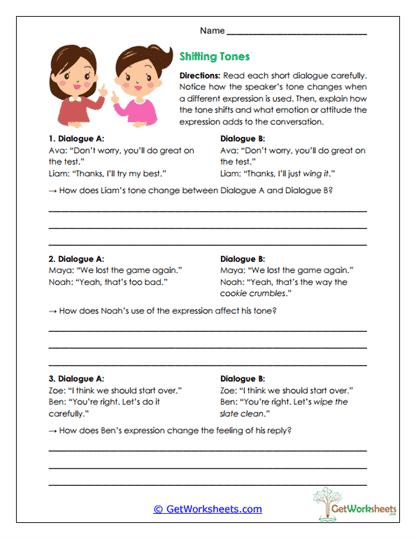
Common Expressions
Learners explore familiar expressions that appear in conversation and writing. This builds cultural language awareness. It helps students interpret everyday phrases more naturally.
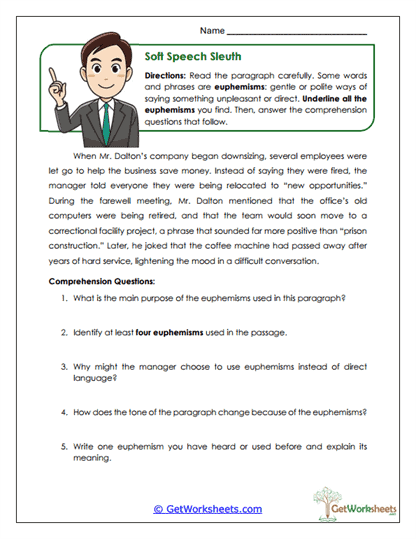
Euphemism
Students learn how softer or indirect expressions replace harsher terms. This builds nuanced understanding of tone and tactful communication. It helps learners recognize subtle meaning in conversations or texts.
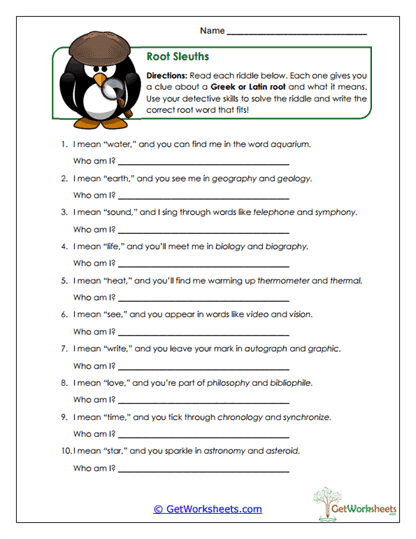
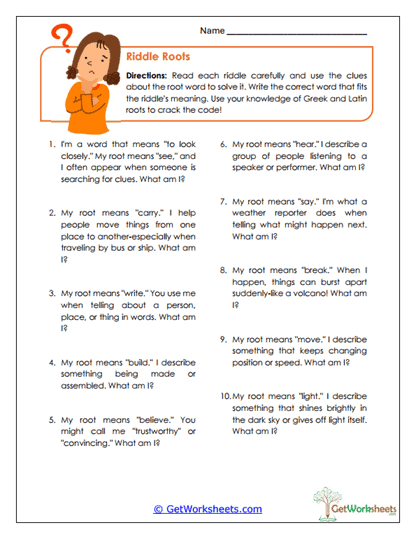
Greek and Latin Roots
These worksheets teach common roots that form many English words. This strengthens word-analysis skills and decoding ability. It helps students unlock the meanings of unfamiliar vocabulary.
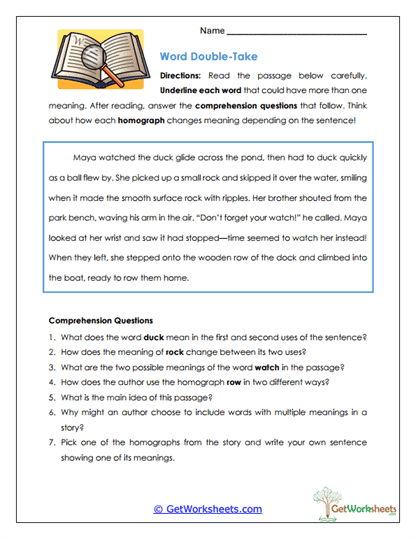
Homographs
Learners explore words that are spelled alike but differ in meaning or pronunciation. This supports careful reading and context awareness. It helps students avoid confusion when encountering tricky words.
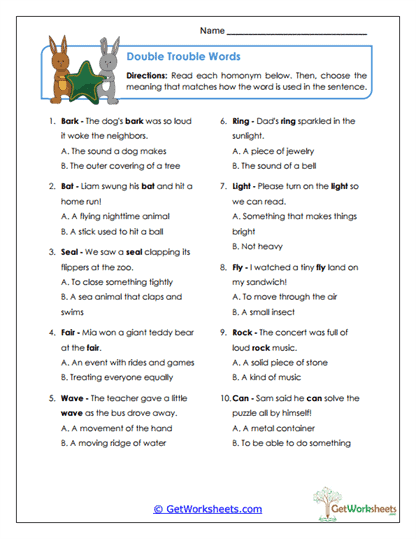
Homonyms
These worksheets introduce words that sound alike or look alike but have different meanings. This strengthens understanding of language complexity. It helps students read and write with greater accuracy.
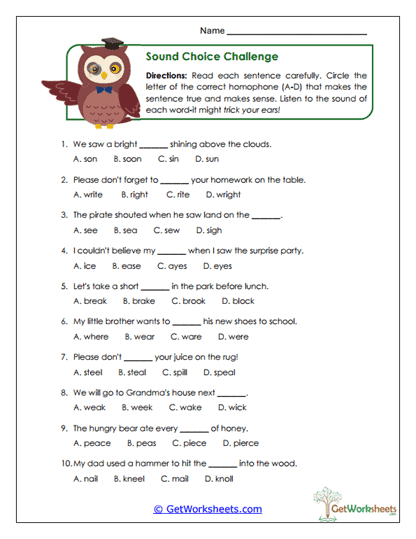
Homophones
Students learn to distinguish between sound-alike words with different spellings and meanings. This builds spelling precision and clarity. It helps prevent common writing mistakes.
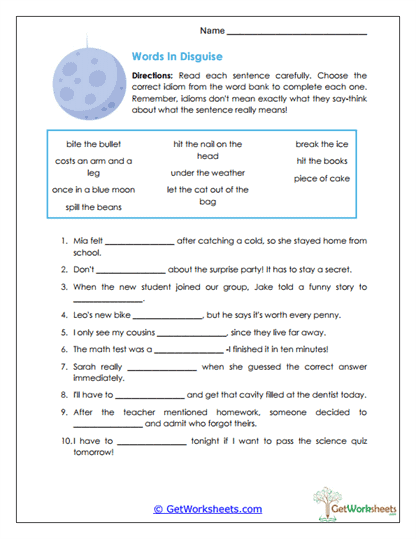
Idioms
Learners study expressions whose meanings cannot be understood literally. This builds cultural and figurative language understanding. It helps students interpret creative or conversational language.
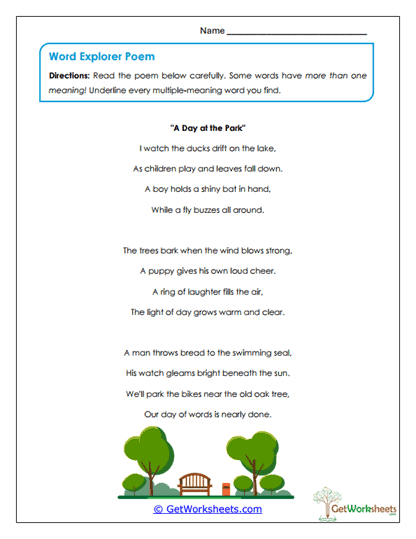
Multiple Meaning Words
These worksheets help students recognize words with more than one meaning. This supports comprehension through flexible thinking. It helps learners choose the correct definition in context.
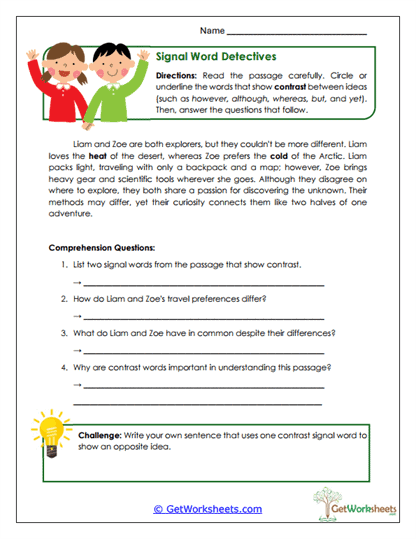
Opposites and Contrasts
Students explore how contrasting words help express difference and comparison. This strengthens descriptive language. It helps learners express ideas more clearly and vividly.
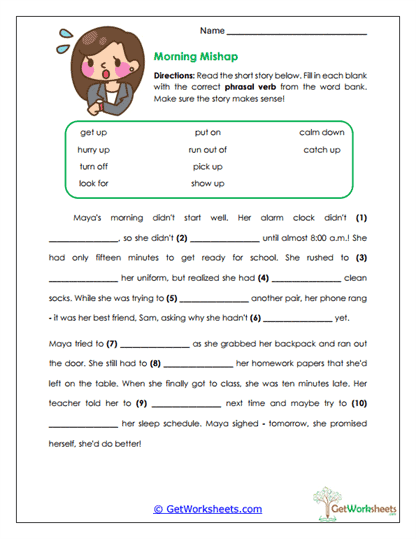
Phrasal Verbs
These worksheets introduce common verb-and-preposition combinations. This supports understanding of everyday English usage. It helps students communicate more naturally in conversation.
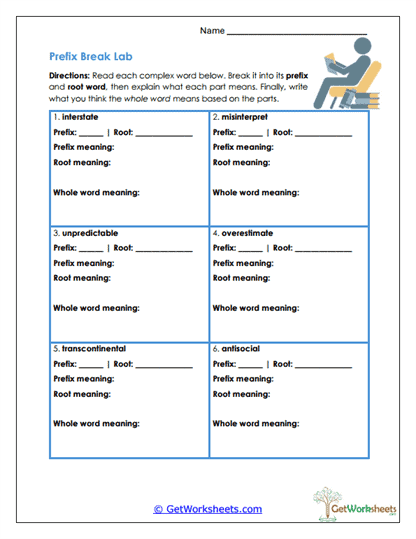
Prefixes
Learners study common prefixes and how they change the meanings of base words. This builds decoding and vocabulary expansion. It helps students understand new words more quickly.
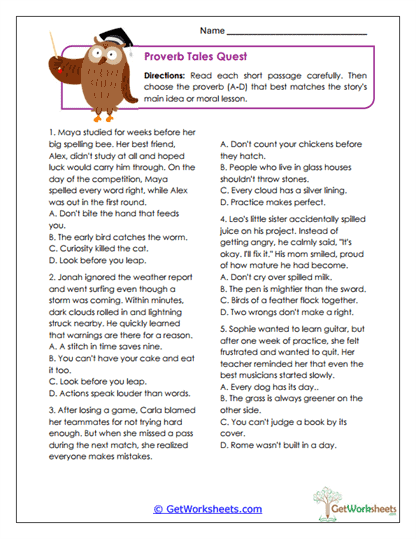
Proverbs & Sayings
These worksheets explore short, well-known phrases that express wisdom or common observations. This strengthens cultural literacy and interpretation skills. It helps students understand deeper meaning in familiar advice.
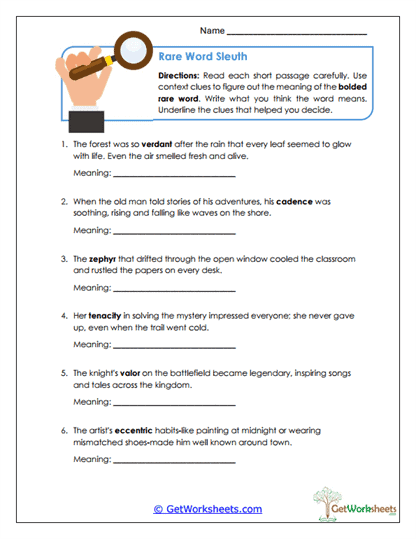
Rare Words
Students learn interesting, unusual, or advanced vocabulary. This builds expressive language and curiosity about words. It helps learners expand beyond everyday vocabulary.
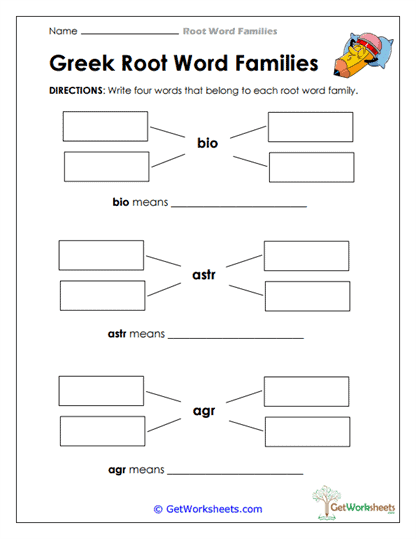
Root Word Families
These worksheets group related words by their shared base. This strengthens vocabulary organization and pattern recognition. It helps learners make meaning connections across multiple terms.
Root Words
Students practice identifying base words and how they combine with affixes. This builds strong foundational vocabulary skills. It helps learners break down unfamiliar terms with confidence.
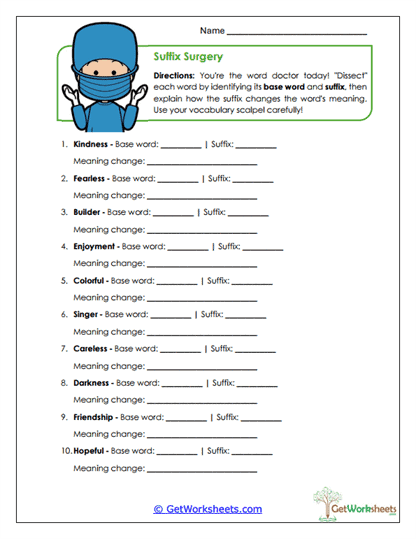
Suffixes
Learners explore how suffixes change word forms and meanings. This supports grammar, word formation, and writing skills. It helps students recognize how small changes affect usage.
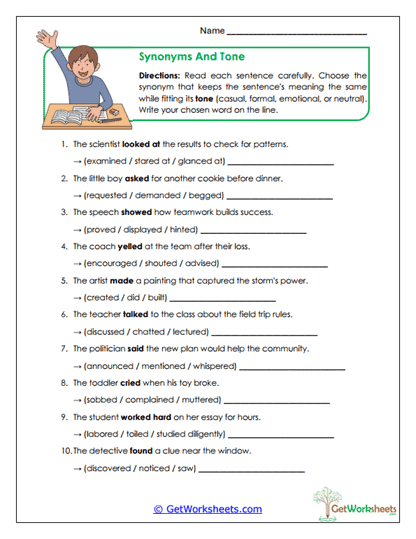
Synonyms
These worksheets help students identify words with similar meanings. This strengthens vocabulary variety and nuance. It helps learners choose more precise or expressive words.
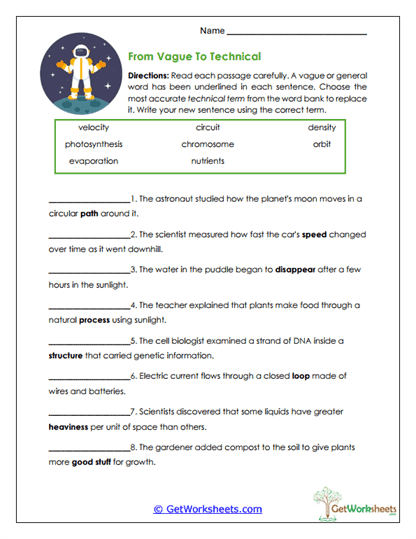
Technical Terms
Students learn words used in specialized fields such as science, technology, or mathematics. This builds academic vocabulary and subject-specific comprehension. It helps learners understand texts that use precise terminology.

Bookmark Us Now!
New, high-quality worksheets are added every week! Do not miss out!