Uppercase Letter Tracing Worksheets
-
Amazing A Adventure
-
Big Bold B
-
Catch the Curvy C
-

-
Discover the D
-
Excellent E Exercise
-
Follow the Fancy F
-
-
Go for the Great G
-
Hop onto H
-
Incredible I Practice
-
Journey with J
-
Kickstart with K
-
Learn the Lovely L
-
Make the Mighty M
-
Navigate the N
-
Outline the Outstanding O
-
Perfect Your P
-
Quick Trace Q
-
Race to the R
-
Smooth and Strong S
-
Trace the Terrific T
-
Up and Around U
-
Victory with V
-
Wonderful W Writing
-
X Marks the Spot
-
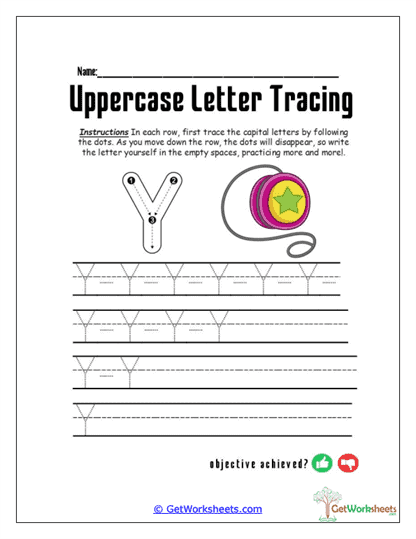
Yes to Y
-
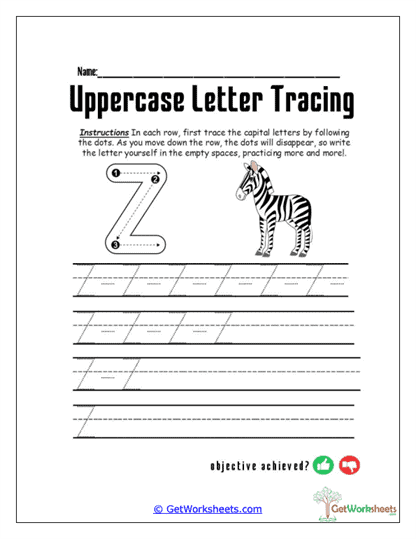
Zoom into Z
About This Worksheet Collection
The Uppercase Letter Tracing collection offers a clear, confidence-building path for learners to master capital letters from A to Z. Each page combines dotted models with gradual release to independent writing, plus a picture cue that anchors the letter to a familiar word and sound. The consistent structure makes these sheets effortless to deploy in centers, small groups, or at home, while the visuals maintain motivation and focus.
Across the set, students internalize stroke order, spacing, and line alignment as they strengthen pencil control and visual-motor integration. Repetition turns careful tracing into fluent handwriting, while phonics prompts connect letter forms to beginning sounds and everyday vocabulary. Together, these pages build alphabet knowledge, handwriting stamina, and readiness for early reading and writing tasks.
Detailed Descriptions Of These Worksheets
Amazing A Adventure
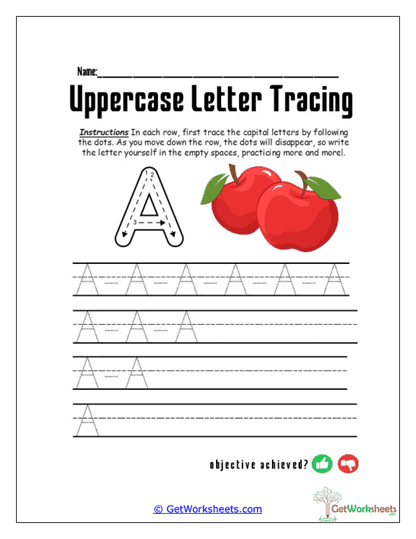
Learners trace bold models of A that gradually fade, then write the letter on their own. Apple imagery reinforces the /a/ sound and provides a concrete memory hook. The progression from support to independence nurtures control, spacing, and confidence.
Big Bold B
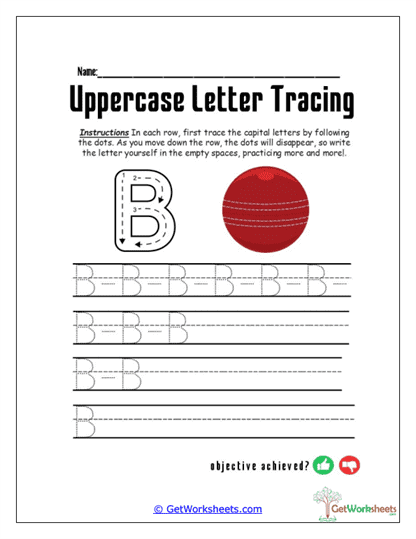
Students follow dotted outlines of B before moving into open practice lines. The friendly ball illustration ties print to sound for quick recall. Repeated formation work builds smooth strokes and consistent letter size.
Catch the Curvy C
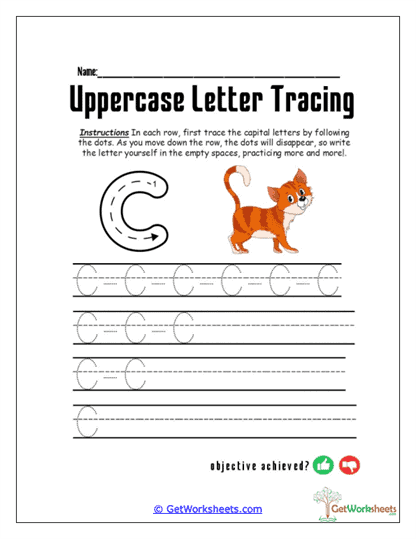
This page focuses on controlled, curved motion as children trace and write C. A cat cue links the letter to a familiar initial sound. Short practice rows promote even pressure, clear shape, and clean endpoints.
Discover the D
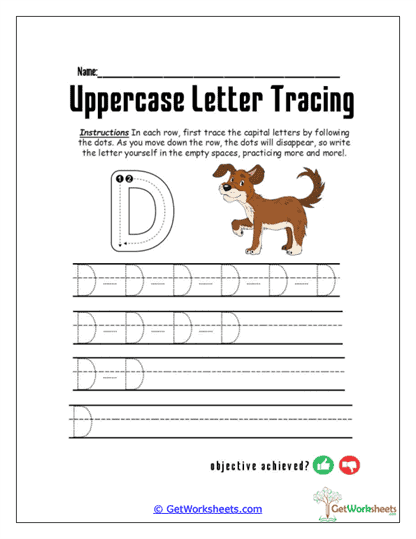
Learners trace D with attention to a strong downstroke and rounded curve, then try it independently. The dog picture supports sound association without distracting from form. Steady repetition improves alignment and legibility.
Excellent E Exercise
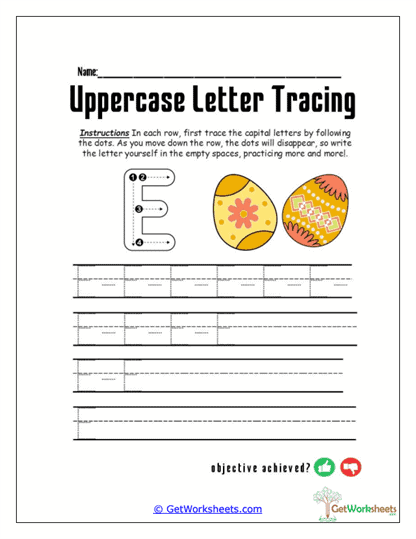
Students practice E using models that step down in support to encourage self-reliant writing. Eggs provide an easy sound anchor for memory. The layout emphasizes straight lines, spacing, and top-to-bottom directionality.
Follow the Fancy F
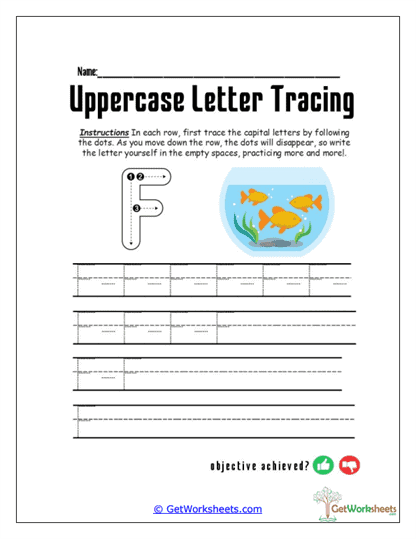
Tracing lines guide students through F's top and middle bars with precise placement. A fish image keeps the target sound front and center. Compact rows strengthen control and rhythm across the line.
Go for the Great G
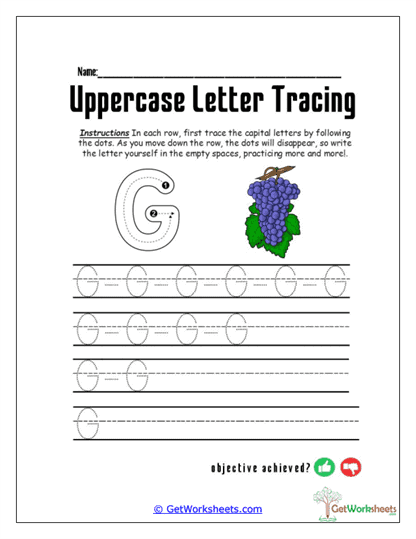
Children learn G's rounded body and inward stroke through carefully sequenced tracing. Grapes offer a helpful cue for sound and vocabulary. Practice balances smooth curves with neat, closed shapes.
Hop onto H
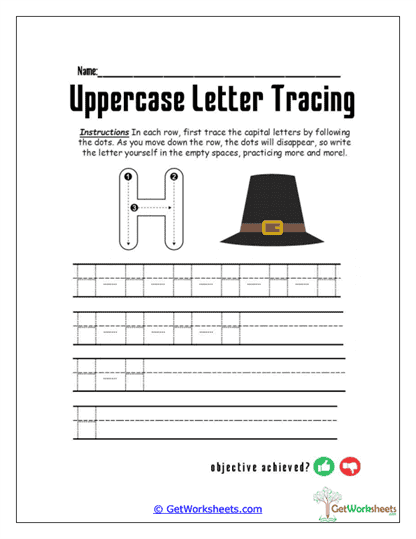
This worksheet highlights parallel lines and a clean crossbar as students form H. A hat illustration connects print to meaning and sound. The step-by-step layout supports steady pencil movement and spacing awareness.
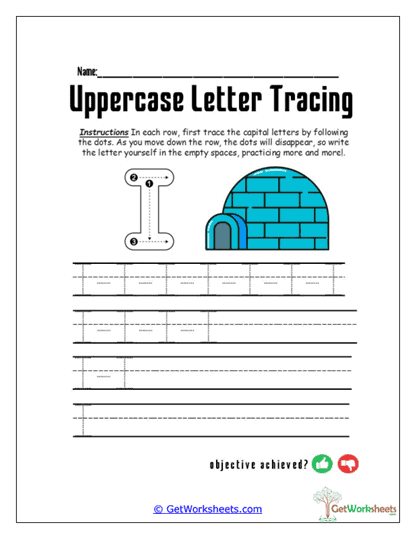
Incredible I Practice
Learners shape a straight, centered I with clear top and bottom lines, then continue independently. The igloo cue keeps phonics visible without clutter. Short practice bursts build accuracy and stamina.
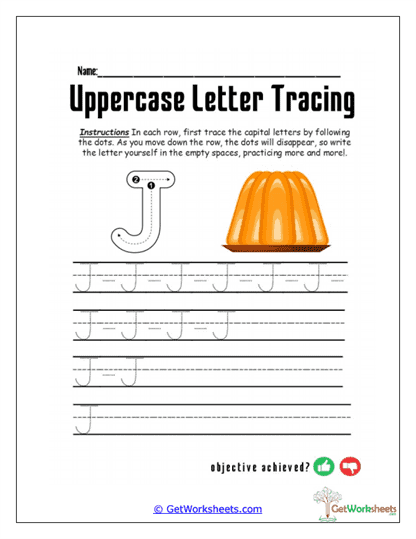
Journey with J
Students trace J's tall line and graceful hook, transitioning to free writing by the final rows. Jelly imagery brings a playful sound reminder. Emphasis on baseline placement supports tidy, readable letters.
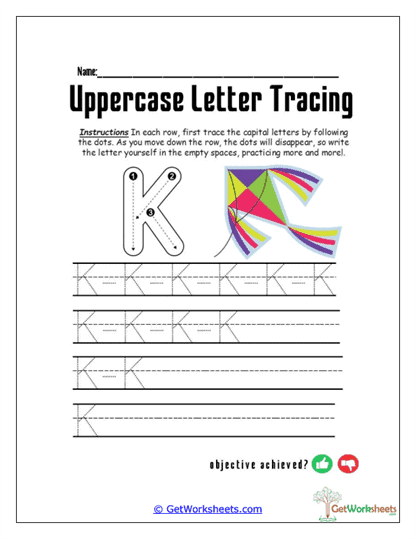
Kickstart with K
Tracing paths show K's diagonal arms and proper connection points. A kite ties the letter to its initial sound and real-world vocabulary. Repetition sharpens angle accuracy and visual discrimination.
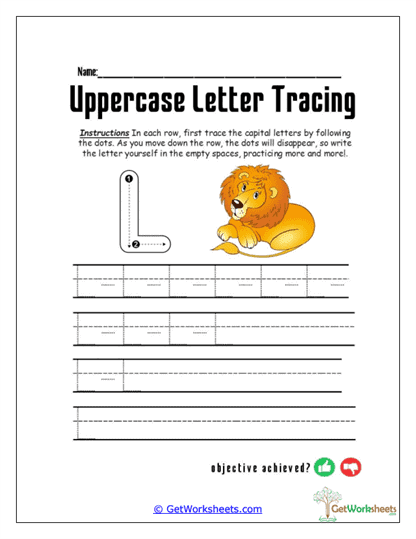
Learn the Lovely L
Children practice the clean vertical of L with attention to height and straightness. A lion image reinforces the beginning sound for quick recall. The simple form helps build confidence and pencil control.
Make the Mighty M
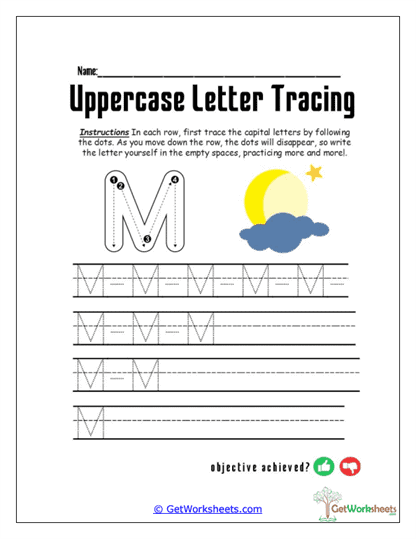
Students form M's peaks with consistent angles and spacing, moving from dotted guides to open lines. A moon cue strengthens sound-symbol links. Careful practice leads to steady rhythm across the page.
Navigate the N
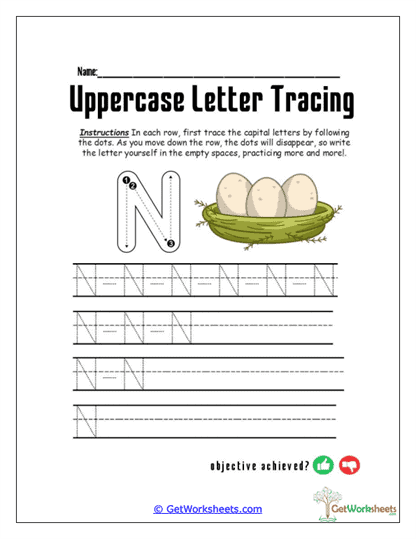
This page develops the strong downstroke and diagonal of N with clear starting points. A nest illustration supports phonemic awareness. Focused rows encourage uniform height and neat connections.
Outline the Outstanding O
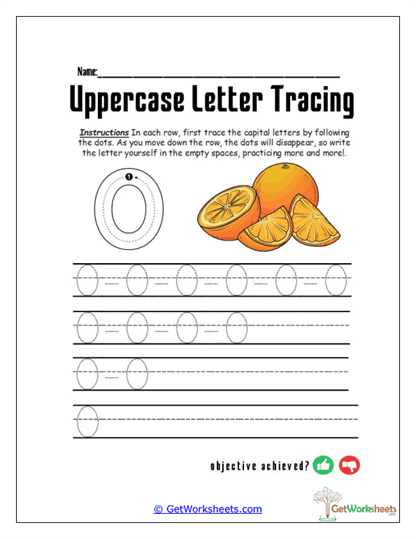
Learners trace smooth, closed circles to master O's continuous motion. The orange cue reinforces vocabulary and sound. Consistent practice reduces wobble and improves roundness and size control.
Perfect Your P
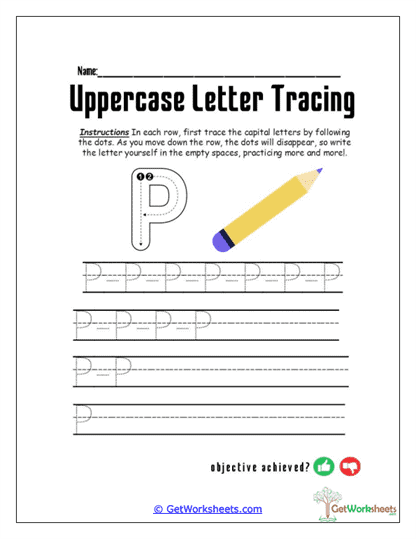
Students build P with a firm vertical line and a balanced curve. A pencil image connects the letter to everyday language and sound. Structured repetition supports tidy proportions and fluent motion.
Quick Trace Q
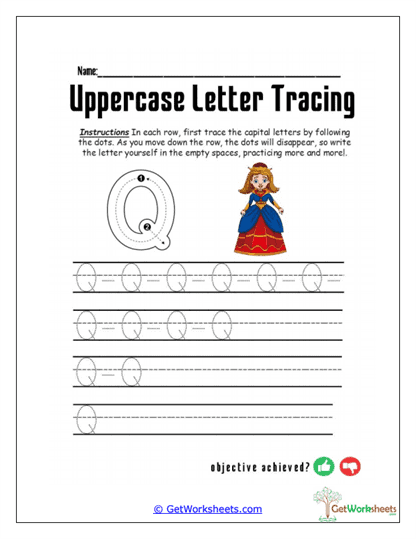
Tracing models guide Q's circular form and tail placement. A queen cue anchors the letter's sound while students refine shape closure. Practice emphasizes control without over-gripping the pencil.
Race to the R
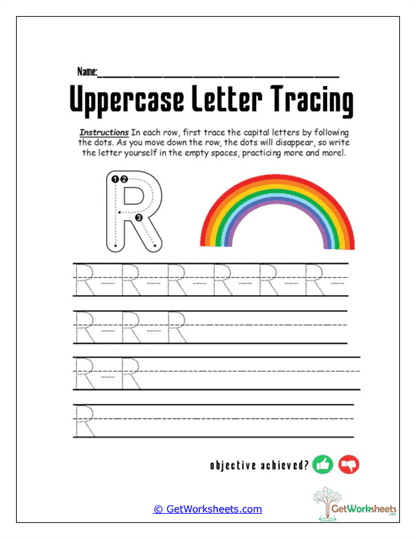
Children learn R's straight stem, rounded shoulder, and angled leg in sequence. The rainbow visual strengthens sound association and memory. Gradual release promotes accuracy and consistent spacing.
Smooth and Strong S
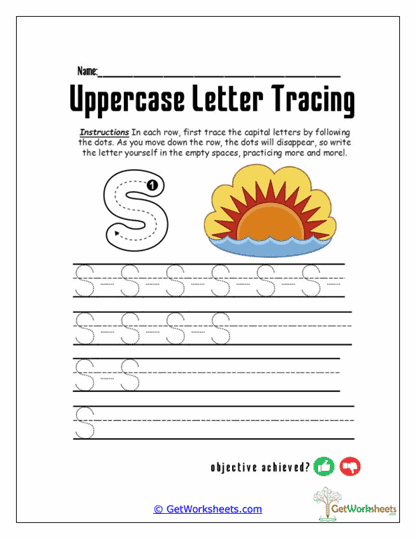
This worksheet targets the flowing turns of S for smooth, confident strokes. A sun image supports quick sound recall. Frequent, short lines of practice help maintain form without fatigue.
Trace the Terrific T
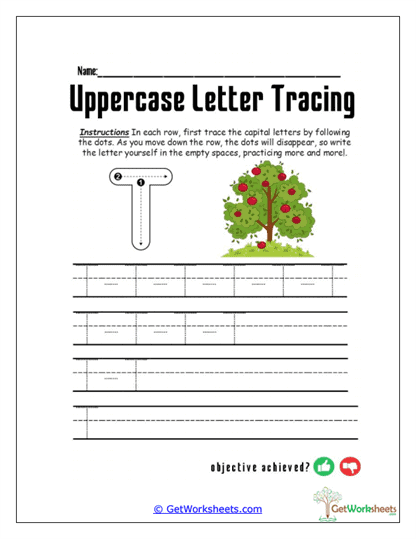
Students practice T's tall line and centered crossbar with models that fade toward independence. A tree cue links print to sound and meaning. Attention to alignment keeps letters crisp and legible.
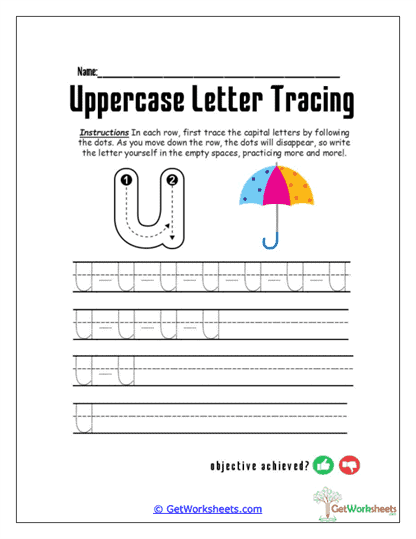
Up and Around U
Learners form U with even curves and a clean upward finish. The umbrella picture reinforces the beginning sound and vocabulary. Repetition develops hand control and consistent baseline contact.
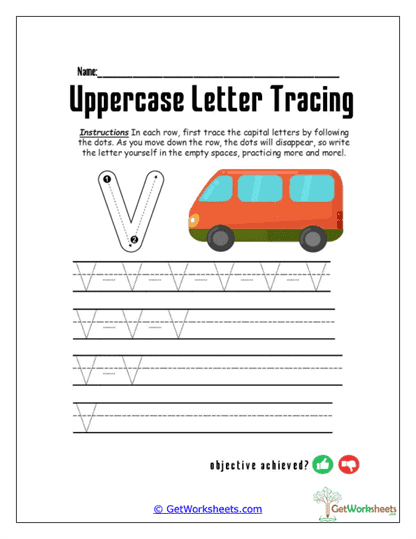
Victory with V
Students trace sharp, even angles to create a balanced V. A van cue supports phonics while keeping focus on stroke precision. Compact practice lines encourage steady pacing and neat endpoints.
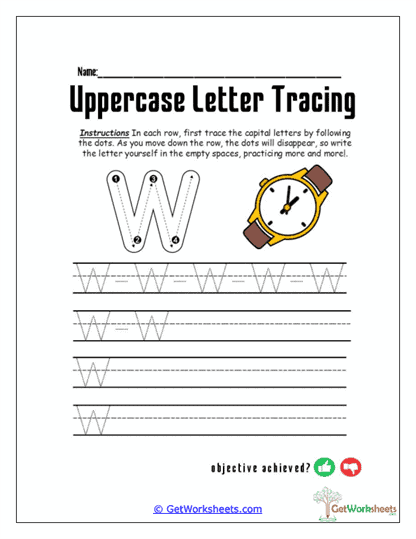
Wonderful W Writing
This page guides the repeating angles of W for uniform peaks and valleys. The watch image ties letter and sound together. Structured rows cultivate smooth transitions and spatial consistency.
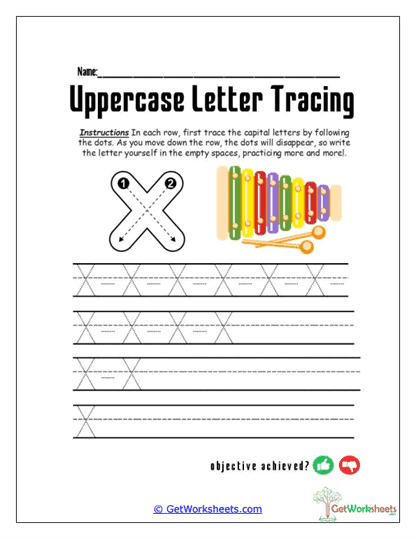
X Marks the Spot
Learners cross two clean diagonals to form a centered X. A xylophone cue aids sound recognition and vocabulary. Practice emphasizes even intersections and straight lines.
Yes to Y
Students trace a split upper branch and a long stem to complete Y. The yo-yo picture supports sound-symbol memory. Repetition reinforces proportion, angle control, and baseline alignment.
Zoom into Z
Children create a straight top, diagonal middle, and straight bottom to craft Z. A zebra cue cements the sound connection. Consistent tracing builds fluency, pressure control, and tidy letter shape.

Bookmark Us Now!
New, high-quality worksheets are added every week! Do not miss out!