Understanding AI Prompt Outputs Worksheets
-
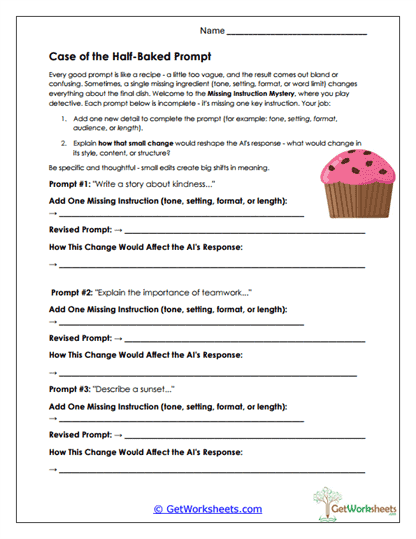
Case of the Half-Baked Prompt
-
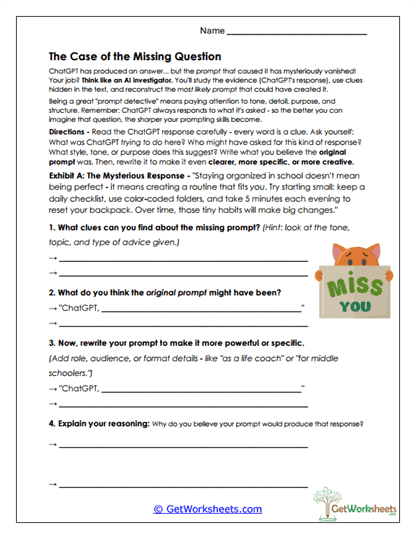
Case of the Missing Question
-
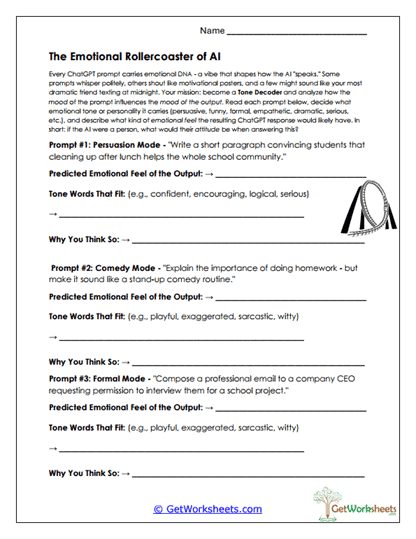
Emotional Rollercoaster of AI
-
-
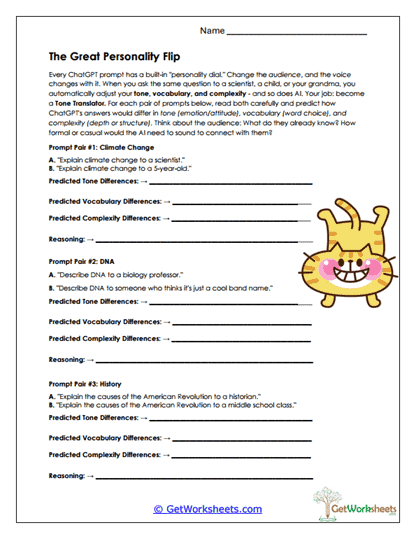
Great Personality Flip
-
How Hot (or Not) Is Your Question?
-
Predicting the Future of AI Answers
-
Predicting the Weather Report of Words
-
Prompt Sorting Machine
-
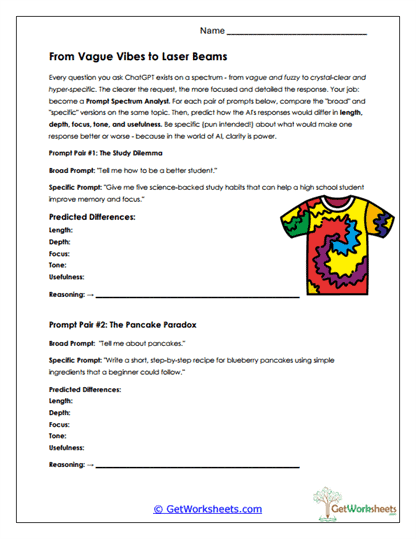
Vague Vibes to Laser Beams
-
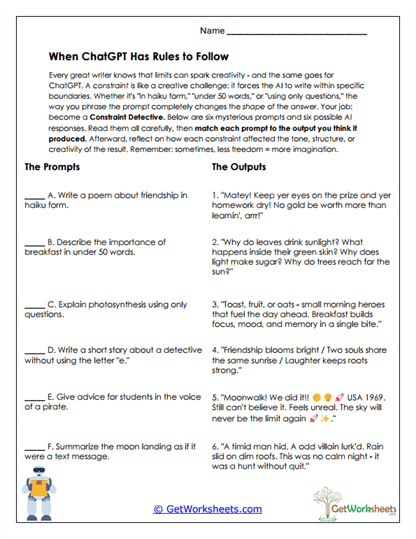
When ChatGPT Has Rules to Follow
-
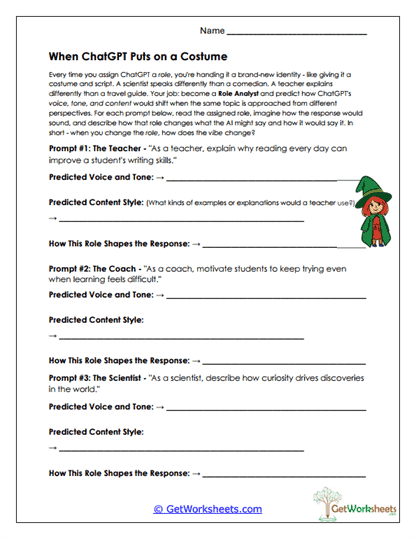
When ChatGPT Puts on a Costume
-
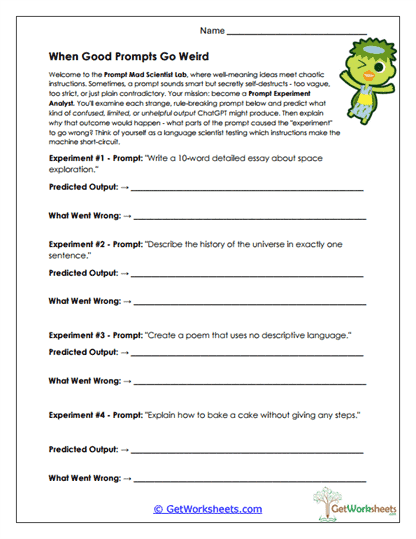
When Good Prompts Go Weird
About This Worksheet Collection
This collection helps students understand why AI outputs look the way they do. Each worksheet teaches learners to read AI-generated text critically, analyze the instructions that shaped it, and predict how small differences in prompts change tone, structure, clarity, and purpose. Students examine vague prompts, missing details, role assignments, genre cues, emotional signals, and constraints-building a strong foundation in prompt mechanics and AI behavior.
Across the set, learners practice inference, prediction, genre identification, and revision. They reverse-engineer missing prompts, classify output types, analyze the emotional tone of responses, and explore how audience or constraints reshape what the AI produces. By engaging with both flawed and effective prompts, students strengthen communication skills, deepen digital literacy, and learn how to craft precise, thoughtful instructions for AI systems.
Detailed Descriptions Of These Worksheets
The Case of the Missing Question
Students examine an AI-generated response and infer what the original prompt must have been. They propose a likely prompt and revise it for clarity and purpose. This builds inference, evidence-based reasoning, and prompt-writing precision.
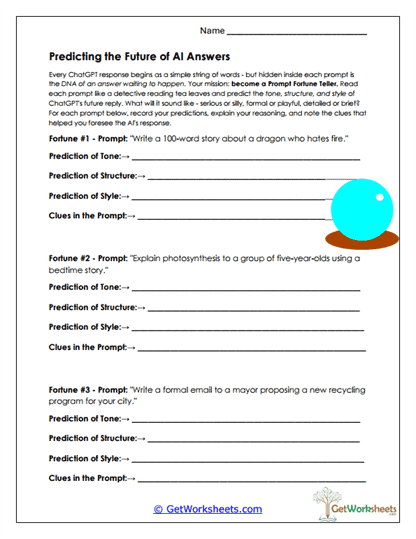
Predicting the Future of AI Answers
Learners predict tone, structure, and style before seeing an AI response. They analyze keywords, audience cues, and format signals to justify their predictions. This strengthens anticipation skills and understanding of prompt-to-output connections.
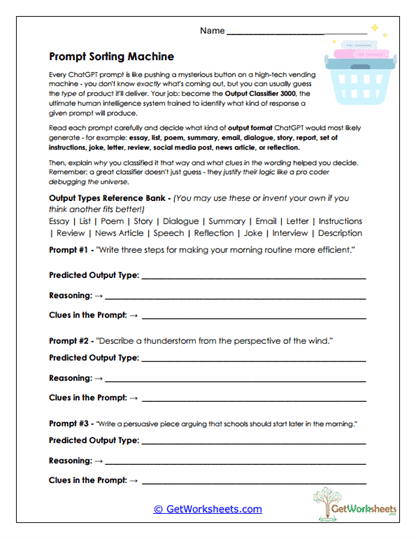
Prompt Sorting Machine
Students match prompts to the genre they would most likely produce-stories, poems, essays, instructions, reports, and more. They identify phrasing that signals narrative, persuasive, informational, or procedural writing.
From Vague Vibes to Laser Beams
Learners compare broad versus highly specific prompts and predict differences in depth, clarity, and usefulness. They analyze which prompt produces stronger results and why.
The Emotional Rollercoaster of AI
Students explore how prompts shape emotional tone. They predict moods such as formal, persuasive, humorous, or enthusiastic, using tone words and text clues to justify their reasoning.
When ChatGPT Puts on a Costume
This worksheet shows how role assignments change the vocabulary, tone, and style of AI responses. Students compare teacher, coach, and scientist voices to understand perspective-based writing.
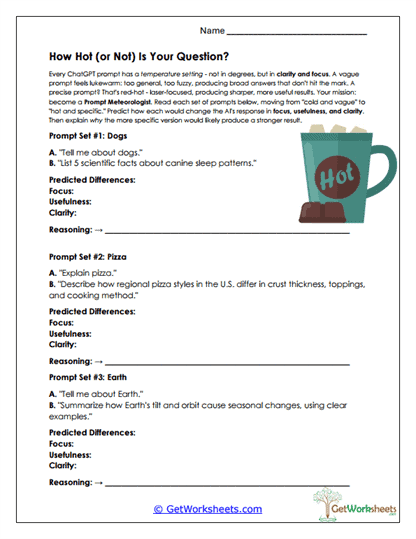
How Hot (or Not) Is Your Question?
Learners analyze vague vs. precise prompts to evaluate clarity and predict differences in output quality. They explain how specificity improves focus and reduces confusion.
When ChatGPT Has Rules to Follow
Students examine prompts with constraints-haikus, pirate voices, word limits, questions-only rules-and match them to unique outputs. This teaches the structural impact of form and restriction.
The Great Personality Flip
Learners explore how the same topic changes when written for different audiences (children, scientists, historians, etc.). They predict shifts in vocabulary, tone, and complexity.
When Good Prompts Go Weird
Students analyze flawed, contradictory, or impossible prompts and predict the strange outputs an AI might produce. They explain why the prompt breaks and how to fix it.
Case of the Half-Baked Prompt
Learners revise prompts that are missing key details. They identify one missing instruction-tone, format, setting, length-and explain how it would change the output.
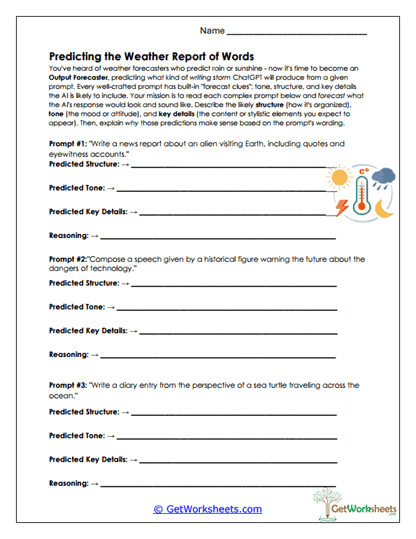
Predicting the Weather Report of Words
Students act as "output forecasters," predicting tone, structure, and details based on genre signals in each prompt. They justify predictions using evidence from the prompt's wording.
Bookmark Us Now!
New, high-quality worksheets are added every week! Do not miss out!