Tweezer or Pinch Practice Worksheets
About This Worksheet Collection
This collection of tweezer and pinch-practice worksheets offers hands-on activities that build essential fine motor strength, hand precision, and early academic readiness. Each worksheet invites children to use tweezers or their pincer grasp to pick up small objects-such as pom-poms, beads, pretend foods, or tiny manipulatives-and place them onto clearly marked targets. These engaging themes, from feeding animals to building ice cream cones and sorting treasure, motivate learners to work slowly and deliberately as they strengthen the muscles needed for writing, cutting, and self-help tasks.
Beyond motor development, these activities integrate early math, science, and language skills. Children sort by color, count objects, identify animals, follow number cues, and name items aloud as they work. The structured one-at-a-time placement supports executive functioning, attention to detail, and careful sequencing. Together, these worksheets provide multisensory practice that prepares young learners for greater independence and academic success.
Detailed Descriptions Of These Worksheets
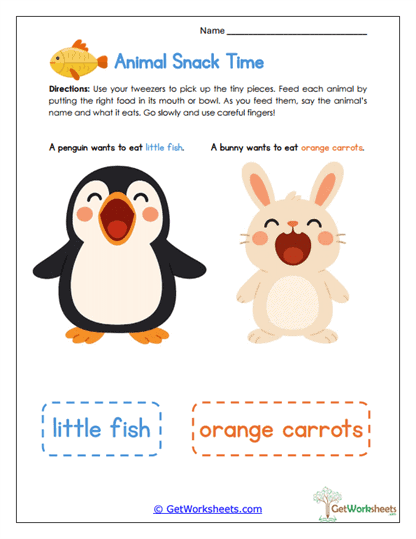
Animal Snack Sorting
Students use tweezers to pick up tiny "snacks" and sort them by feeding each animal the appropriate food. The activity encourages slow, careful movements that strengthen the pincer grasp. Children name the animals and foods as they work, supporting oral vocabulary. Sorting by type reinforces early classification skills while developing precise hand control.
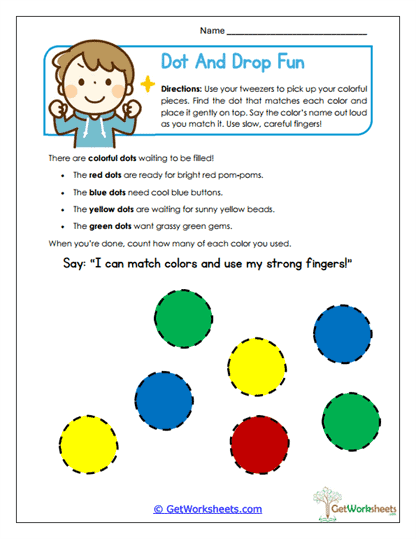
Color Dot Matching
Learners use tweezers to place small colored objects onto matching dotted circles. The task promotes color recognition, visual discrimination, and careful placement within boundaries. Children count how many items they place for each color, reinforcing numeracy skills. Fine motor strength grows as they move from dot to dot.
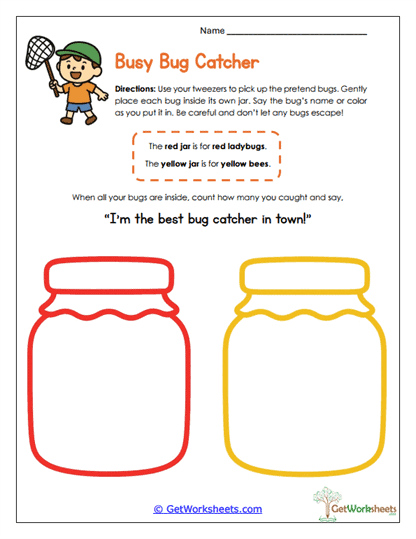
Bug Jar Sorting
Students pick up pretend ladybugs and bees and place them into matching colored jars. This reinforces color sorting and insect recognition while building steady tweezer control. Naming each bug aloud promotes expressive language skills. The counting component at the end enhances early math practice.
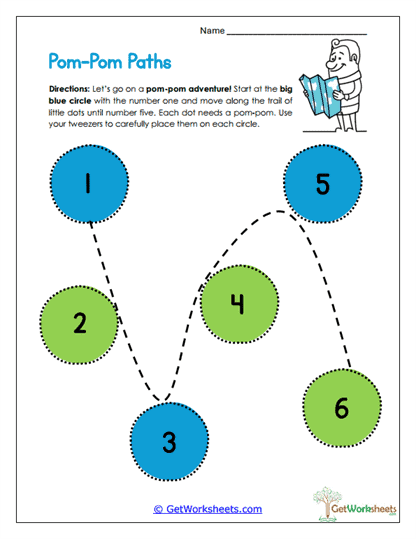
Pom-Pom Counting Path
Learners use tweezers to place pom-poms on numbered circles while following a connected path. The sequence encourages directional tracking and number recognition. Each placement helps refine hand steadiness and precision. The one-step-at-a-time structure supports focus and smooth motor planning.
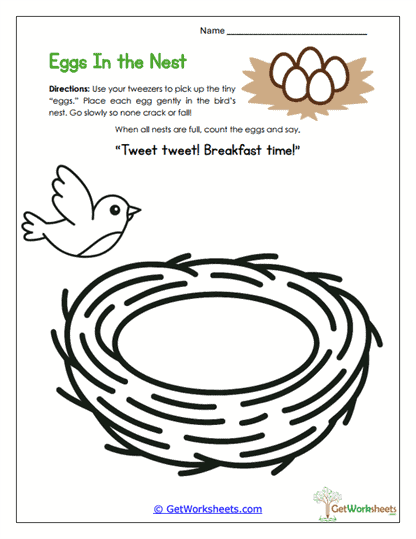
Eggs in the Nest
Students use tweezers to place small eggs into a bird's nest, strengthening the pincer grasp through careful handling. The bird and nest theme supports simple science concepts about animal habitats. Children count the eggs they place, building early math understanding. The task promotes patience and accurate control.
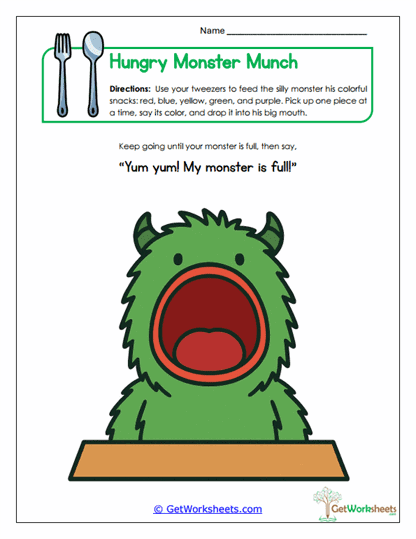
Monster Snack Sort
Learners feed colorful pretend snacks to a friendly monster by placing them one at a time into its mouth. Naming each color aloud encourages language development. The activity builds controlled tweezer use and strong hand-eye coordination. Students practice working slowly and deliberately to avoid dropping pieces.
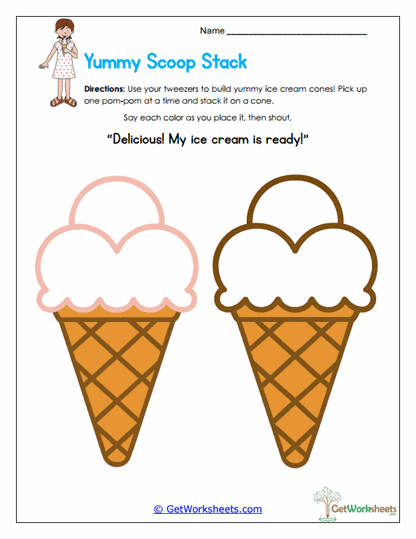
Ice Cream Scoop Build
Students use tweezers to add pom-pom "scoops" onto ice cream cones, matching each scoop to its outline. The task develops precise object placement within boundaries. Saying each color aloud reinforces vocabulary and descriptive language. Slow, controlled motion strengthens fine motor endurance.
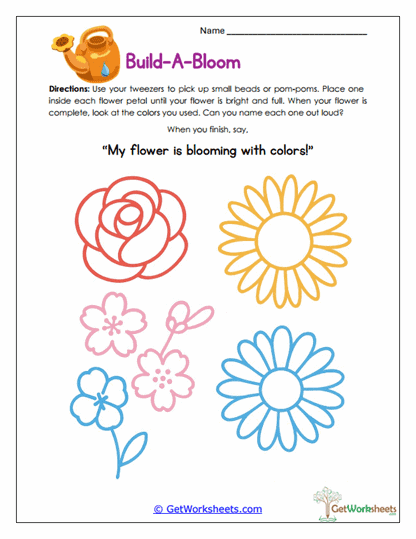
Build-A-Bloom Bead Activity
Learners fill outlined flower petals with beads or pom-poms, focusing on accuracy as they place objects into small spaces. Naming colors adds a language component, while the variety of flowers encourages sustained attention. The activity develops strong visual-motor coordination and controlled finger movement.
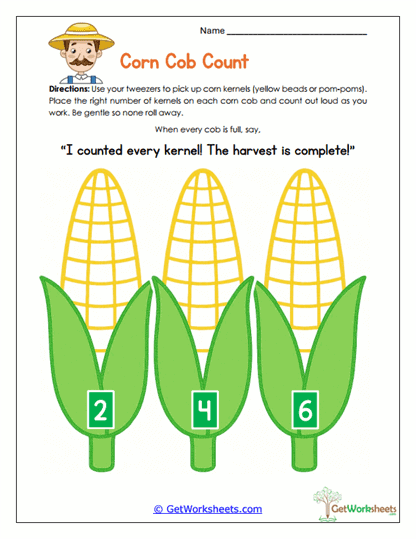
Corn Kernel Counting
Students place small yellow "kernels" onto corn cobs according to the number printed beneath each one. This reinforces counting skills and one-to-one correspondence. Using tweezers strengthens finger muscles and improves careful hand control. Children practice maintaining focus as they prevent kernels from rolling away.
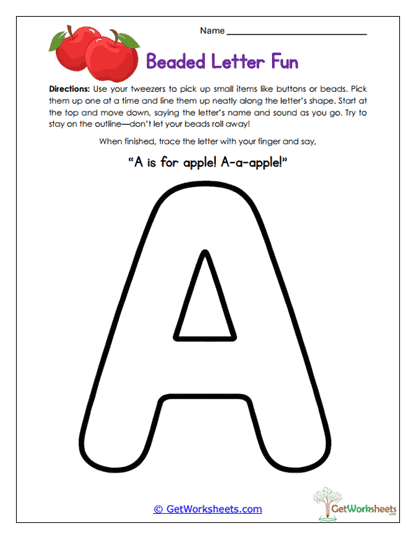
Beaded Letter A
Learners use tweezers to place small objects along the outline of the letter A, preparing them for early handwriting. Saying the letter name and sound reinforces alphabet knowledge. The precise placement supports fine motor accuracy and direction-following. Tracing the letter afterward adds multisensory reinforcement.
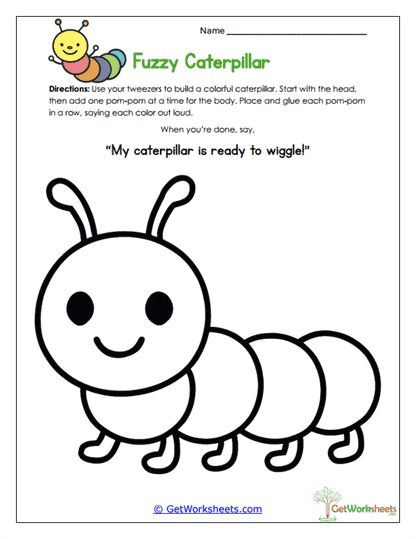
Fuzzy Caterpillar Build
Students add pom-poms to each segment of a caterpillar body, working from head to tail. Sequencing the placements supports orderly task completion. Color naming strengthens expressive language and concept recognition. The activity builds fine motor precision and clear placement skills.
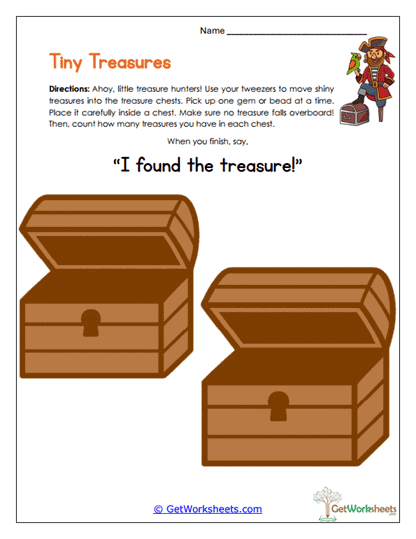
Treasure Chest Sorting
Learners use tweezers to transfer small gems or beads into illustrated treasure chests. The task strengthens pincer control as children place items one at a time without dropping them. Counting the treasures afterward supports math comparison skills. The playful theme promotes engagement and careful manipulation.
Bookmark Us Now!
New, high-quality worksheets are added every week! Do not miss out!