Tornadoes Worksheets
About This Worksheet Collection
This tornado-focused worksheet collection equips students with essential knowledge about one of the most dramatic and dangerous weather phenomena. Through vocabulary practice, sequencing tasks, informational passages, safety scenarios, and data interpretation activities, learners explore how tornadoes develop, where they occur, and how people can stay safe. These resources offer teachers a balanced mix of scientific explanation and practical application, making tornado studies both engaging and meaningful.
As students work through the collection, they build strong weather-literacy skills by analyzing atmospheric conditions, identifying causes of tornado formation, comparing storm types, and making informed safety decisions. They also strengthen comprehension, critical reasoning, and writing skills as they explain processes, evaluate scenarios, and interpret charts. The variety of formats ensures that students encounter tornado science from multiple angles, deepening both understanding and retention.
Detailed Descriptions Of These Worksheets
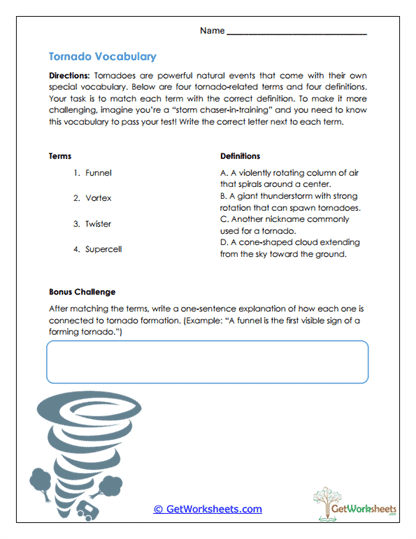
Vocabulary
Students match key tornado terms to their correct definitions and then write a sentence showing how each connects to tornado formation. This promotes careful reading and builds weather-related vocabulary. Learners strengthen their grasp of tornado structure and behavior by applying each term meaningfully. The worksheet reinforces both conceptual understanding and scientific communication.
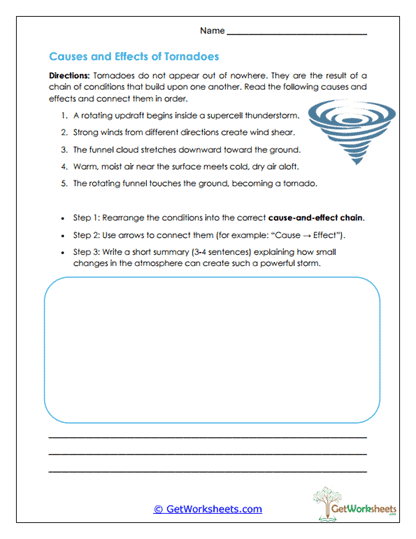
Cause-and-Effect
Learners arrange tornado-related conditions into a correct cause-and-effect chain, illustrating how atmospheric changes build toward tornado development. Drawing arrows helps them visualize the progression of events. A short written summary deepens comprehension of how small shifts in the atmosphere can lead to major storms. This activity supports sequencing skills and scientific reasoning.
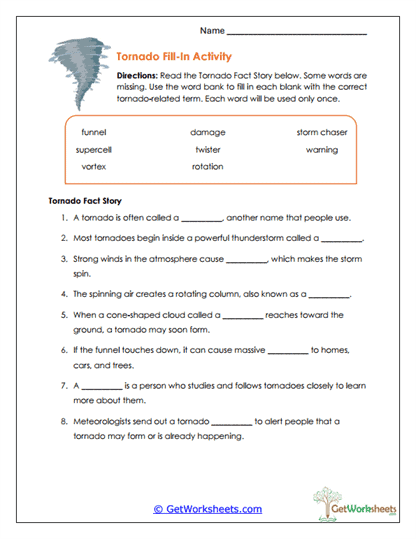
Fill-In Activity
Students complete a tornado fact story using a word bank containing terms like funnel, supercell, vortex, and warning. By inserting vocabulary into well-structured sentences, they practice applying terminology in context. The task strengthens reading comprehension and reinforces understanding of tornado development and safety. It also helps learners master storm-related scientific words.
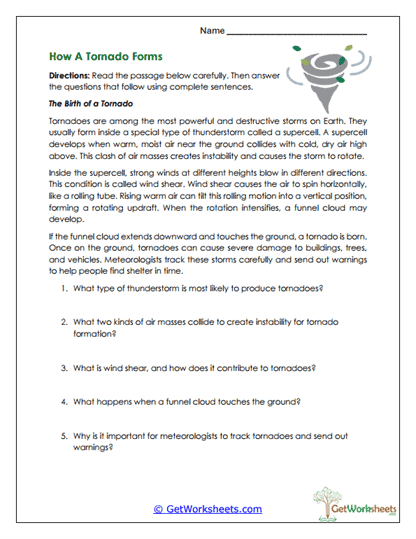
How a Tornado Forms
This worksheet features an informational passage explaining tornado formation inside supercell thunderstorms. Students learn about wind shear, rotating updrafts, and funnel clouds before answering comprehension questions. They write complete responses that demonstrate understanding of atmospheric processes and storm tracking. The activity builds strong reading and explanatory writing skills.
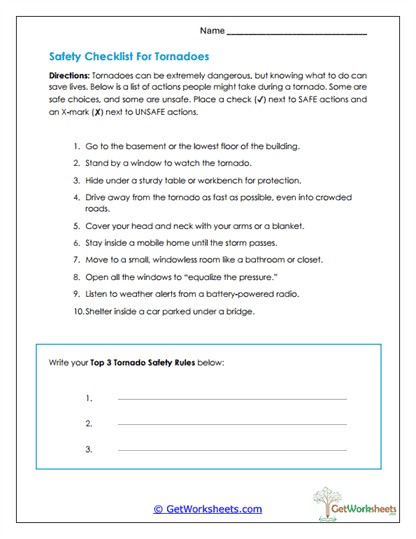
Safety Checklist
Students examine a list of tornado-related actions and mark each one as SAFE or UNSAFE. They evaluate choices such as sheltering in a basement or seeking cover under a bridge. The activity promotes life-saving safety awareness and decision-making. Learners also identify their top safety rules, reinforcing readiness for severe weather.
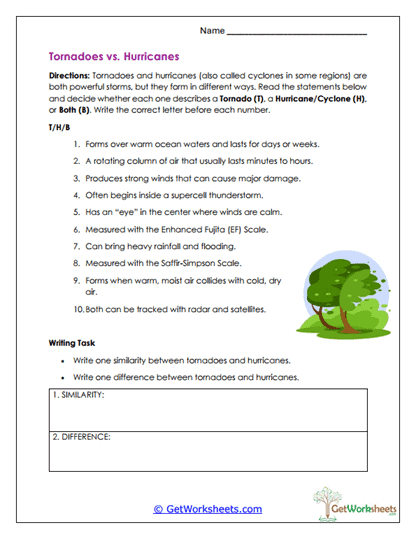
Tornadoes vs. Hurricanes
Learners compare tornadoes and hurricanes by labeling statements as Tornado (T), Hurricane (H), or Both (B). This introduces important differences in formation, duration, and measurement. A writing extension asks students to describe one similarity and one difference between the storms. The worksheet strengthens comparative thinking and scientific literacy.
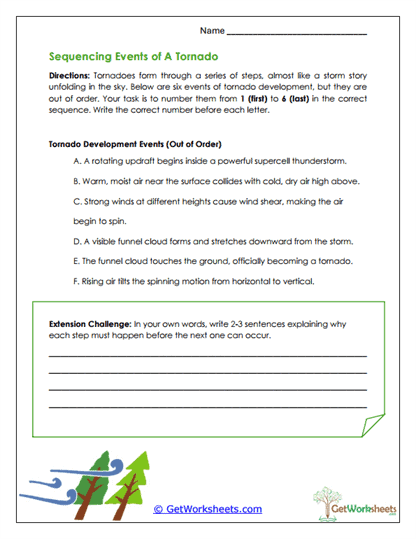
Sequencing a Tornado
Students number six events in the tornado development process from rotating updraft to tornado touchdown. They visualize how each step leads to the next within atmospheric conditions. An extension prompt requires them to explain why each event must occur in sequence. The activity builds logical reasoning and understanding of storm progression.
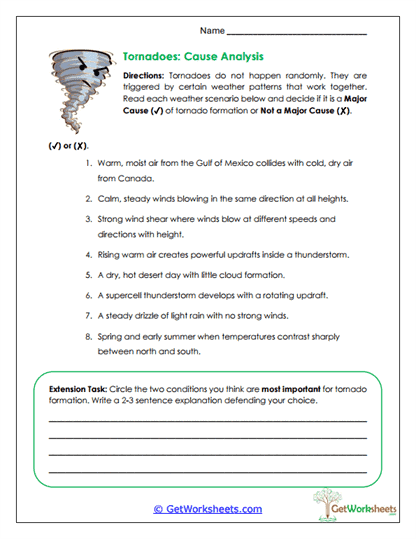
Cause Analysis
Learners analyze weather scenarios and label each one as a Major Cause or Not a Major Cause of tornado formation. They consider conditions like warm moist air, wind shear, and supercell thunderstorms. A written extension challenges them to justify which conditions matter most. This activity encourages evidence-based reasoning and atmospheric understanding.
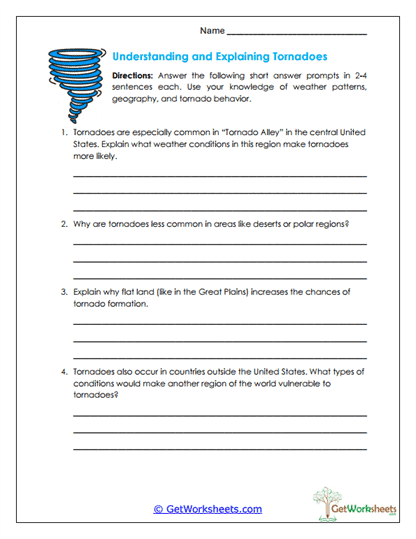
Explaining Tornadoes
Students answer short questions exploring why tornadoes occur more frequently in some regions and rarely in others. They examine geography, climate, and global weather patterns. This strengthens explanatory writing and helps students connect meteorological concepts to real-world locations. The worksheet builds both science and geography knowledge.
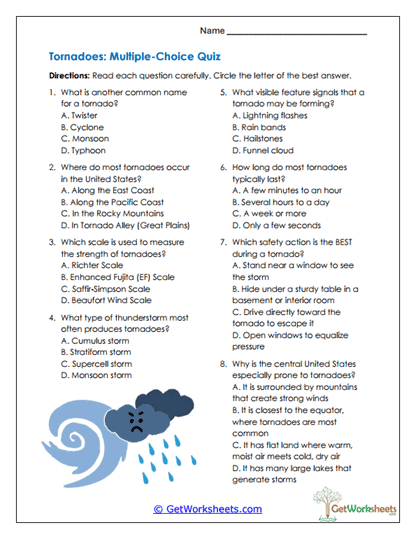
Multiple-Choice Quiz
This quiz assesses understanding of tornado formation, safety, and geographic distribution through ten multiple-choice questions. Students apply knowledge of warning signs, duration, and the Enhanced Fujita Scale. The activity supports reading comprehension and test readiness. It also helps teachers evaluate mastery of tornado concepts.
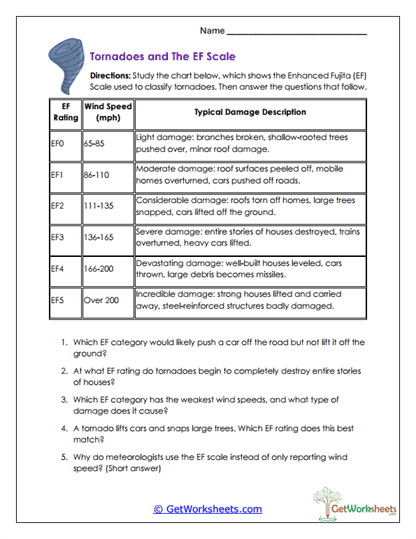
EF Scale Analysis
Learners study the Enhanced Fujita (EF) Scale and answer questions about tornado severity and damage patterns. They interpret wind-speed ranges and identify the impacts associated with different EF ratings. This worksheet builds chart-reading skills and deepens understanding of severe weather hazards. It encourages thoughtful analysis of storm intensity data.
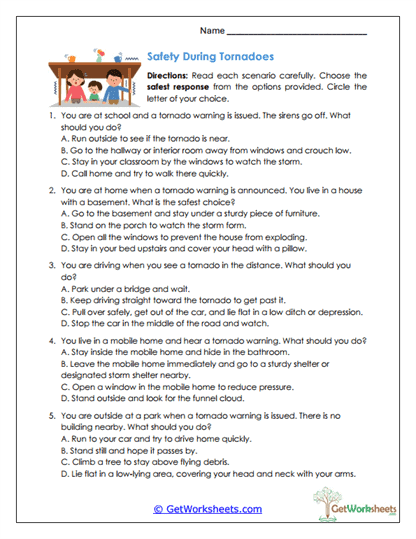
Safety Scenarios
Students read real-life tornado scenarios and select the safest response from multiple choices. They apply safety rules to situations at school, at home, while driving, and outdoors. The activity builds practical preparedness and strengthens critical thinking. Learners gain confidence in making safe decisions during severe weather emergencies.
Bookmark Us Now!
New, high-quality worksheets are added every week! Do not miss out!