The Rock Cycle Worksheets
About This Worksheet Collection
This rock-cycle worksheet collection offers teachers a rich set of resources that guide students through one of Earth science's most fundamental systems. The materials blend sequencing tasks, matching activities, classification labs, creative narratives, and multiple-choice reviews to help learners understand how rocks continually transform through natural processes. Each worksheet reinforces the idea that Earth's materials are always changing-melting, cooling, compacting, eroding, and reforming in a dynamic, ongoing cycle.
Across the collection, students build critical academic skills such as interpreting scientific descriptions, explaining geological change, analyzing cause-and-effect relationships, and applying specialized vocabulary. They practice distinguishing among igneous, sedimentary, and metamorphic rocks, connect physical characteristics to formation processes, and develop a clearer sense of how pressure, heat, weathering, erosion, and deposition shape Earth's surface. The varied worksheet formats ensure learners can deepen their understanding through multiple modes of engagement.
Detailed Descriptions Of These Worksheets
Rock Cycle Sequencing
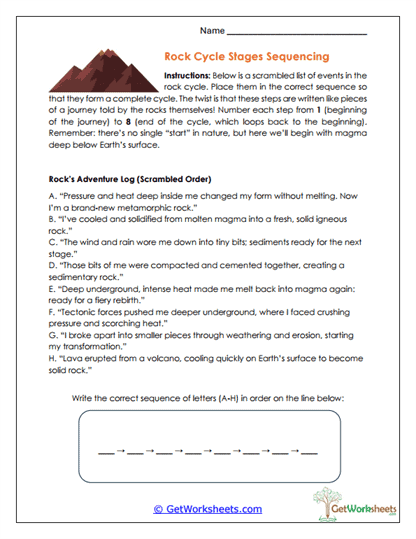
Students arrange eight scrambled rock-cycle events into their correct order, creating a complete pathway from magma formation through repeated transformations. As they analyze each clue, learners strengthen their ability to follow geological changes and recognize transitions among igneous, sedimentary, and metamorphic rocks. The activity supports deductive reasoning and reinforces understanding of processes like heating, erosion, and cementation. It also helps students build chronological thinking within an Earth-systems context.
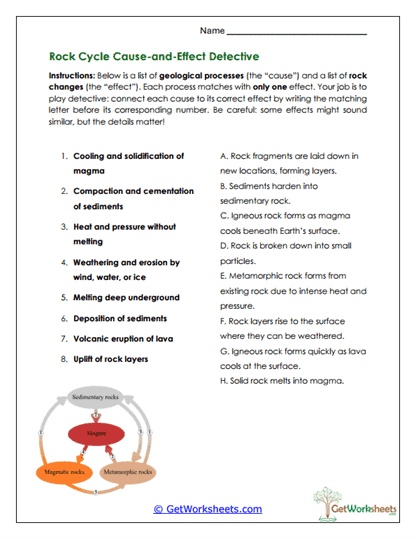
Cause & Effect
Learners match geological processes to their corresponding outcomes, clarifying how factors such as cooling, melting, and compaction influence rock formation. By examining each pair closely, students develop stronger reasoning skills and deepen their understanding of rock transformations. The structured matching format emphasizes vocabulary precision and conceptual accuracy. This worksheet helps students see how natural forces shape different rock types.
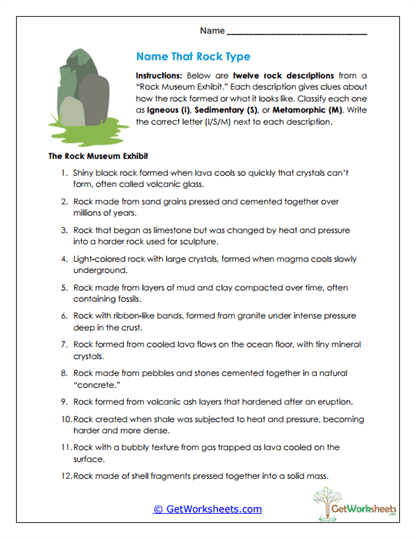
Rock Type Identification
Students read twelve descriptive "museum exhibit" labels and classify each rock as igneous, sedimentary, or metamorphic. They rely on clues such as texture, crystal size, pressure, and layering to determine classification. The activity encourages close reading and builds confidence in using evidence to identify rock types. It supports foundational knowledge of how geological conditions shape physical characteristics.
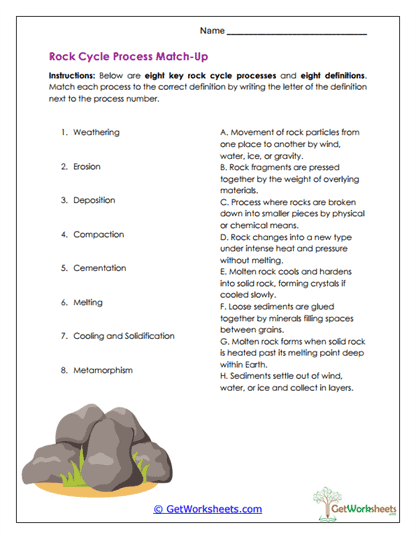
Rock Process Match-Up
This worksheet asks students to match major rock-cycle processes to clear definitions that describe changes caused by erosion, weathering, melting, and more. By distinguishing between similar processes, learners reinforce essential scientific vocabulary. The activity supports careful reading and strengthens understanding of how rocks change within Earth's crust. Students build familiarity with terminology needed for more advanced geology content.
Geologist Classification Lab
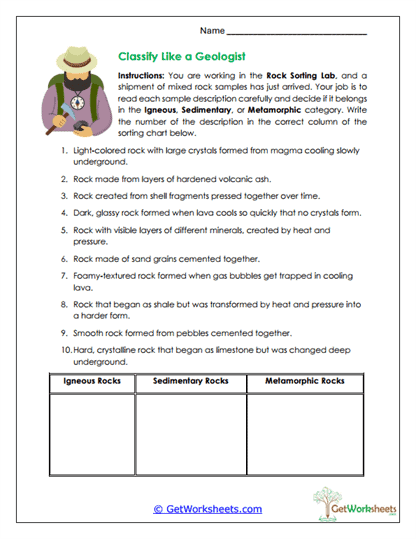
Students analyze ten rock descriptions and sort them into igneous, sedimentary, or metamorphic categories using a chart. Each description highlights clues like volcanic origin, pressure effects, or layering. This simulated lab experience strengthens observational reasoning and helps students apply evidence-based classification. The task reinforces how Earth materials reveal their history through physical features.
Process to Product Matching
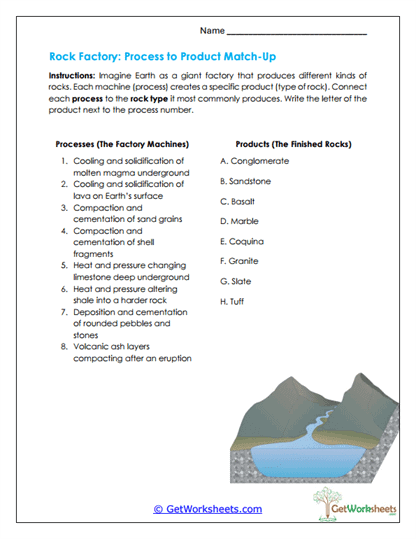
Learners match rock-forming processes with the rock types they produce, encouraging a systems-level understanding of geological change. Students connect processes like heat and pressure or compaction to rocks such as basalt, marble, or conglomerate. The activity builds scientific reasoning and reinforces memory of formation pathways. It helps students visualize how Earth's "rock factory" transforms materials over time.
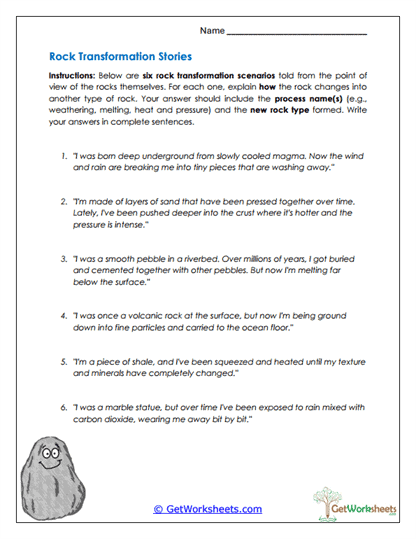
Rock Transformation Stories
Students read first-person narratives told from the perspective of rocks undergoing transformation. They identify the processes involved and determine the new rock type formed. This creative approach engages both imagination and scientific thinking, helping students remember complex concepts more easily. Writing complete explanations promotes clarity and reinforces understanding of long-term geological change.
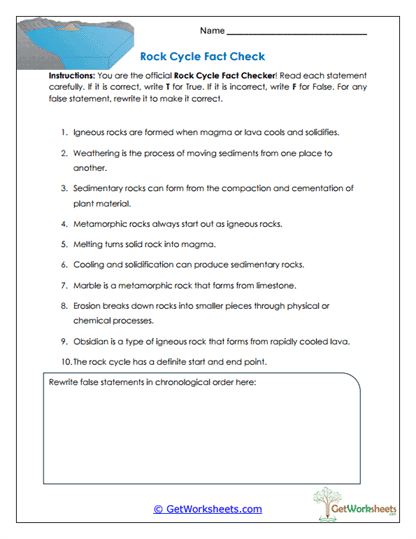
Fact Check
Learners evaluate ten statements about the rock cycle and mark them as true or false. They correct inaccuracies by rewriting false statements with scientifically accurate information. This activity strengthens scientific literacy and challenges common misconceptions. The final sequencing task reinforces understanding of chronological order within the rock cycle.
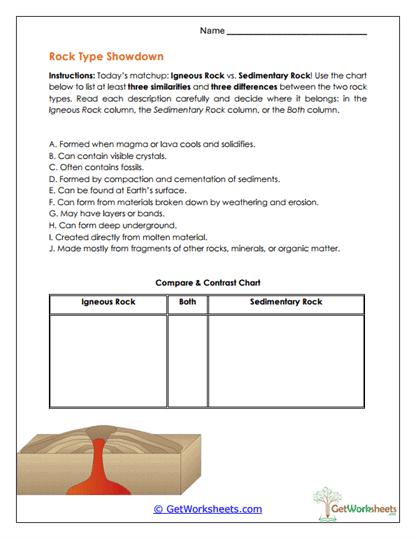
Rock Type Comparison
Students compare igneous and sedimentary rocks by sorting descriptive statements into appropriate columns. They then identify similarities and differences, promoting deeper analysis of formation processes and rock characteristics. The activity builds classification and comparative reasoning skills. It also enhances scientific vocabulary related to Earth materials.
Rock Cycle Stage Identification
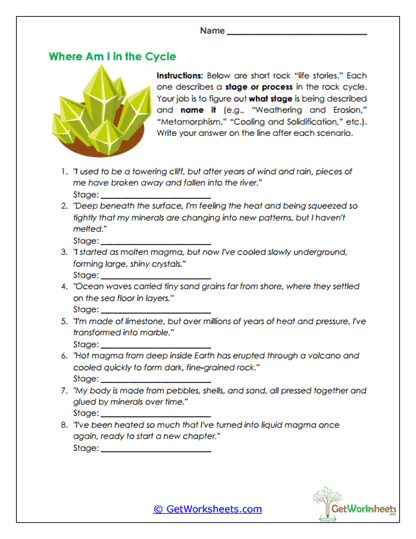
Learners read eight short "life story" snippets told by rocks in different stages of the cycle. They determine which process or stage is being described and label each one correctly. This narrative-based approach strengthens interpretation and supports understanding of continuous geological change. The activity reinforces vocabulary tied to melting, erosion, compaction, and other key processes.
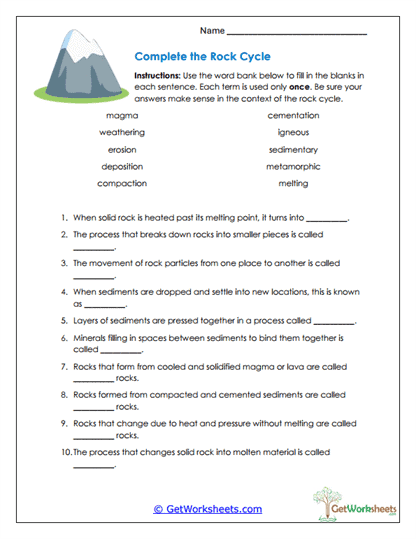
Fill-In
Students complete ten fill-in-the-blank statements using a word bank of geological terms. They must read for context clues to ensure terms such as deposition, magma, or compaction fit correctly. This worksheet reinforces vocabulary knowledge and supports comprehension of how rocks transform over time. It helps students differentiate among similar processes within the cycle.
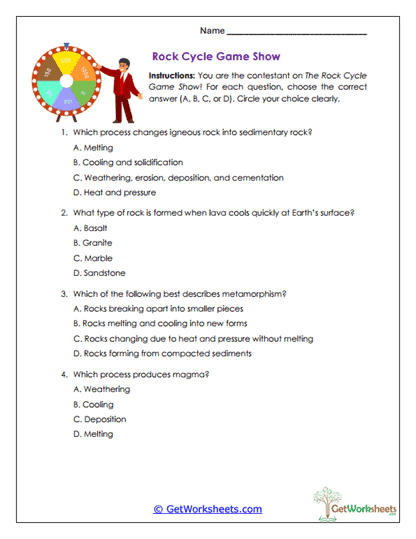
Game Show
This multiple-choice activity offers a fun review of major rock-cycle concepts in a game-show format. Students answer questions about heat and pressure, cooling, magma formation, and rock types. The worksheet strengthens recall and builds confidence in interpreting scientific questions. It offers an engaging way to prepare for quizzes or reinforce unit content.
Bookmark Us Now!
New, high-quality worksheets are added every week! Do not miss out!