The Aeneid Worksheets
About This Worksheet Collection
This Aeneid worksheet collection brings Virgil's epic poem to life through a sequence of structured, engaging activities that balance literary comprehension with creative interpretation. Each worksheet is designed to help students navigate the poem's characters, plot, themes, and symbolism, encouraging close reading and critical thinking. The set can function as a complete teaching resource-ideal for classical literature units, comparative mythology lessons, or integrated humanities study-providing teachers with flexible tools for guided discussion, assessment, or independent analysis.
Through these exercises, learners deepen their understanding of epic structure, character motivation, and recurring motifs such as fate, duty, and divine influence. Students strengthen skills in sequencing, textual evidence, argumentation, and interpretive writing while gaining an appreciation for how Roman values and storytelling shaped Western literature. The collection not only reinforces comprehension but also invites thoughtful reflection on the enduring questions of heroism, morality, and destiny that define The Aeneid.
Detailed Descriptions Of These Worksheets
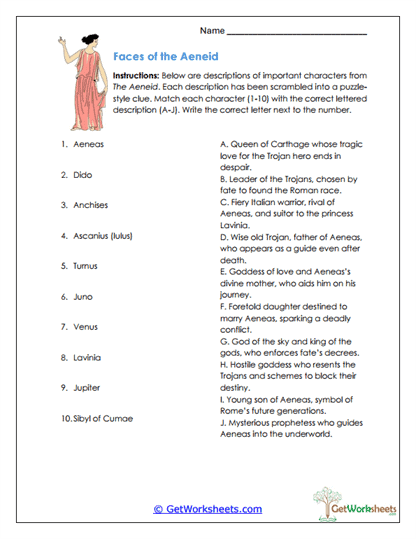
Epic Characters
Students match central figures from The Aeneid to concise descriptions that reveal their roles and relationships within the epic. This character-driven activity helps learners differentiate between mortals and gods, rivals and allies, while reinforcing how each influences Aeneas's destiny. By analyzing details and cross-referencing text evidence, students sharpen interpretive reasoning and character recognition skills.
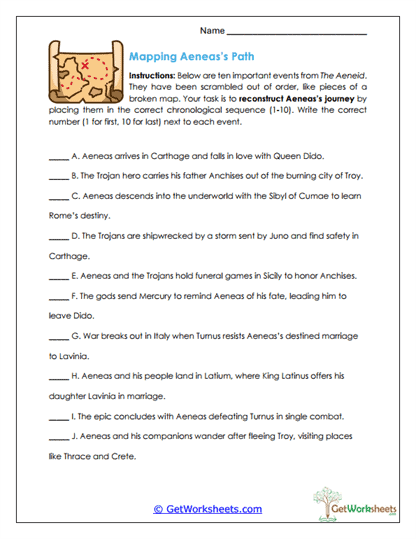
Journey Sequencing
Learners reconstruct Aeneas's travels by organizing ten major events in proper chronological order. This sequencing task emphasizes cause and effect, narrative flow, and the logic of Virgil's storytelling. It strengthens memory recall and analytical reading while providing a clear overview of the hero's journey from Troy to Italy. The exercise serves as both review and summary preparation.
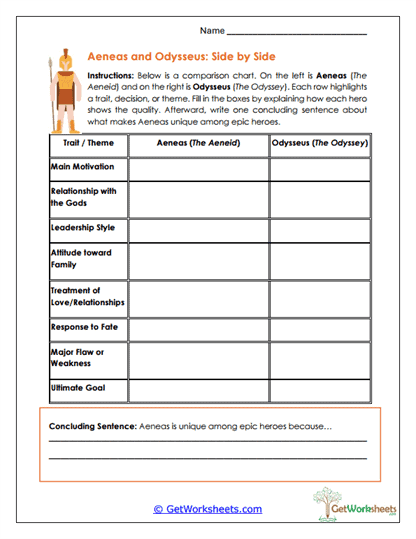
Hero Comparison
In this comparative chart, students examine Aeneas and Odysseus side by side, exploring how each embodies distinct cultural ideals. They cite examples of motivation, duty, and divine interaction to clarify differences between Roman and Greek heroism. The chart encourages structured reasoning, textual support, and balanced literary analysis. It's a strong precursor to essay writing or class debate.
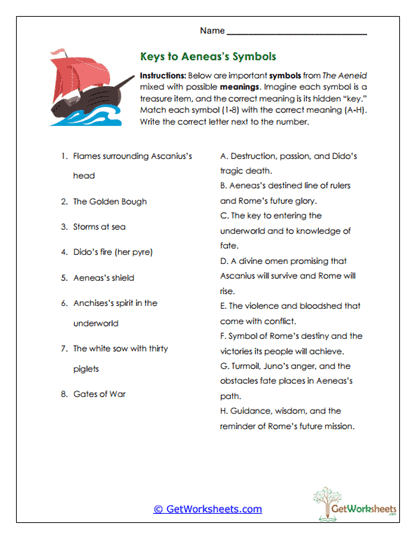
Symbol Match
This worksheet invites students to interpret symbolic imagery such as the Golden Bough, Dido's fire, and Aeneas's shield. Each match connects an image or omen to deeper meanings tied to fate, prophecy, or conflict. Learners move from literal understanding to figurative analysis, refining their ability to interpret theme and motif. The format offers immediate, targeted feedback on comprehension.
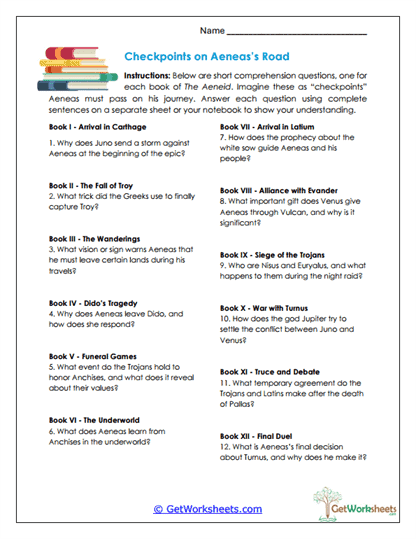
Book Checkpoints
Students answer brief comprehension questions-one per book-to reinforce understanding of pivotal scenes across all twelve books. Each response demands clarity and concise explanation, transforming the activity into both a reading log and a quick-assessment tool. Teachers can use it to gauge comprehension or spark discussion on major turning points.
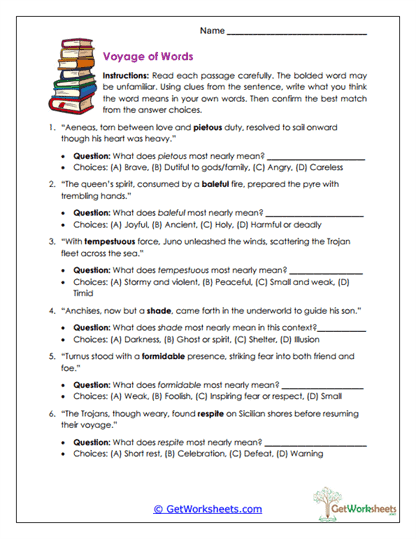
Context Vocabulary
Learners infer the meanings of bolded academic and literary terms by analyzing excerpts from The Aeneid. Through context clues and multiple-choice reinforcement, they practice interpreting elevated diction and tone. This activity strengthens vocabulary acquisition and builds comfort with classical language, improving students' reading fluency in complex texts.
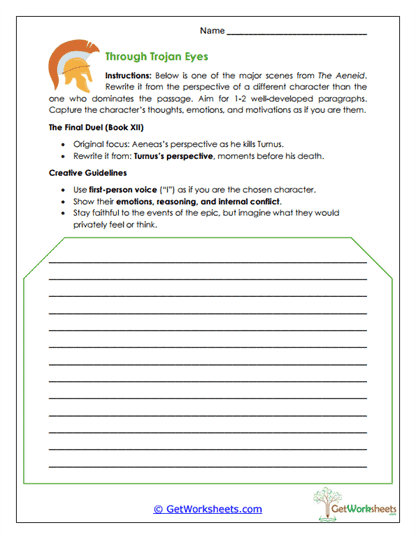
Perspective Rewrite
Students retell the climactic duel from Turnus's first-person perspective, expressing his internal struggle and emotions. This creative exercise builds empathy and narrative voice while requiring textual accuracy. Learners blend imagination with evidence-based writing to reframe the story through an alternate lens, preparing them for deeper point-of-view analysis.
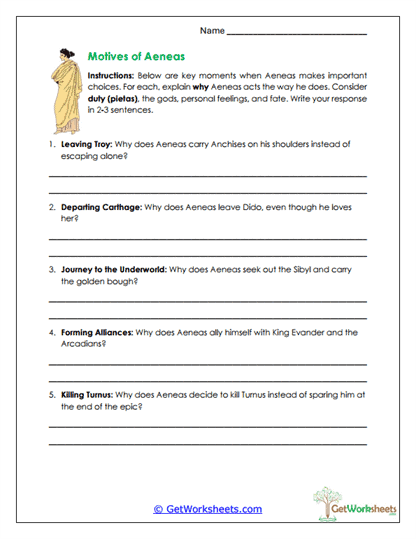
Motive Analysis
For five defining choices Aeneas makes, students write short responses explaining his motives and values. They weigh themes of pietas, emotion, and duty while justifying their reasoning with text references. The exercise encourages concise argumentation and connects literary interpretation to ethical decision-making.
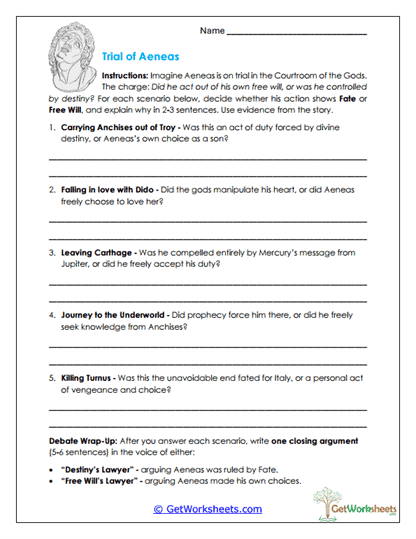
Fate on Trial
This imaginative debate activity places Aeneas's actions under courtroom scrutiny, challenging students to decide whether fate or free will drives each event. Learners build claims, supply evidence, and deliver short closing arguments from opposing perspectives. It's a lively way to teach argumentative writing and deepen understanding of the epic's central philosophical question.
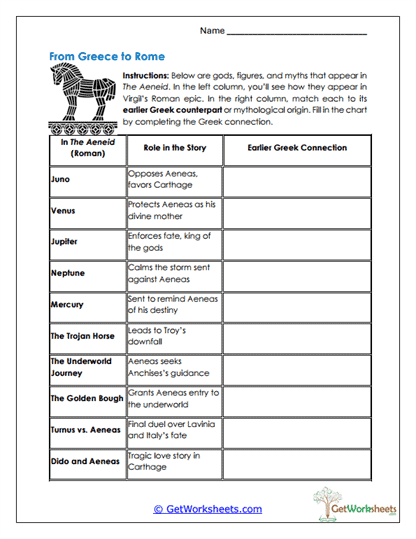
Roman-Greek Links
Students chart the relationships between Roman figures in The Aeneid and their Greek mythological counterparts. The task highlights cultural parallels between Virgil and Homer, reinforcing the continuity of epic tradition. It strengthens background knowledge, aids allusion recognition, and connects literature to classical history.
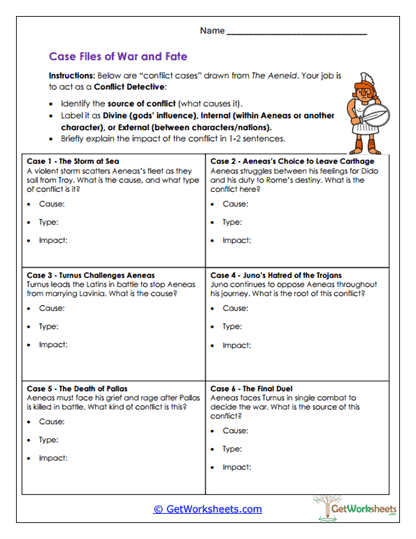
Conflict Detective
Taking on the role of investigator, students analyze six major conflicts in the poem and classify each as divine, internal, or external. They summarize causes and outcomes in concise explanations that reveal how conflict shapes character and plot. This exercise refines analytical reasoning and helps students trace Virgil's complex interplay of human and divine forces.
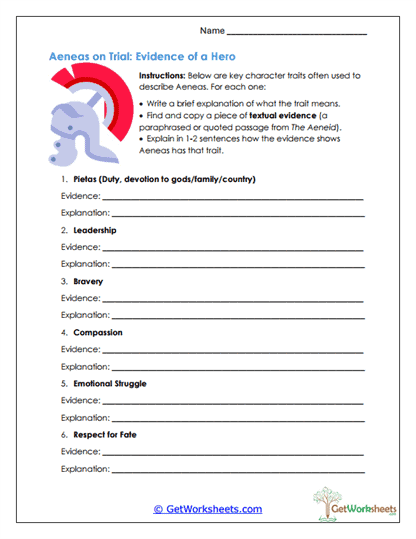
Evidence of a Hero
Learners gather and explain textual evidence that proves Aeneas's heroism through traits like bravery, compassion, and respect for fate. Acting as literary "attorneys," they define each virtue and defend it with examples from the text. The structured format develops argumentation, critical reading, and synthesis skills while celebrating Roman ideals of leadership and duty.
Bookmark Us Now!
New, high-quality worksheets are added every week! Do not miss out!