Spotting AI Worksheets
About This Worksheet Collection
This collection helps students learn how to recognize AI-generated content and identify where AI appears across the digital tools they use every day. Through activities involving ads, headlines, conversations, podcast scripts, apps, and written passages, learners practice spotting stylistic patterns, tone inconsistencies, and algorithm-driven behaviors. Each worksheet guides students to look closely at language and media features, developing awareness of how AI can subtly or overtly shape their online experiences.
As students progress through the set, they strengthen skills in evidence-based reasoning, close reading, tone analysis, and media literacy. They learn to detect repetition, vague phrasing, exaggerated claims, and other markers of automated writing. They also explore how AI influences recommendations, navigation, messaging, and creative content. By examining both human and AI examples, students build critical digital-literacy skills that help them evaluate authenticity, credibility, and fairness in the modern media landscape.
Detailed Descriptions Of These Worksheets
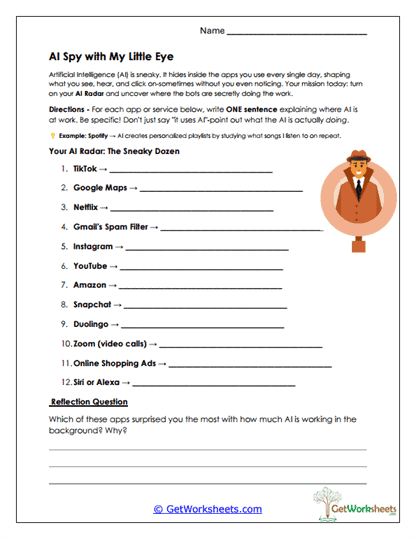
AI Spy Radar
Students read a short introduction and identify how AI appears in apps they use daily, such as TikTok, Google Maps, and Netflix. They write clear explanations describing each AI task, building awareness of recommendation engines, navigation tools, and filtering systems. A reflection question encourages deeper thinking about AI's widespread influence.
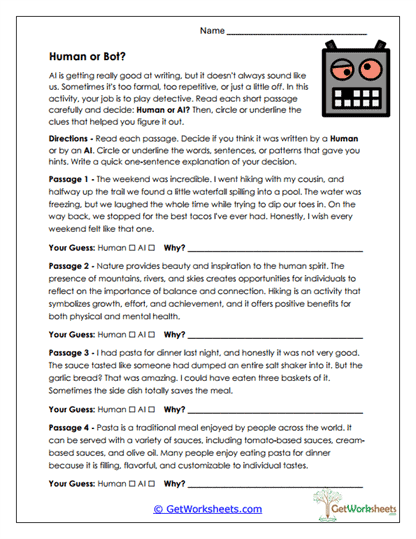
Human or Bot?
Learners examine short passages and decide whether each was written by a human or an AI. They underline clues such as repetitive patterns, overly formal tone, or vague descriptions. Students justify their decisions, strengthening close-reading and evidence-based writing skills.
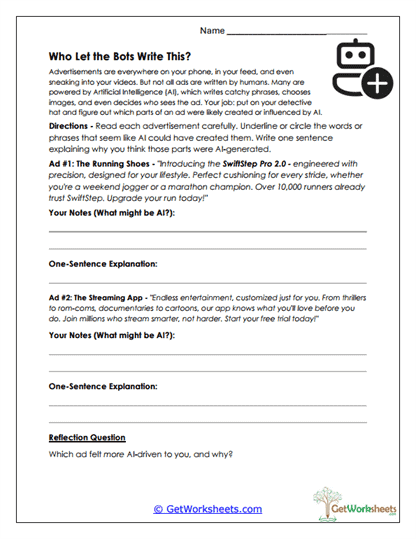
Bot-Written Ads
Students analyze two sample advertisements and underline phrases that seem generic, exaggerated, or machine-like. They write brief explanations of their choices, learning how AI influences marketing language. The worksheet builds media literacy and critical analysis of persuasive writing.
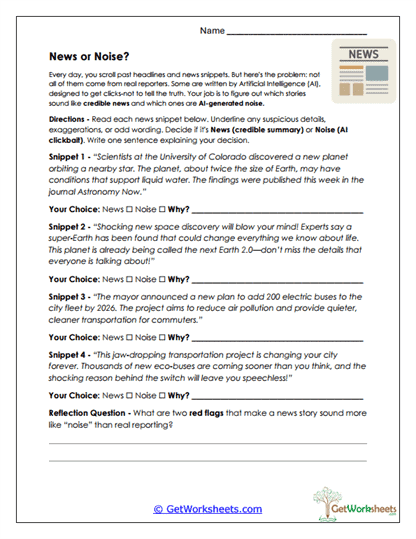
News or Noise
Learners evaluate short news snippets to determine whether each is credible reporting or AI-generated misinformation. They identify red-flag cues such as hype, vague statistics, or emotional exaggeration. This task reinforces critical reading and teaches students how to assess information reliability.
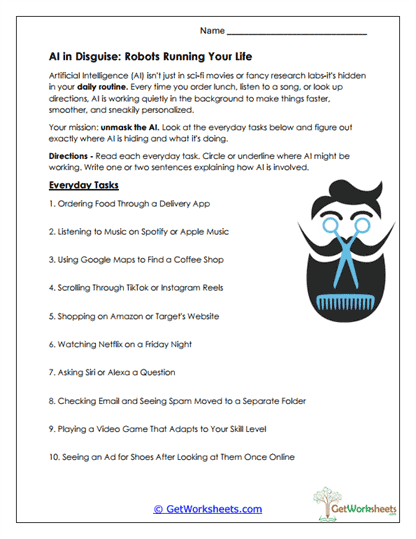
AI in Everyday Life
Students read a list of everyday activities and explain where AI shows up in each one. They identify recommendation tools, context-aware features, and adaptive digital systems. This worksheet highlights the many ways AI supports everyday decisions.
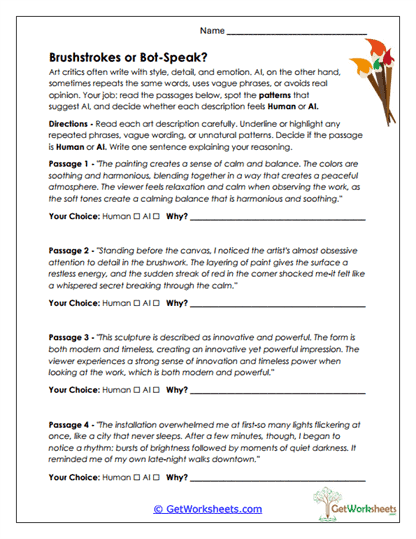
Human or AI in Art?
Learners examine descriptions of artwork and decide whether each feels human-written or AI-written. They underline stylistic clues and explain their reasoning. The activity builds understanding of tone, style, and the limits of AI-generated creativity.
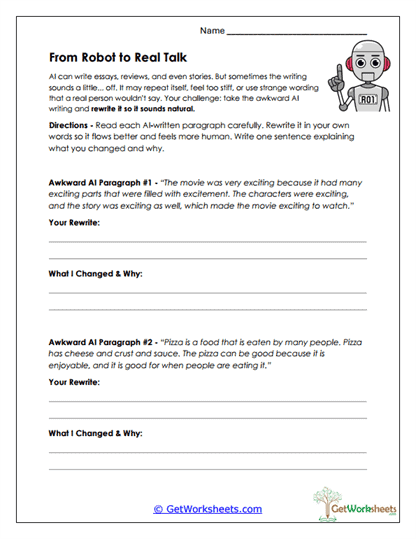
Rewrite AI Text
Students read two awkward AI-generated paragraphs and rewrite them to sound more natural. They explain what changes they made, practicing revision for clarity and flow. This helps learners recognize and improve unnatural automated writing.
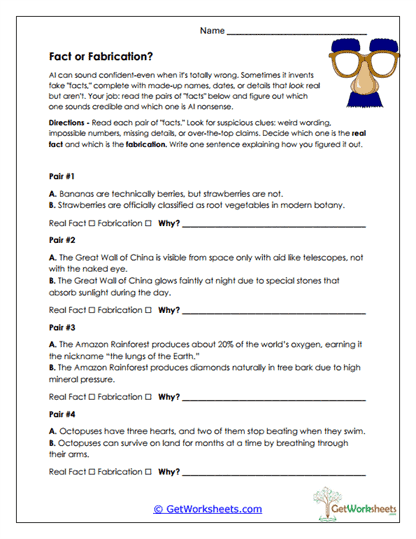
Real Fact or Fake AI?
Learners read pairs of statements-one true, one fabricated by AI-and determine which is accurate. They explain their reasoning by identifying implausible details or contradictions. This worksheet strengthens evidence-based thinking and media literacy.
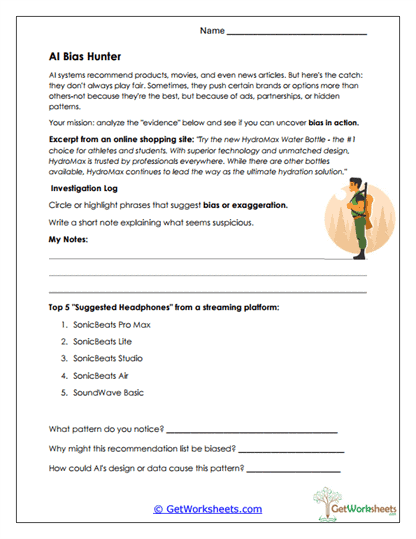
AI Bias Hunter
Students analyze an advertisement and a set of "suggested products" to identify potential AI-driven bias. They look for emotional appeals, suspicious rankings, or promotional patterns. The activity teaches students to question recommendation fairness and understand algorithmic influence.
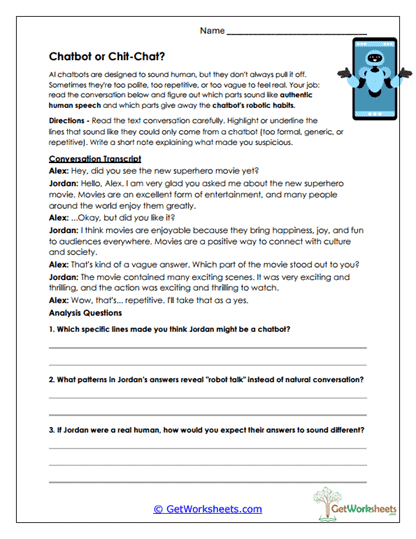
Chatbot Conversation Analysis
Learners read a conversation and identify whether one of the speakers might be a chatbot. They highlight unnatural dialogue patterns and explain their findings through written responses. This builds skills in tone analysis and recognition of formulaic conversational structures.
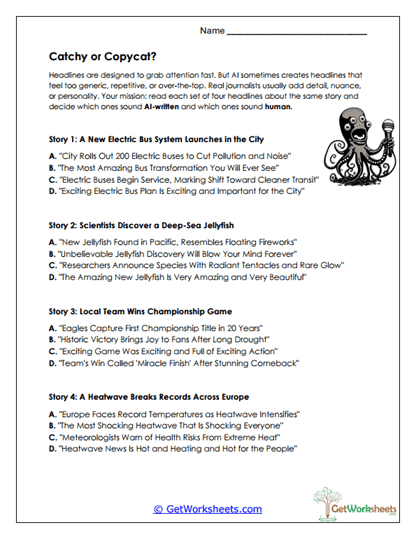
Catchy or Copycat?
Students review sets of headlines about the same story and classify them as AI-written or human-written. They look for vague enthusiasm, repetition, or overly dramatic phrasing. This worksheet strengthens source evaluation and teaches how tone affects credibility.
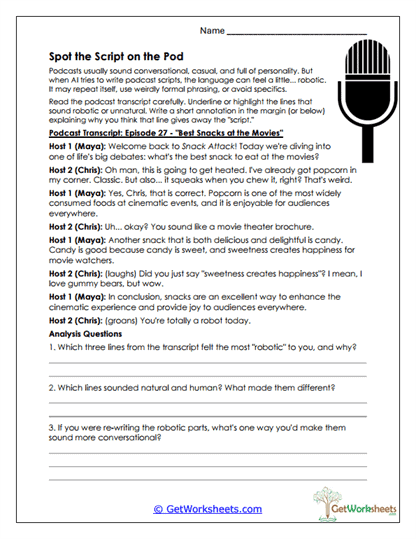
Podcast Script Detective
Learners read a podcast transcript and underline lines that sound overly stiff, repetitive, or robotic. They answer questions comparing natural and artificial-sounding dialogue and rewrite lines to improve fluency. This activity develops close-reading skills and deepens understanding of spoken-language patterns.
Bookmark Us Now!
New, high-quality worksheets are added every week! Do not miss out!