Sorting and Matching by Size or Shape Worksheets
-
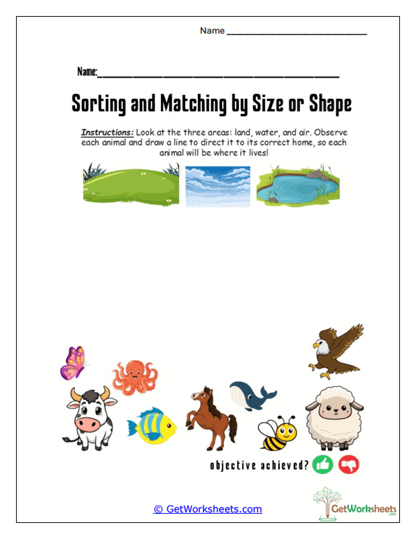
Animal Habitat Sorting
-
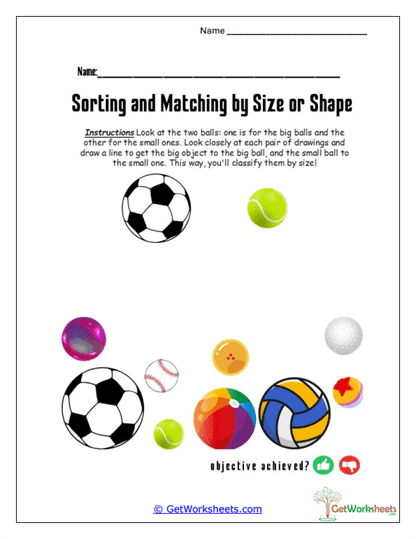
Ball Size Sorting
-
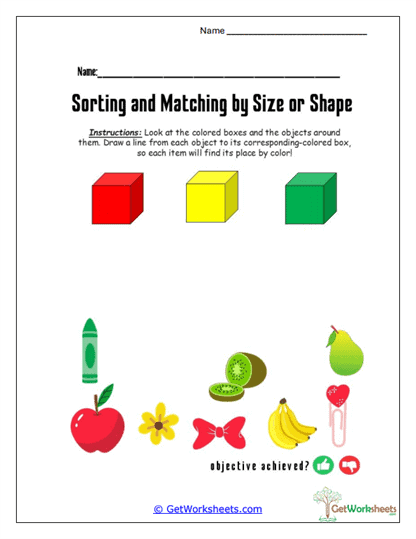
Color Box Matching
-
-
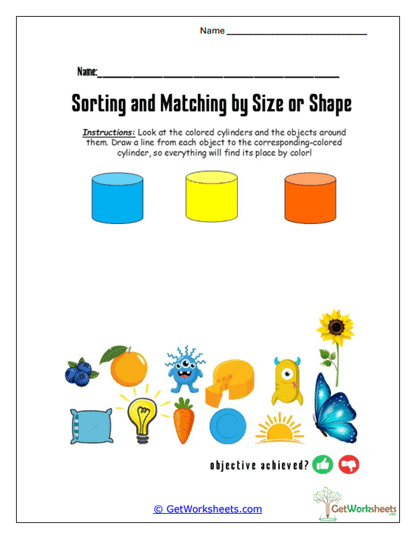
Cylinder Color Sort
-
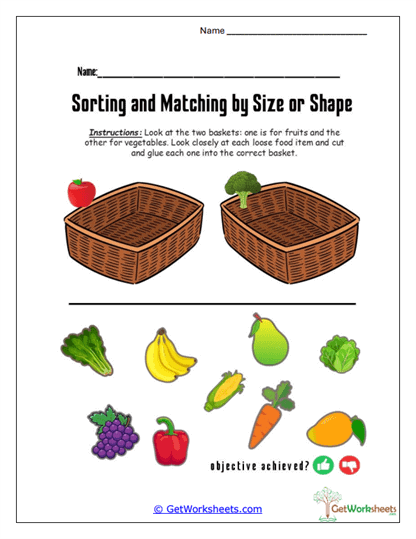
Fruit vs. Vegetables
-
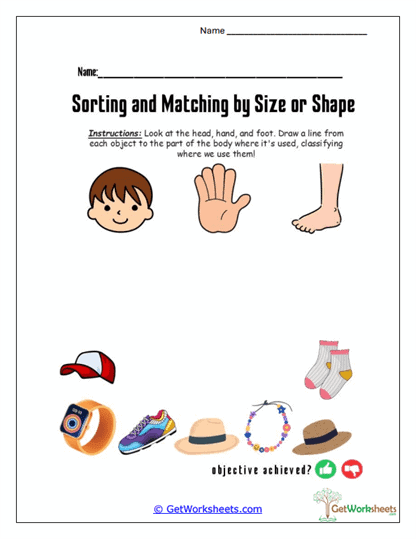
Head Hand Foot Sorting
-
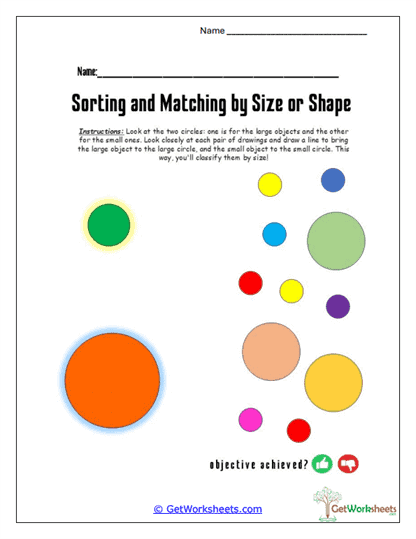
Large vs. Small Circles
-
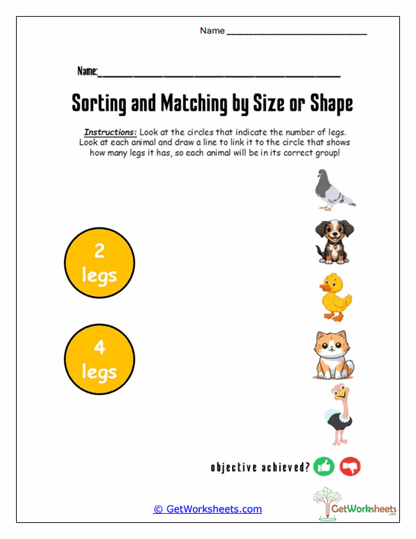
Legs Number Sort
-
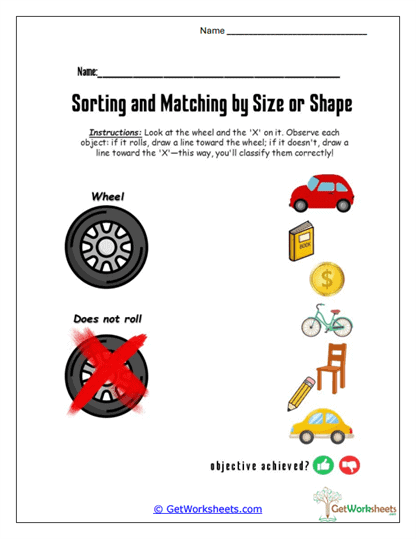
Rolling Object Sort
-
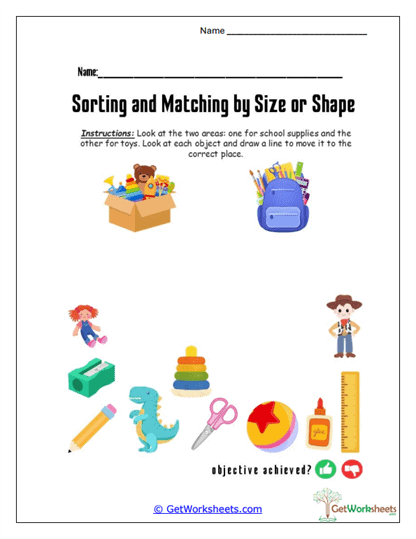
School vs. Toy Sorting
-
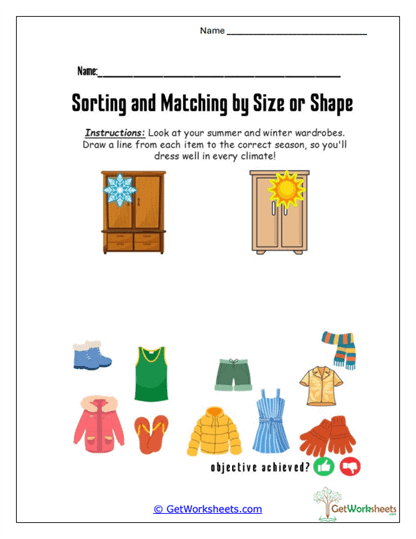
Seasonal Clothing Sort
-
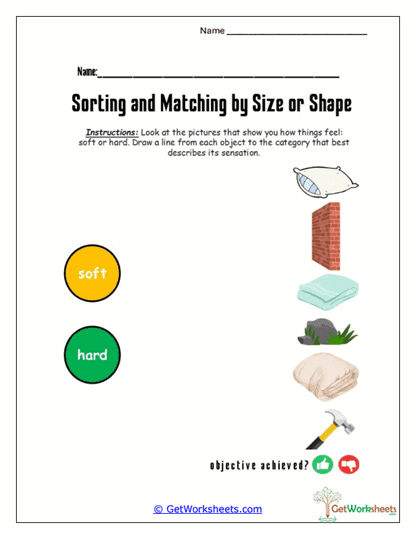
Soft vs. Hard Objects
-
Sports Ball Sorting
-
Toy Box Sorting
-
Yarn Ball Sorting
About This Worksheet Collection
This collection of sorting and matching worksheets helps young learners build foundational classification, comparison, and visual discrimination skills. Through engaging themes-such as toys, food, animals, clothing, textures, and movement-students practice organizing objects based on attributes like size, shape, function, and category. Each worksheet encourages meaningful observation and decision-making, giving children opportunities to identify similarities, differences, and defining features.
As children draw lines, cut and paste, and analyze illustrations, they strengthen fine motor control alongside early cognitive skills. They learn how to compare measurable attributes, classify items logically, and recognize patterns across real-world objects. These worksheets support early math, science, and social-development foundations, fostering both independent thinking and readiness for more advanced sorting and reasoning tasks.
Detailed Descriptions Of These Worksheets
Toy Box Sorting
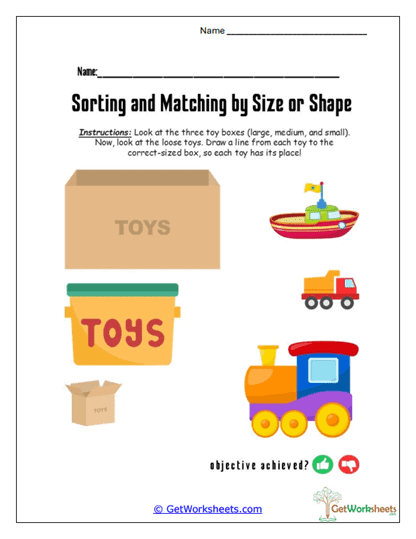
Students examine toys of different sizes and match each one to the correct large, medium, or small box. This process helps children compare relative sizes and strengthens early measurement skills. Drawing lines to sort items reinforces fine motor control and attention to detail. The toy theme makes the activity engaging while promoting logical organization.
Fruit vs. Vegetables
Learners sort illustrated foods into fruit and vegetable baskets using cut-and-glue pieces. This introduces category-based classification and strengthens recognition of common foods. Students practice decision-making as they analyze each item's characteristics. The hands-on sorting also builds fine motor coordination.
Color Box Matching
Students match objects to colored boxes by drawing lines from each item to its corresponding red, yellow, or green box. The task reinforces early color recognition and develops visual discrimination. Children practice focusing on dominant visual attributes. Line drawing supports fine motor strength and early organizational thinking.
Cylinder Color Sort
Learners sort surrounding objects by matching each one to a blue, yellow, or orange cylinder. This single-attribute task strengthens color identification and grouping skills. Students practice scanning for visual characteristics and drawing purposeful lines. The clean layout encourages careful comparison.
Large vs. Small Circles
Students sort objects by size using two circles: one for large items and one for small. The activity helps children compare scale and recognize measurable differences. Fine motor control is reinforced through accurate line drawing. This worksheet emphasizes focusing on a single defining attribute.
Ball Size Sorting
Learners classify balls as big or small by connecting each one to the correct category. The similar shapes encourage close observation of size variations. Students strengthen visual discrimination and comparison skills. The repetitive sorting supports motor refinement and early measurement concepts.
Yarn Ball Sorting
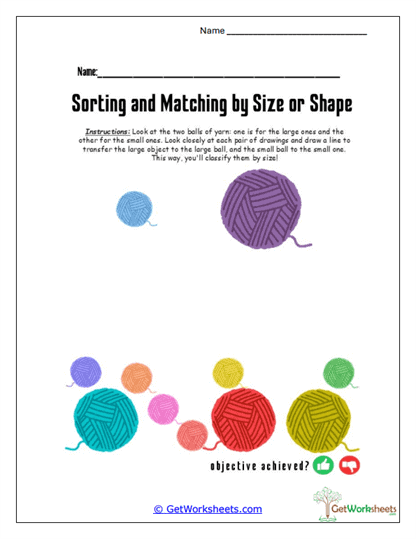
Children sort yarn balls based on size, distinguishing large from small. The familiar objects promote real-world understanding of scale. Students refine fine motor skills as they draw lines to the correct category. The activity encourages focus on one attribute while ignoring irrelevant details.
Sports Ball Sorting
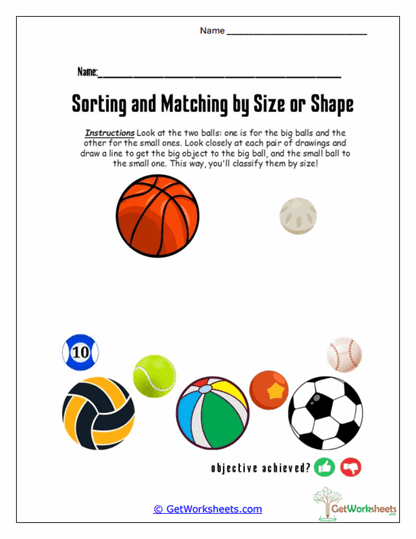
Students categorize sports balls into big or small groups, comparing subtle size differences between similar items. Visual scanning and careful observation are essential as children sort each ball. Fine motor control is strengthened through line drawing. The sports theme adds a playful, familiar context.
Seasonal Clothing Sort
Learners sort clothing items into summer and winter categories. The activity supports science concepts about seasons and weather. Students analyze clothing function, strengthening real-world reasoning skills. Line drawing reinforces motor coordination while children classify objects based on purpose.
Animal Habitat Sorting
Students match animals to land, water, or air habitats by drawing connecting lines. This reinforces understanding of where animals live and supports early biology learning. Visual comparison skills help students identify animal features related to habitat. The task also builds fine motor accuracy.
Rolling Object Sort
Children determine whether objects roll or do not roll, classifying each based on its physical properties. This introduces fundamental physical science concepts about motion and shape. Students practice predictive reasoning and attribute-based sorting. Line drawing supports fine motor steadiness.
Legs Number Sort
Students sort animals by the number of legs they have-either two or four. This task reinforces counting, observation, and classification skills. Children examine physical attributes to make decisions, strengthening scientific thinking. Fine motor abilities grow as they draw accurate lines.
School vs. Toy Sorting
Learners categorize objects as either school supplies or toys. This supports functional classification and helps children distinguish between items used for learning and play. Visual recognition skills are strengthened through detailed object observation. The activity encourages logical thinking and motor control.
Soft vs. Hard Objects
Students classify items based on texture, deciding whether each one is soft or hard. The activity introduces physical-property vocabulary and builds early science knowledge. Visual inference skills develop as students judge texture by appearance. Line drawing reinforces fine motor precision.
Head-Hand-Foot Sorting
Learners sort items based on the body part they are used with-head, hand, or foot. This reinforces body-part awareness and functional understanding. Students analyze how familiar objects are used in daily routines. The activity also supports classification and steady line drawing.
Bookmark Us Now!
New, high-quality worksheets are added every week! Do not miss out!