Small vs. Big AI Models Worksheets
About This Worksheet Collection
This collection helps students understand the differences between small and big AI models, including how they perform, what resources they require, and how they're used in real-world situations. Through comparison charts, case studies, cloze passages, budgeting tasks, and scenario-based reasoning, learners explore the trade-offs between efficiency, accuracy, speed, cost, and complexity. Each worksheet guides students to think critically about why different model sizes exist and how choosing the right one depends on context and need.
Across the set, students strengthen their analytical reading, evaluation, and problem-solving skills while building a solid foundation in digital literacy. They learn to interpret informational text, classify features, identify misconceptions, and apply technological knowledge to mathematical and practical situations. By examining multiple perspectives and distinguishing fact from myth, learners gain a balanced and nuanced understanding of how AI models differ and how those differences influence their real-world applications.
Detailed Descriptions Of These Worksheets
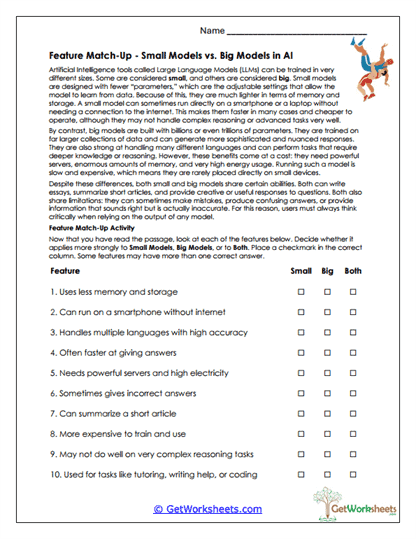
Model Feature Match
Students read an informational passage comparing small and big AI models, then complete a chart assigning features to each model type or both. They use evidence from the text to justify their classifications. This worksheet strengthens comprehension and highlights key trade-offs in accuracy, speed, and resource usage.
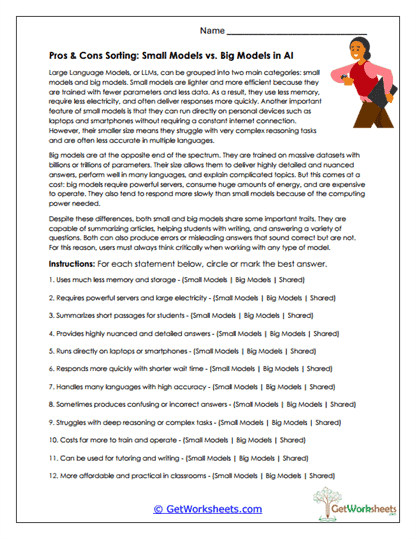
Pros and Cons Sorting
Learners sort statements into categories describing small models, big models, or both. They analyze nuances such as performance limits and power needs. The activity reinforces careful reading and meaningful comparison of model capabilities.
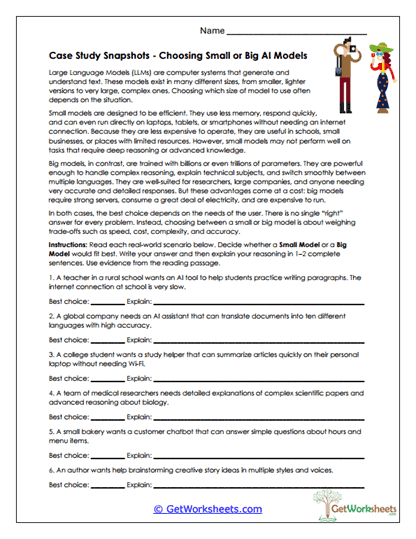
AI Model Case Studies
Students review short scenarios-such as tutoring, translation, and scientific explanation-and choose which model best fits each task. They justify their selections using reasoning from the passage. This builds real-world decision-making and clear explanatory writing.
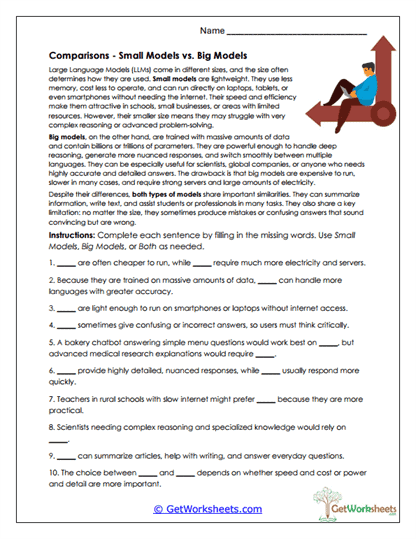
Model Comparisons Cloze
Learners complete fill-in-the-blank statements comparing small and big models using key details from the text. The task encourages close reading and reinforces vocabulary related to cost, accuracy, and processing requirements.
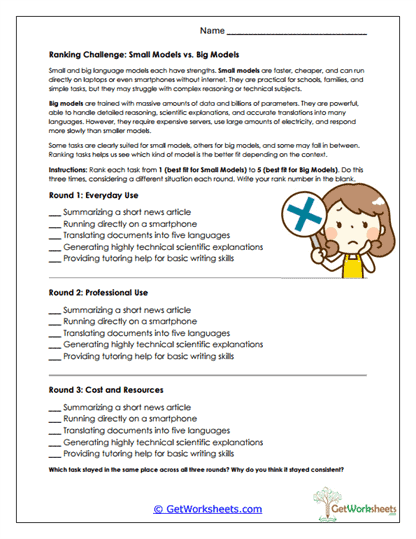
Model Ranking Challenge
Students evaluate multiple tasks and rank small and big models in terms of suitability. They justify choices across several rounds, promoting flexible thinking and evidence-based reasoning. The activity shows how context shapes model effectiveness.
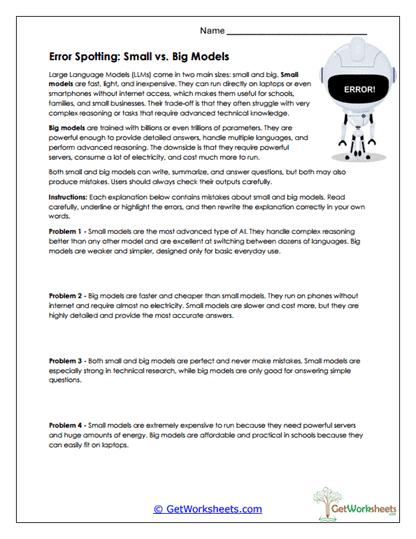
Error Spotting Analysis
Learners analyze inaccurate statements about small and big AI models and rewrite them correctly. This strengthens fact-checking and helps students identify exaggerated or misleading claims.
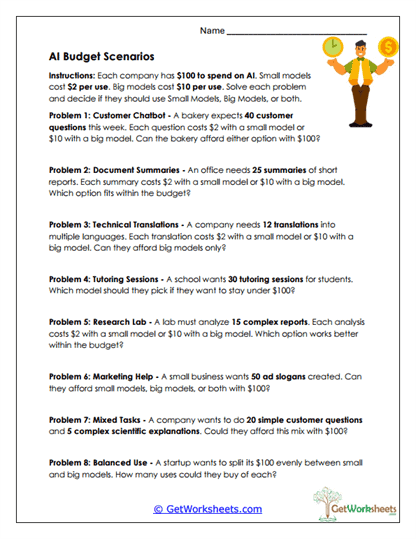
AI Budget Scenarios
Students solve budgeting problems involving model cost and project requirements. They determine which model-or combination-fits within a $100 limit. The worksheet blends financial literacy with technological reasoning.
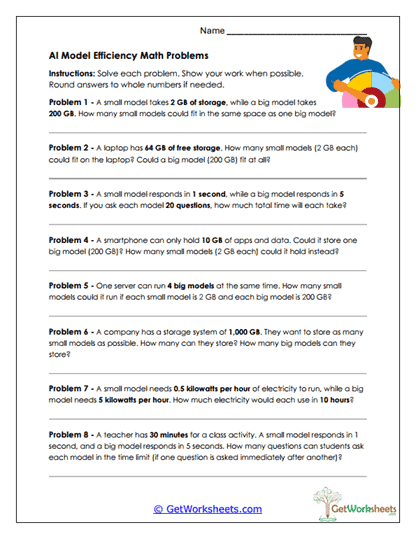
AI Efficiency Math Problems
Learners tackle multi-step math problems involving storage, energy usage, and speed for small and big models. This builds quantitative literacy and connects mathematical reasoning to real-world technology constraints.
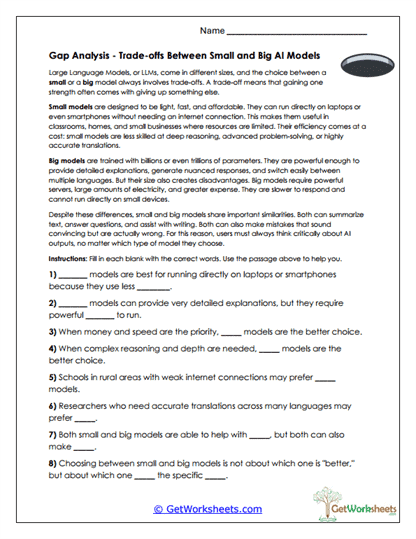
Trade-Offs Gap Analysis
Students complete a cloze passage reinforcing the idea that choosing between model types involves trade-offs. They analyze context clues about efficiency, capability, and resource needs. The activity deepens conceptual understanding of AI decision-making.
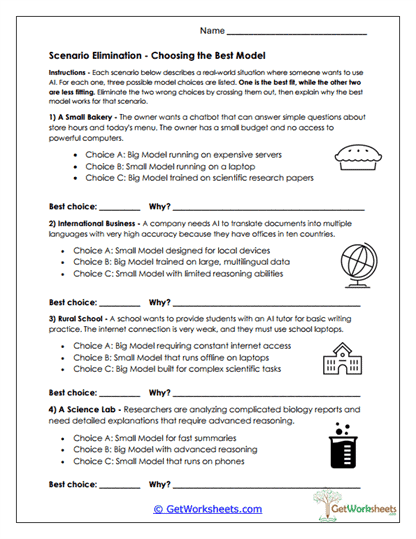
Scenario Model Selection
Learners review real-world scenarios and eliminate two unsuitable options before choosing the best model type. They explain their choices to demonstrate scenario-based reasoning and practical understanding of model strengths.
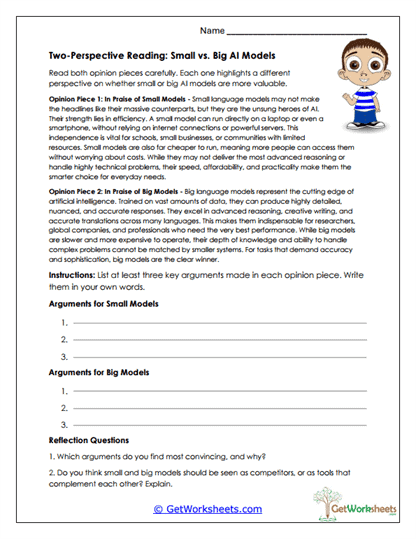
Two-Perspective Reading
Students read contrasting opinion pieces praising small and big models, then list key arguments from each side. They answer reflection questions that require forming their own viewpoint using text evidence. The worksheet strengthens comparison, evaluation, and opinion writing.
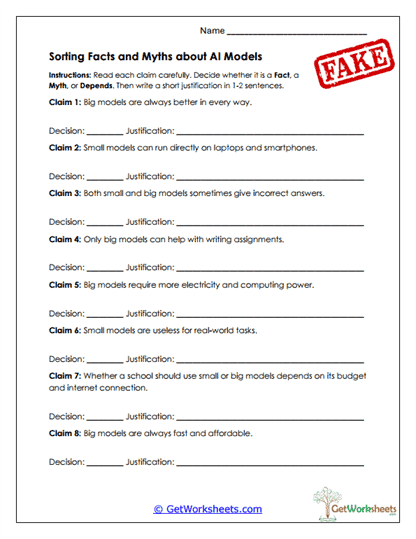
Fact vs. Myth Sorting
Learners categorize statements about AI models as fact, myth, or conditional and justify their reasoning. This task builds critical evaluation skills and helps students recognize misconceptions and oversimplifications about technology.
Bookmark Us Now!
New, high-quality worksheets are added every week! Do not miss out!