Show, Don't Tell Techniques Worksheets
About This Worksheet Collection
The Show, Don't Tell Techniques Worksheets collection helps students transform flat, direct statements into vivid, expressive writing. These worksheets guide learners through multiple techniques-body language, sensory imagery, dialogue, action beats, and scene-level revision-to help them show emotion, atmosphere, and character traits indirectly. Teachers will appreciate how each activity provides clear, practical support for building stronger narrative craft, improving descriptive detail, and deepening students' understanding of how powerful writing engages readers.
Across the collection, students learn to infer emotion from subtle cues, revise telling sentences into dynamic ones, and analyze how writers reveal meaning through behavior, sensory details, and context. They practice essential skills such as inference, character analysis, descriptive precision, and revision strategies. By the end, learners develop sharper narrative instincts and become more confident, intentional storytellers who understand how to communicate emotion and experience without relying on explicit labels.
Detailed Descriptions Of These Worksheets
Emotion Showcasing
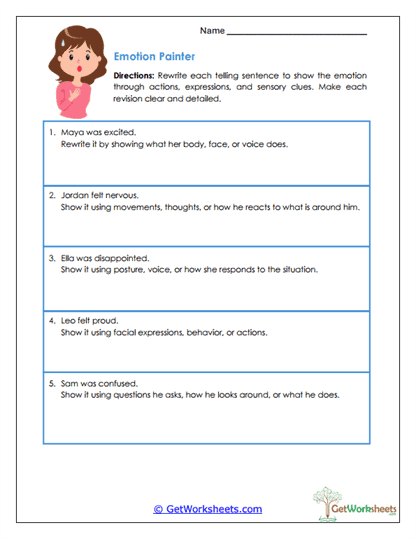
Students revise five telling sentences to show emotions through actions, expressions, and sensory detail. As they rewrite each line, they learn how indirect cues create more vivid character reactions. The activity strengthens descriptive writing and deepens emotional authenticity. It also supports creativity and helps students practice core "show, don't tell" strategies.
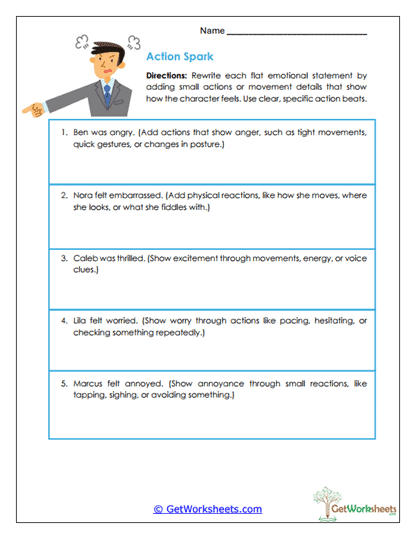
Action Emotion Revision
Learners transform simple emotional statements by adding action beats that reveal feelings through posture, gestures, and small movements. Each prompt specifies the type of action to convey the appropriate emotion. This refined approach helps students understand how behavior communicates emotional states. The worksheet builds precision in character depiction and strengthens revision skills.
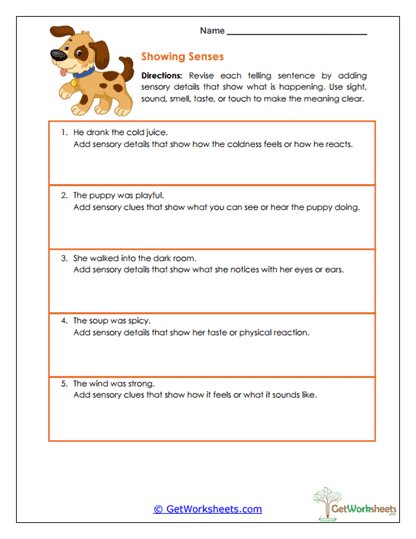
Sensory Detail Builder
Students rewrite telling sentences by incorporating sensory descriptions that clarify mood and experience. Each revision encourages them to rely on imagery rather than direct explanation. The task supports vivid writing and helps learners create more immersive scenes. It also reinforces the role of sensory detail in effective narrative craft.
Emotion Through Dialogue
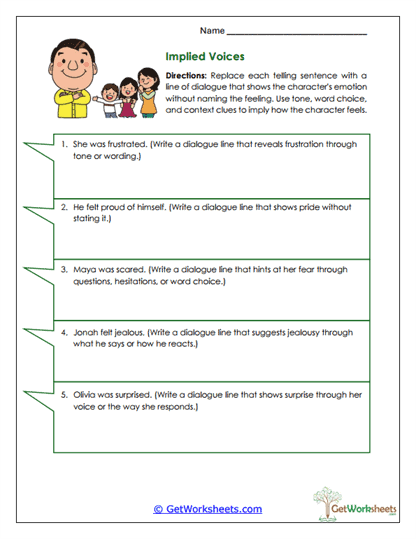
Learners replace telling sentences with lines of dialogue that imply emotion through wording, tone, and phrasing. This helps students develop a stronger sense of character voice and emotional subtext. By crafting indirect emotional cues, they strengthen their understanding of how dialogue shapes storytelling. The activity deepens skill in expressing feeling without labels.
Emotion Matching
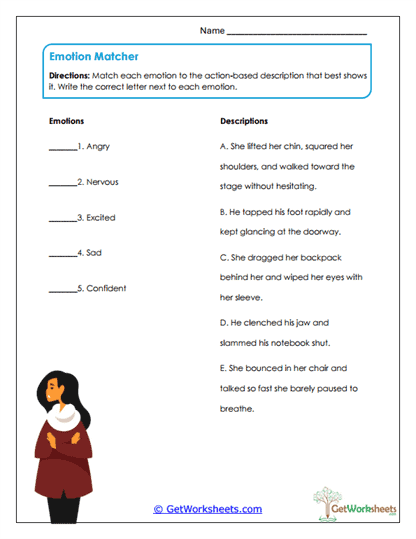
Students match listed emotions to detailed action descriptions that demonstrate them. The exercise helps learners analyze physical reactions and interpret subtle cues. It reinforces recognition of body language as a narrative tool. The matching format also strengthens comprehension and interpretive thinking.
Scene Rewrite Practice
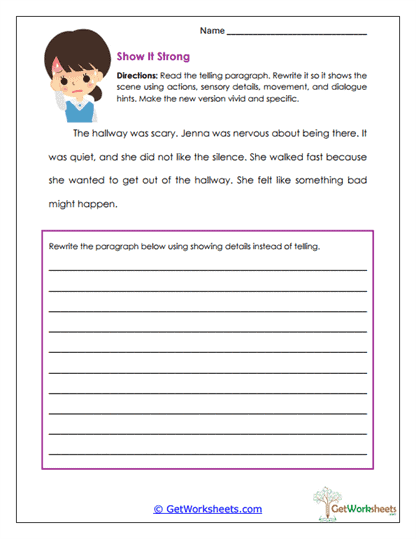
Students read a telling paragraph about a frightening hallway and rewrite it using sensory imagery, movement, and subtle emotional clues. This teaches them to transform flat description into dynamic scenes. Learners practice applying "show, don't tell" at a longer scale, building narrative clarity and atmosphere. The activity encourages thoughtful revision and more polished writing.
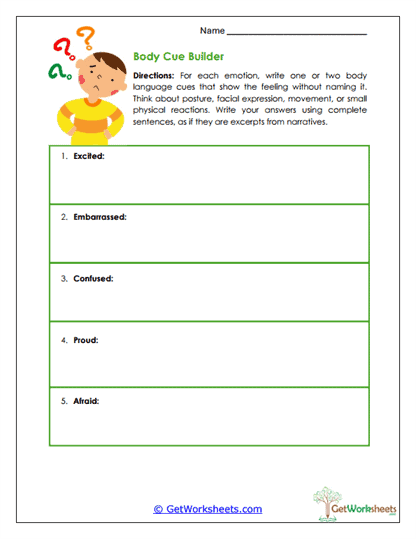
Body Language Builder
Students generate body language cues-posture, movement, facial expressions-for several emotions. Writing in full sentences helps them imagine how such cues function in real narrative excerpts. The activity strengthens characterization by teaching students to depict feeling indirectly. It also builds descriptive specificity and emotional awareness.
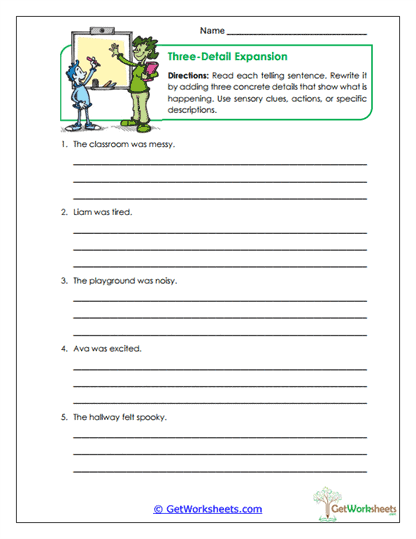
Three-Detail Revision
Learners revise telling statements by adding three concrete details that help the reader visualize the moment. Details may include sensory cues, actions, or specific descriptive elements. This exercise improves elaboration and strengthens habits for writing vivid scenes. It deepens students' skill in expanding minimal statements into meaningful narrative moments.
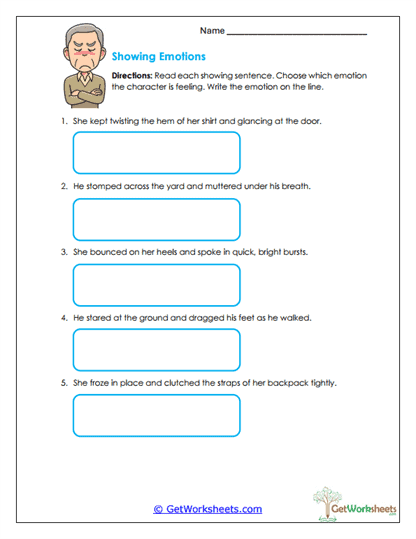
Emotion Interpretation
Students read showing sentences and identify the emotion each one expresses. The task strengthens inference by requiring students to interpret behavior and subtle descriptive cues. It also reinforces understanding of how writers imply meaning. Learners build analytical skills that support character interpretation and narrative comprehension.
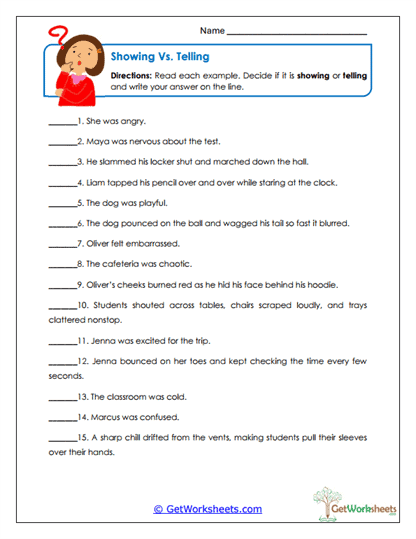
Showing vs. Telling Sort
Students sort fifteen examples into "showing" or "telling," helping them distinguish between direct statements and descriptive cues. This supports foundational understanding of narrative technique. Learners practice recognizing effective writing choices and thinking critically about sentence construction. The activity prepares them to apply strong techniques in their own revisions.
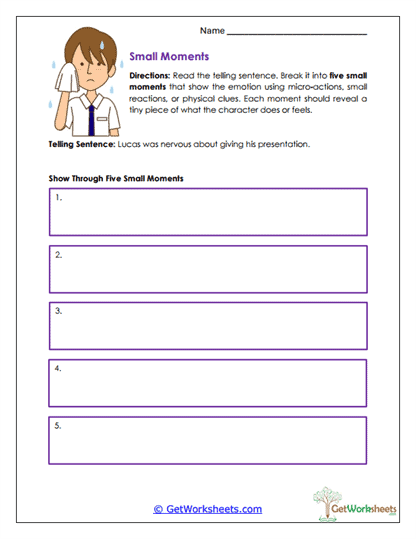
Small Moments
Students expand a single telling sentence into five "small moments" that reveal emotion through micro-actions and subtle reactions. This teaches pacing and helps learners slow down emotional beats for deeper narrative impact. The task supports both struggling and advanced writers by developing nuanced emotional detail. It encourages thoughtful, authentic character portrayal.
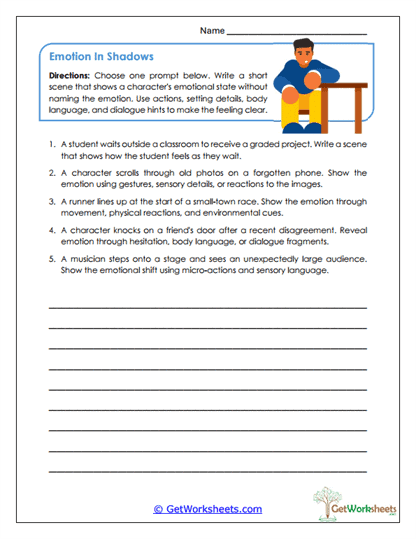
Emotion in Shadows
Learners choose from several prompts and write a short scene revealing emotion without naming it directly. They rely on sensory detail, body language, setting cues, and action to communicate feeling. The activity strengthens inference and narrative craftsmanship. It also demonstrates how subtle descriptive choices shape tone, mood, and characterization across full scenes.
Bookmark Us Now!
New, high-quality worksheets are added every week! Do not miss out!