Shape Tracing Worksheets
About This Worksheet Collection
This collection of shape tracing worksheets provides young learners with a rich variety of activities designed to strengthen fine motor skills, visual-motor integration, and foundational geometry awareness. From animals and everyday objects to detailed geometric assortments, each worksheet invites students to follow dotted outlines that help them practice steady pencil movement, controlled tracing, and accurate line following. These activities are thoughtfully crafted to build early confidence with curves, angles, and simple composite forms.
By working through the collection, children gain essential pre-writing skills while also developing shape recognition, classification, and early mathematical vocabulary. Many worksheets include color-coding steps that reinforce multistep direction following and help learners connect visual instructions with physical actions. With engaging themes and developmentally aligned tracing tasks, this collection supports handwriting readiness, shape fluency, and early academic growth.
Detailed Descriptions Of These Worksheets
Animal Tracing
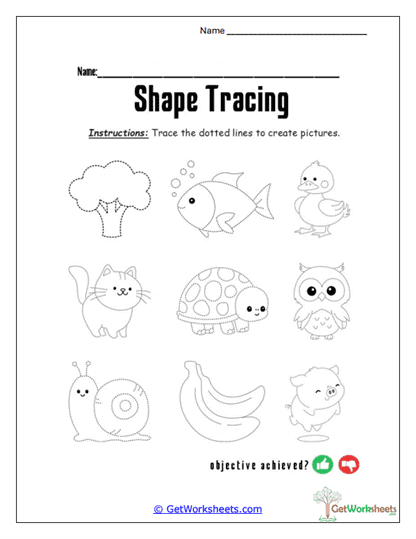
Students trace outlines of familiar animals and objects, building control as they follow a mix of curves and straight lines. The variety of shapes encourages learners to adjust their pencil movements to different forms. As children complete each outline, they strengthen early drawing skills and line awareness. The playful collection of animals and items helps reinforce basic shape recognition.
Ocean Animals
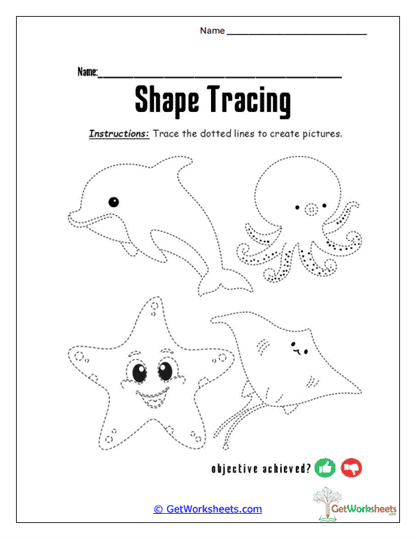
Children trace dotted outlines of marine creatures like dolphins, octopuses, and stingrays, practicing smooth, rounded tracing motions. Each animal features unique curves that promote precision and careful line following. The activity supports fine motor development and visual-motor coordination. Students also expand their knowledge of ocean life through the recognizable designs.
Fruits and Vegetables
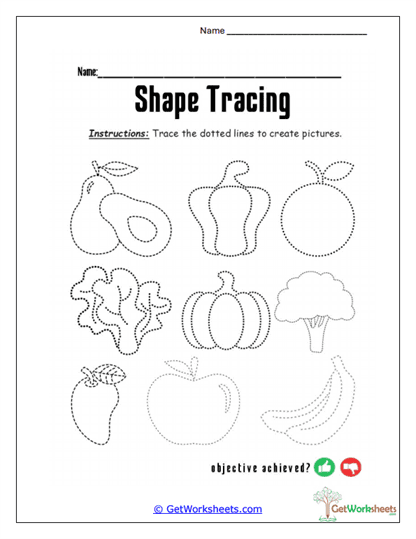
Learners trace dotted shapes representing common foods such as apples, pumpkins, peppers, and bananas. The mixture of simple and detailed outlines helps children practice controlled tracing across varied shapes. As they work, students reinforce vocabulary related to healthy foods. The activity also supports pre-writing development through repeated curved and angled strokes.
Everyday Objects
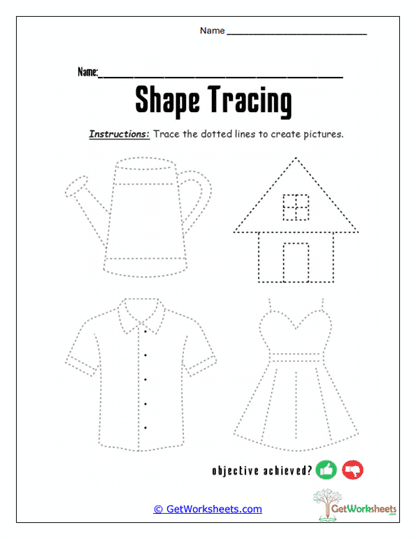
Students trace dotted outlines of household items like a watering can, house, shirt, and dress. The worksheet encourages children to practice straight edges, geometric angles, and curved forms in a single activity. These familiar shapes help learners understand how basic geometry forms recognizable objects. This practice builds visual-spatial awareness and pencil control.
Mixed Objects
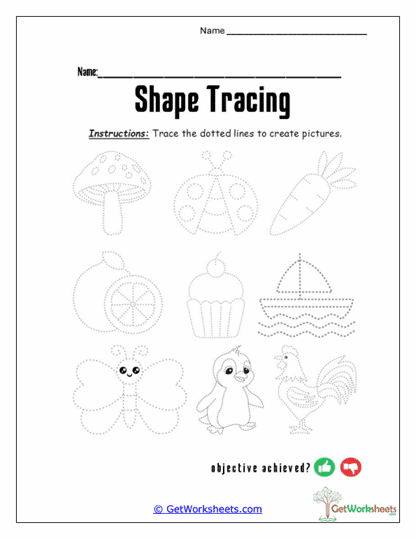
Children trace a broad assortment of objects, from insects and mushrooms to cupcakes and boats. Each design blends multiple geometric elements that require flexible motion control. Students build confidence as they move between simple curves and more complex outlines. The wide variety enhances visual discrimination and early object identification.
Outlines and Colors
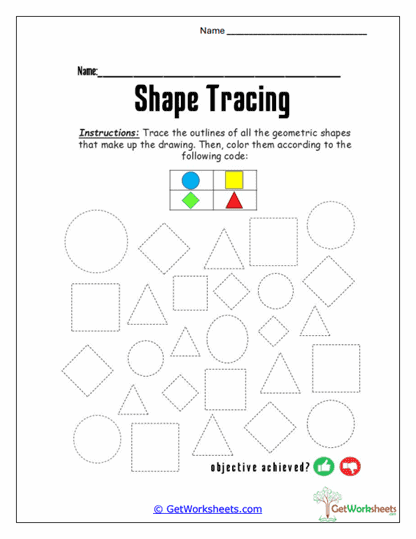
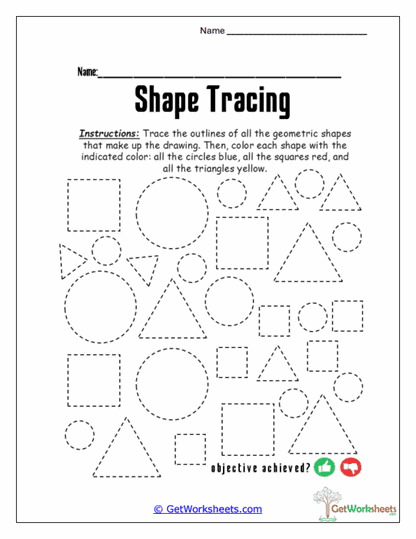
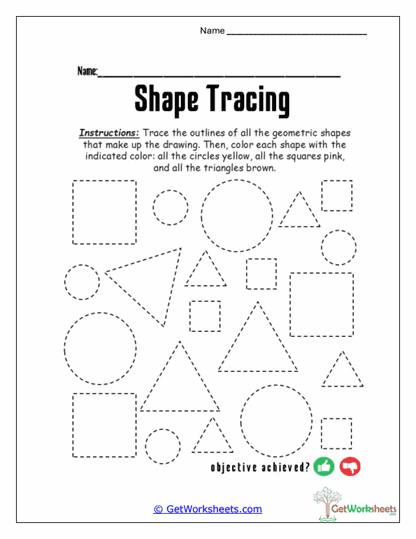
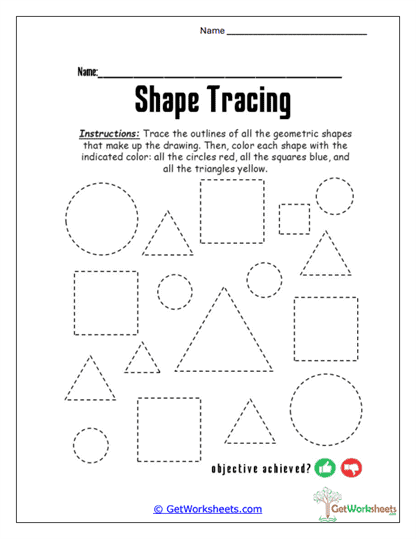
Students trace circles, squares, and triangles, then follow a color key to shade them correctly. This dual-step task reinforces shape recognition and multistep direction following. The tracing experience strengthens fine motor skills needed for writing. Coloring according to the instructions supports careful attention to detail.
Shape Assortments
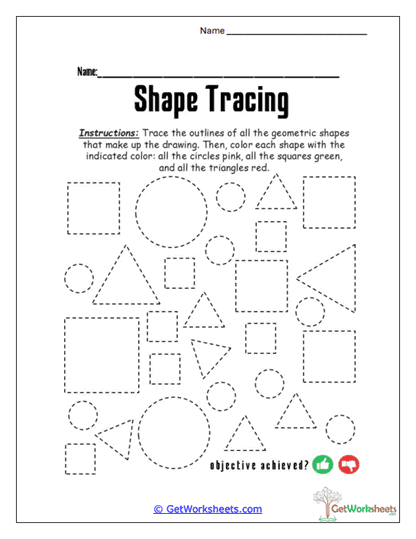
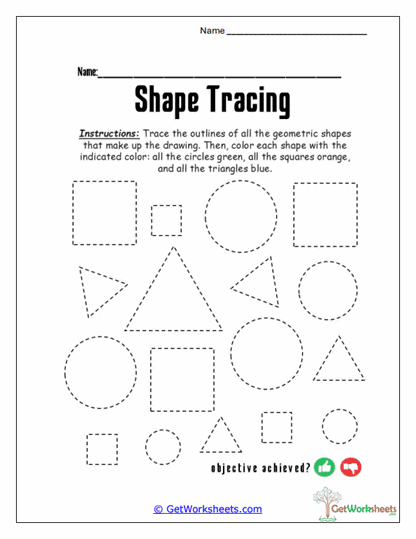
Learners trace groups of circles, triangles, and squares, then apply a specific color to each shape type. The activity promotes classification and sorting as students differentiate between similar geometric forms. Tracing supports control and precision in early handwriting strokes. The color-coding step encourages students to follow structured directions.
Geometry With Colors
Students trace geometric outlines and then color each shape based on a provided key. The repetition of circles, squares, and triangles helps reinforce early geometry vocabulary. Children practice switching between tracing and coloring as they follow multistep instructions. This worksheet supports steady hand movement and thoughtful shape identification.
Classify and Change
Children trace circles, squares, and triangles in various sizes, then color each according to the given code. The variety encourages careful scanning and classification. Tracing improves fine motor control while coloring reinforces instruction-following skills. This worksheet helps students develop early math understanding through repeated practice.
Dense Arrangement
Students trace a densely packed set of circles, triangles, and squares, then color them with the appropriate key. The close spacing encourages precision and consistent line following. The activity deepens knowledge of geometric properties while strengthening tracing endurance. Children also practice attention to detail as they navigate the busy layout.
Color-Coded Shapes
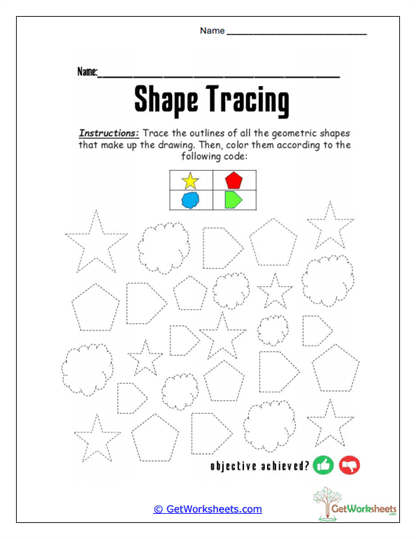
Learners trace stars, pentagons, and cloud-like shapes before applying colors based on the key. The worksheet encourages students to differentiate between shapes that may appear similar. Tracing develops control, while coloring reinforces multistep direction following. The varied shapes support strong visual discrimination.
Shapes and Cylinders
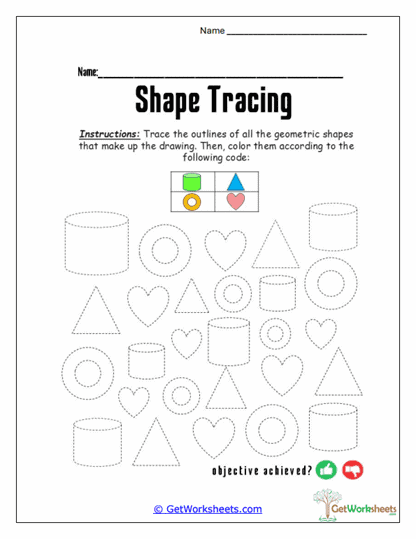
Students trace hearts, triangles, circles, and cylinders, practicing both flat and 3D form recognition. The mixture of shapes encourages flexible tracing skills across curved and angled outlines. Coloring according to the key promotes classification and decision-making. This worksheet strengthens early geometry foundations and motor precision.
Mixed Geometry Tracing
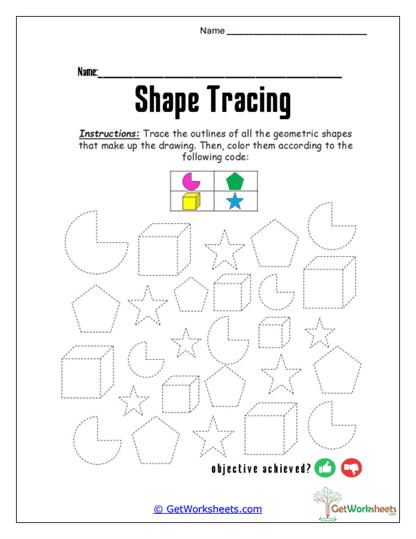
Learners trace crescents, stars, cubes, and pentagons, then color each based on a shape-coded instruction. The blend of curves, straight lines, and angles promotes adaptable pencil movements. Students enhance visual scanning as they locate all shapes in each category. This activity reinforces shape vocabulary and executive functioning skills.
Directional Shapes
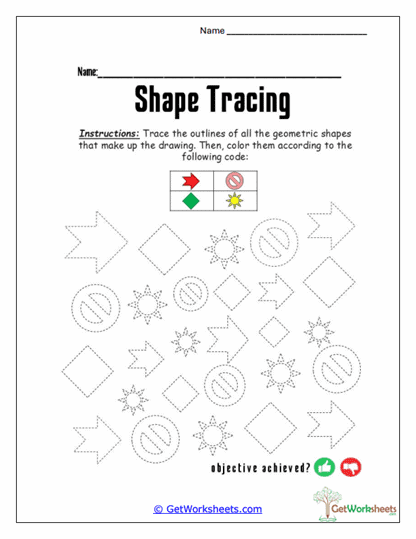
Students trace arrows, circles, snowflake-like stars, and diamond shapes before coloring them by type. The inclusion of arrows helps introduce directionality awareness in shape study. Tracing improves steadiness and controlled motion. Coloring supports visual sorting and accuracy in following instructions.
Basic Shapes Coding
Children trace circles, squares, ovals, diamonds, and triangles, then apply colors using a shape-based key. The repeated tracing builds consistency and control, while varied sizes encourage adaptable motion. Coloring supports executive functioning and strengthens shape identification. This worksheet provides foundational practice for future geometric reasoning.
Bookmark Us Now!
New, high-quality worksheets are added every week! Do not miss out!