Sensory Details Worksheets
About This Worksheet Collection
The Sensory Details (Five Senses) Worksheets collection helps students build vivid, descriptive writing by teaching them how to incorporate sight, sound, smell, taste, and touch into their work. Each worksheet offers a different approach-from sorting sensory words to rewriting full narrative passages-allowing students to practice both identifying and applying sensory imagery in a variety of contexts. Teachers will find these activities ideal for strengthening descriptive writing, narrative scene-building, and close reading skills.
Throughout the collection, students learn to generate richer details, analyze author choices, and understand how sensory language shapes tone, mood, and theme. They explore how imagery affects readers' emotional responses and how writers use specific sensory choices to create clarity and depth. These worksheets support vocabulary development, creative thinking, and strong writing craftsmanship, helping students become more expressive, intentional, and perceptive communicators.
Detailed Descriptions Of These Worksheets
Five Way Sorting
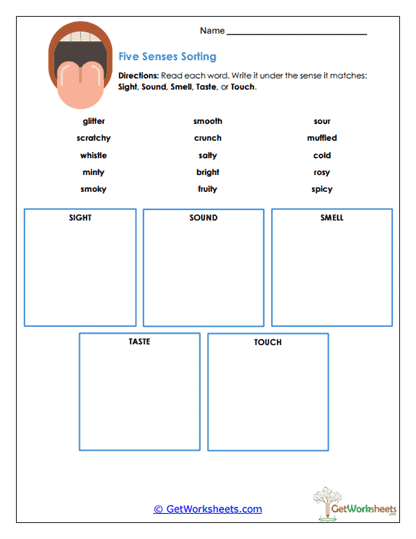
Students read descriptive words and sort them into the correct sensory categories, reinforcing their understanding of how sensory vocabulary functions. This exercise helps them differentiate among the five senses and recognize how each category contributes to vivid imagery. By organizing words into groups, learners strengthen their ability to choose precise sensory language when writing. The activity also builds foundational descriptive fluency.
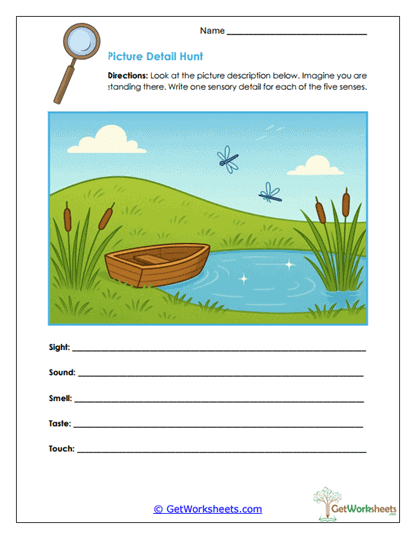
Picture Detail Hunt
Learners observe a small outdoor picture and imagine themselves inside it, writing one detail for each of the five senses. This task strengthens visualization skills by encouraging students to infer sensory information from a single image. They practice generating concrete, vivid details that add depth to narrative scenes. The worksheet also nurtures creativity and observational thinking.
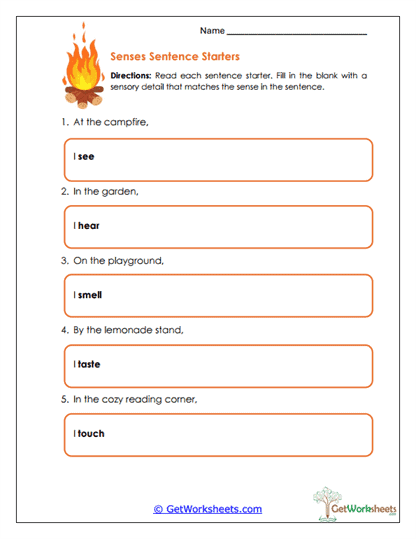
Sentence Starters
In this worksheet, students complete sentence beginnings by adding original sensory details. Each prompt specifies which sense to use, guiding students toward targeted descriptive phrases. The activity reinforces how settings and experiences connect to sensory imagery. By expanding the starters, students gain confidence in crafting sensory-rich sentences.
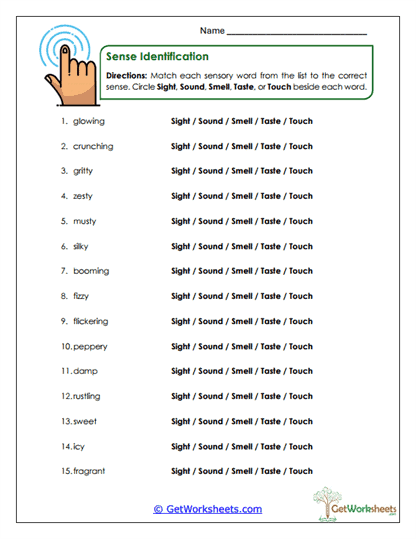
Sense Identification
Students read descriptive words and circle the sense each one relates to-sight, sound, smell, taste, or touch. This activity helps them analyze how authors use specific vocabulary to evoke sensory experience. It sharpens their awareness of descriptive word choice and strengthens general vocabulary skills. The task encourages clear thinking about how language appeals to the senses.
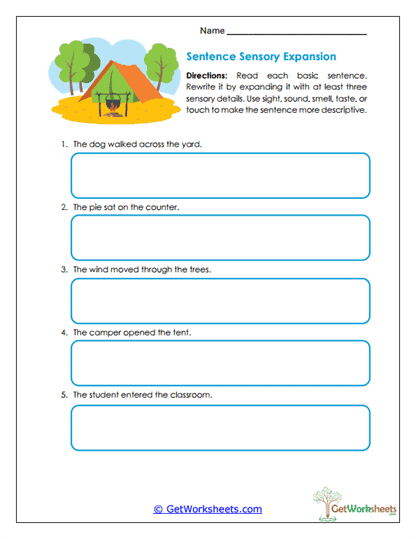
Sentence Expansion
Learners take simple sentences and expand them using at least three sensory details. This teaches them how to elevate basic statements into vivid, engaging descriptions. They focus on choosing meaningful words that enhance imagery and reader understanding. The activity builds essential skills for stronger descriptive and narrative writing.
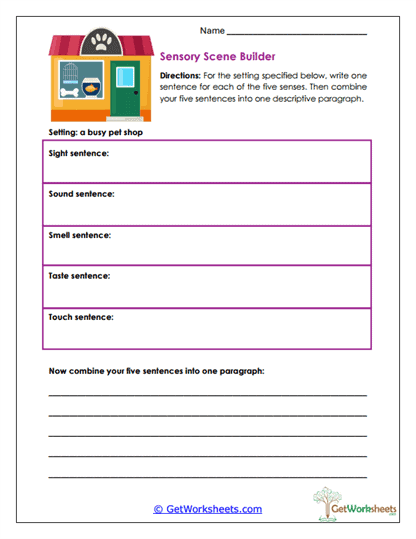
Scene Builder
Students write five sensory sentences based on a busy pet shop setting, one for each sense. After generating these details, they combine them into a cohesive paragraph. This exercise develops multi-sensory descriptive skill and helps students practice paragraph organization. They learn how separate sensory impressions can merge into one unified scene.
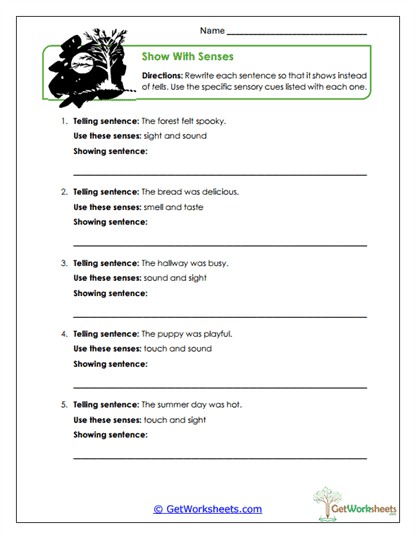
Show Some Sense
This worksheet asks students to transform plain "telling" sentences into vivid "showing" ones using specific sensory cues. They revise each sentence to include imagery that appeals directly to one or more senses. The activity strengthens understanding of how sensory detail improves narrative quality. Students also build revision and sentence-crafting skills.
Holiday Memory Snapshot
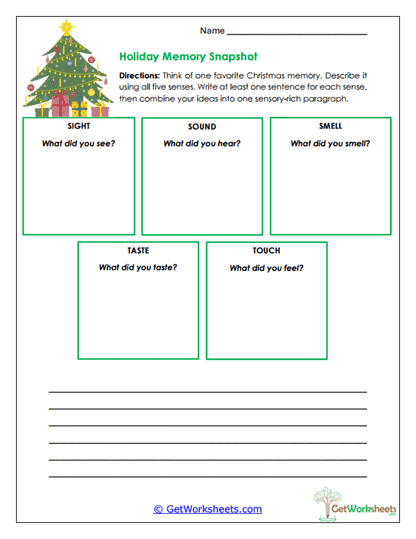
Students reflect on a meaningful Christmas memory and describe it using all five senses. They then combine their sensory sentences into one descriptive paragraph. This task supports expressive writing by helping learners connect emotion with vivid imagery. It also reinforces how sensory detail enriches personal narratives.
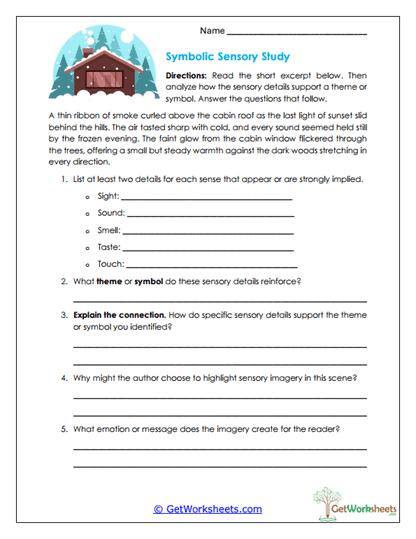
Symbolic Study
Learners read a descriptive passage and analyze how its sensory imagery contributes to theme or symbolism. They list sensory details for all five senses and explain how these details shape meaning. The worksheet encourages students to think beyond straightforward description and evaluate author craft. It deepens literary analysis skills through interpretation of symbolism and emotional impact.
Focused Sense Writing
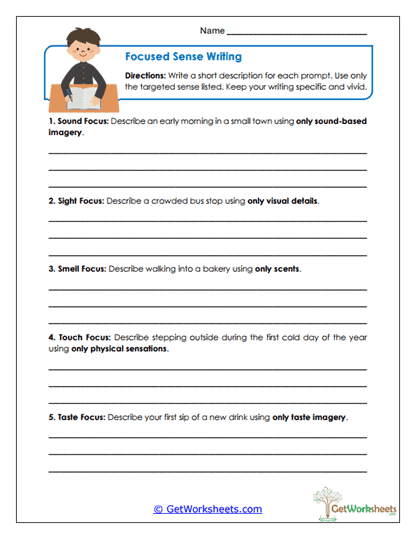
Students write short descriptive passages that use only one targeted sense at a time. By restricting their options, they learn to craft sharper, more intentional sensory imagery. The activity encourages creative problem-solving and precise vocabulary selection. It supports stronger control of tone and style in descriptive writing.
Contrast It
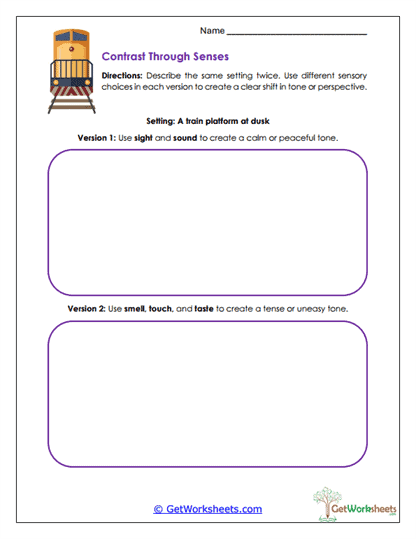
Learners describe the same setting twice-a train platform at dusk-using different sensory focuses to create contrasting tones. One version uses sight and sound for a calm tone, while the other uses smell, touch, and taste to create tension. Students explore how sensory choices influence mood and reader perception. This worksheet strengthens narrative craft and understanding of tonal control.
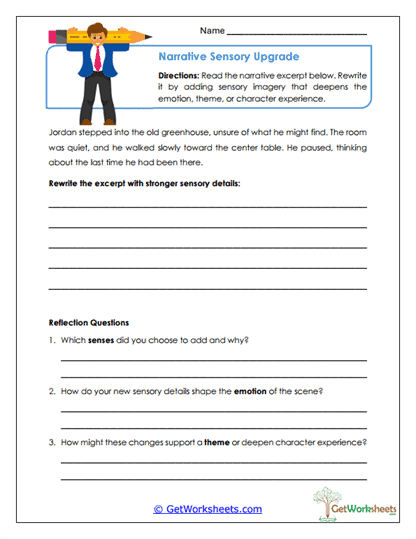
Narrative Upgrade
Students revise a short narrative excerpt by adding stronger sensory details that enhance emotion, theme, or characterization. They choose which senses to emphasize and reflect on how those choices shift the scene's mood. The activity teaches intentional revision and demonstrates how sensory language elevates storytelling. Learners develop deeper awareness of craft and structure in narrative writing.
Bookmark Us Now!
New, high-quality worksheets are added every week! Do not miss out!