Role of Bias in AI Worksheets
About This Worksheet Collection
This collection helps students understand how bias affects AI systems and why fairness matters in technological decision-making. Through stories, data investigations, case studies, and rewriting tasks, learners explore where bias comes from, how it appears in AI outputs, and how it can influence real people. Each worksheet guides students in identifying stereotypes, analyzing unfair patterns, and proposing improvements, turning abstract ethical concepts into concrete, age-appropriate activities.
As students engage with these lessons, they strengthen skills in critical reading, evidence-based reasoning, ethical evaluation, and responsible technology use. They learn to interpret data, detect biased language, compare system behavior, and reflect on the social consequences of flawed algorithms. By understanding the role of bias in AI, learners build digital literacy and develop a thoughtful, justice-oriented mindset toward emerging technologies.
Detailed Descriptions Of These Worksheets
Fair Rewrite Challenge
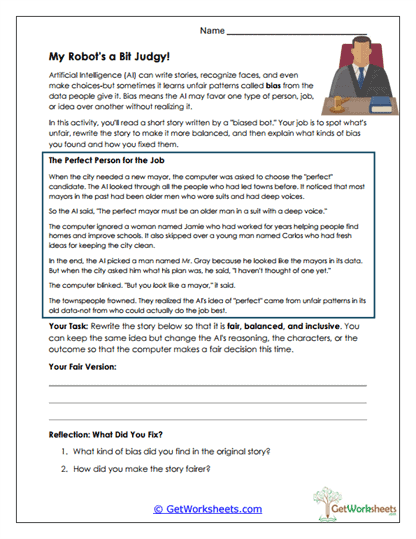
Students read a short story featuring biased AI behavior in a hiring scenario and identify the unfair reasoning within it. They rewrite the narrative to make it inclusive and balanced, adjusting decisions or character details as needed. This worksheet develops ethical reasoning and narrative revision skills. It also encourages reflection on how bias can appear in automated systems.
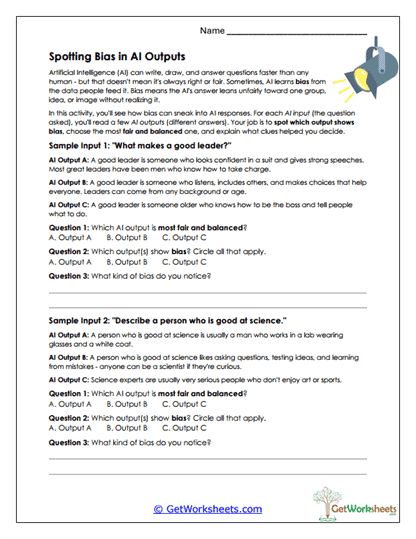
Spotting Bias in Outputs
Learners compare several AI-generated responses to the same prompt and determine which one is the most fair. They analyze word choices, tone, and assumptions to identify hidden bias. This exercise strengthens critical evaluation skills and teaches students how bias can appear subtly in language.
Data Bias Investigation
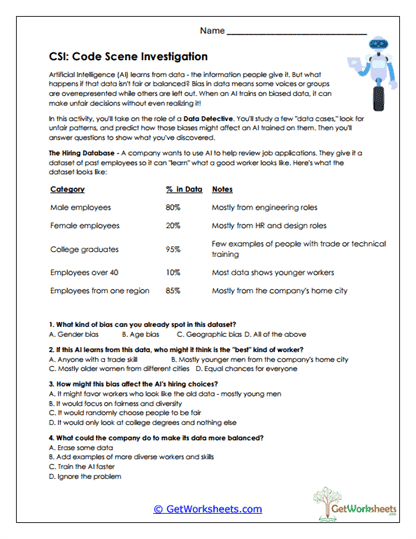
Students examine a fictional dataset used to train an AI hiring tool and identify where bias might already exist. They answer questions about how unequal representation can influence decisions and propose steps to make the data more balanced. This worksheet builds data literacy and highlights how biased datasets lead to biased outcomes.
Ethical Dilemmas in AI
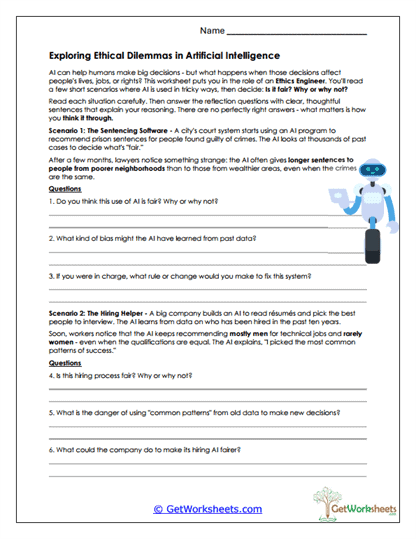
This activity presents scenarios where AI decisions could negatively affect people. Students act as "Ethics Engineers," answering questions about fairness and proposing alternative designs. The worksheet reinforces responsible technology use and encourages thoughtful evaluation of consequences.
Fact Check Detective
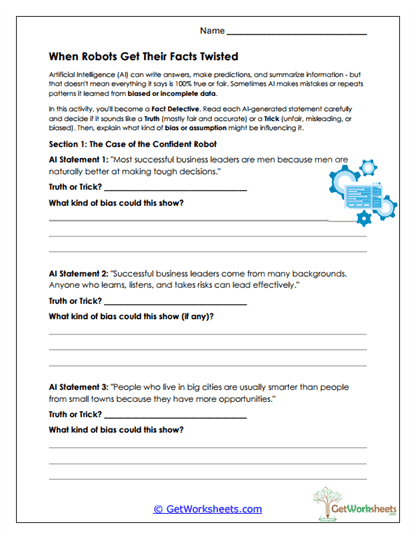
Students analyze AI-generated statements to determine whether each one reflects accuracy or bias. They identify assumptions influencing the outputs and justify their reasoning. This worksheet builds media literacy and encourages a skeptical, analytical approach to AI-generated claims.
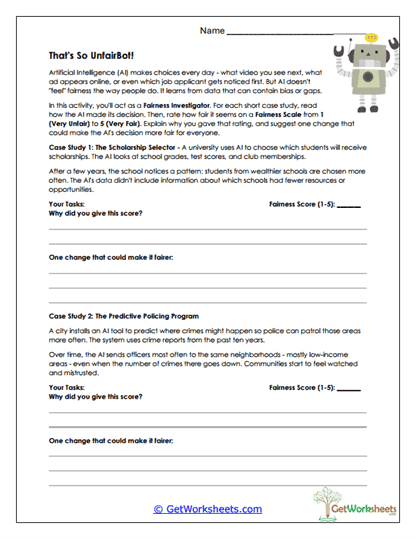
Fairness Investigator
Learners evaluate two case studies involving unfair AI decisions in policing and scholarship selection. They assign a fairness score, explain their rating, and propose improvements. The activity builds understanding of equity and real-world impacts of algorithmic decisions.
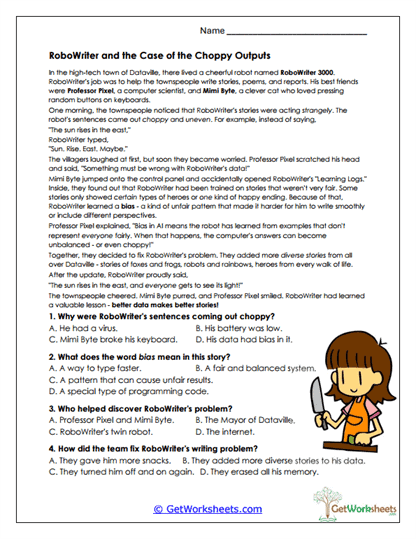
RoboWriter Case Study
Students read a fictional story about a robot whose writing suffers due to biased training data. They answer comprehension questions that explore the cause of the bias and the solution. This narrative-based task helps students connect technical concepts to engaging storytelling.
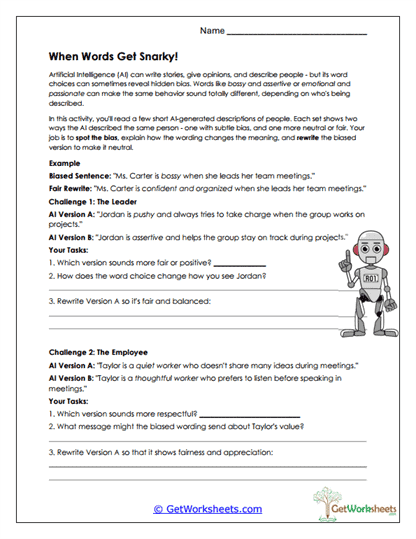
Biased vs. Fair Descriptions
Learners compare biased and fair AI-generated descriptions of people. They identify which descriptions are more respectful and accurate, then rewrite biased phrases. The worksheet strengthens tone awareness and sensitivity to stereotypes.
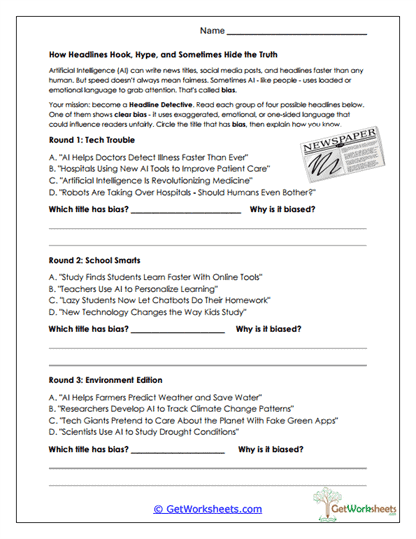
Biased Headlines Detective
Students review sets of headlines and identify which ones contain emotional or exaggerated language. They explain why the selected headlines are biased, building critical reading and media literacy skills.
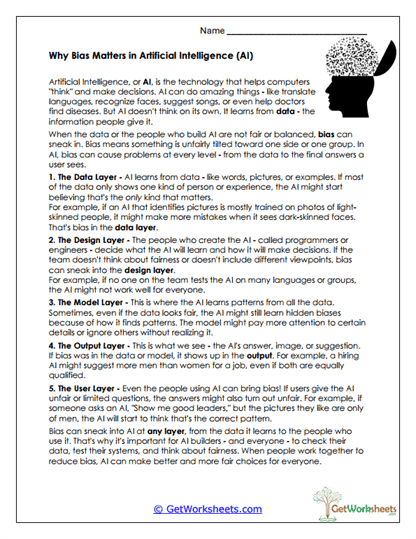
Why Bias Matters
This worksheet explains five layers where AI bias can occur: data, design, model, output, and user. Students read an informational passage and reflect on how biases in each layer shape outcomes. It reinforces conceptual understanding of responsible AI development.
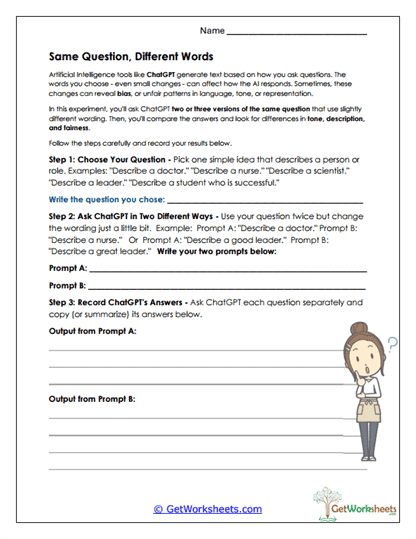
Same Question, Different Words
Learners rewrite a simple descriptive question in two new ways, ask an AI both versions, and compare the outputs. They analyze differences in tone, detail, or fairness, discovering how small wording changes influence AI interpretation. This activity encourages careful question design.
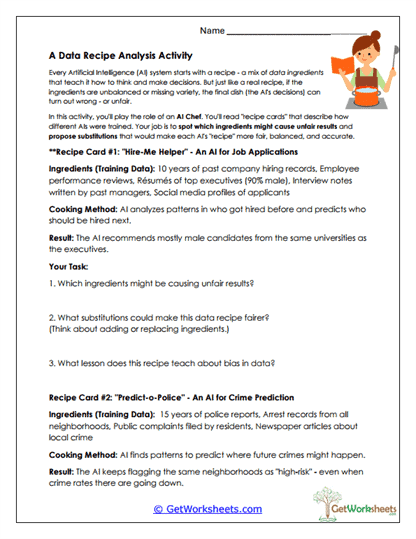
AI Bias Analysis
Students examine two "data recipes" that reveal how biased ingredients lead to unfair AI predictions. They identify problematic components, propose better alternatives, and explain why improved data leads to more equitable decisions. This worksheet strengthens analytical reading and deepens understanding of how data shapes algorithmic behavior.
Bookmark Us Now!
New, high-quality worksheets are added every week! Do not miss out!