Renewable and Nonrenewable Energy Sources Worksheets
-
Balancing Energy Sources

-
Choosing the Best Energy Source
-
Comparing Energy Types

-
-
Energy Debate Prompts

-
Energy Quiz
-
Energy Sources Cloze Passage

-
Energy Sources True or False

-
Impact of Energy Chains

-
Learning Energy Terms
-
Pros and Cons of Energy Sources

-
Renewable vs. Nonrenewable Chart

-
Renewable World Writing

About This Worksheet Collection
This collection on renewable and nonrenewable energy introduces students to essential concepts that shape how societies power their homes, transportation, industries, and technologies. The worksheets blend vocabulary development, reading comprehension, analytical tasks, and scenario-based decision-making to help students grasp both the science and the real-world relevance of energy choices. Teachers can use these materials to support full energy units, enrich environmental science lessons, or provide targeted practice on sustainability concepts.
Across the set, students strengthen their understanding of how different energy sources are formed, how long they last, and the environmental consequences of relying on them. They compare energy categories, weigh pros and cons, analyze cause-and-effect relationships, and apply their knowledge to real situations. The activities also foster critical thinking about long-term energy solutions, encouraging students to consider how individual decisions and global policies influence the future of the planet.
Detailed Descriptions Of These Worksheets
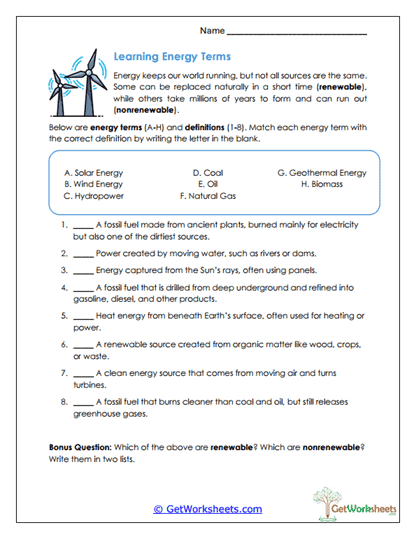
Learning Energy Terms
Students match eight key energy vocabulary words to their correct definitions, reinforcing foundational concepts related to fossil fuels and renewable sources. As they review clues about resources like solar power and biomass, they strengthen both classification and comprehension skills. The bonus question encourages them to sort the terms into renewable and nonrenewable categories. This activity supports vocabulary mastery and conceptual clarity in energy science.
Energy Sources True or False
This worksheet has students evaluate statements about common energy sources, determining which claims are accurate and which reveal misunderstandings. Learners examine ideas about sustainability, environmental impact, and resource availability. The exercise helps correct misconceptions and promotes stronger scientific reasoning. A final reflection challenges students to consider why governments promote renewable energy adoption.
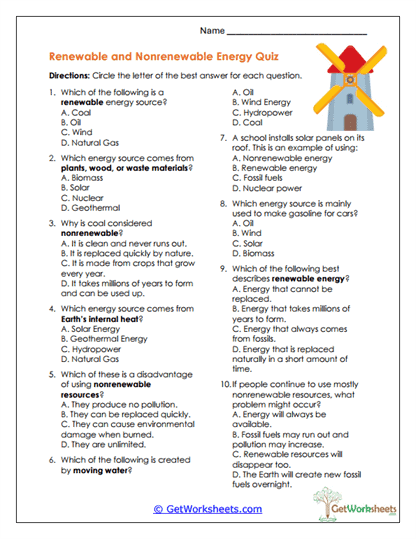
Energy Quiz
Students test their knowledge of energy concepts by answering ten multiple-choice questions about renewable and nonrenewable resources. They interpret scenarios, analyze answer choices, and apply environmental science principles to demonstrate understanding. The quiz supports test-taking skills while reinforcing major unit ideas. It also helps teachers quickly assess student mastery.
Impact of Energy Chains
Learners complete cause-and-effect chains that show how energy choices influence people, ecosystems, and the planet's future. They identify outcomes associated with actions such as burning coal or installing solar panels. This task builds analytical thinking and highlights long-term consequences of energy use. A reflection prompt invites students to explain why shifting toward renewable resources benefits society.
Renewable vs. Nonrenewable Chart
Students complete a chart comparing definitions, examples, environmental impacts, and availability of renewable and nonrenewable energy sources. Organizing details visually helps them see connections and distinctions between the two categories. The activity strengthens structured thinking and supports deeper understanding of sustainability. A reflection question asks students to consider which energy type is best for the planet's future.
Pros and Cons of Energy Sources
Learners evaluate eight major energy sources by identifying at least one advantage and one disadvantage of each. This encourages thoughtful consideration of issues like cost, reliability, pollution, and climate effects. Students write in full sentences to explain their reasoning clearly. A final reflection prompt supports informed decision-making about future energy priorities.
Balancing Energy Sources
Students read an informational passage comparing clean energy with fossil fuels and respond to comprehension questions. They analyze why renewable sources are more sustainable yet sometimes harder to adopt. The activity strengthens inference skills and reinforces science literacy related to global energy challenges. It also encourages reflection on the complexities of transitioning to cleaner energy.
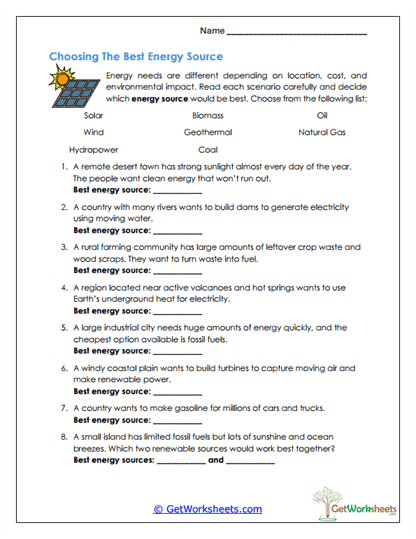
Choosing the Best Energy Source
Learners evaluate eight real-world scenarios and determine which energy source fits each situation best. They consider factors such as geography, affordability, climate, and environmental impact. This worksheet promotes practical reasoning and helps students connect energy science to everyday decisions. It reinforces understanding of both renewable and nonrenewable options.
Comparing Energy Types
Students list pros and cons for both renewable and nonrenewable energy categories, offering at least two points for each. The activity supports comparison skills and encourages critical thinking about energy choices. A reflection question asks learners to determine which energy type should be more widely used in the future. This promotes awareness of long-term global challenges.
Energy Sources Cloze Passage
Learners fill in missing vocabulary words in a passage describing how different energy sources form, how long they last, and their environmental impacts. By using context clues, students strengthen comprehension and reinforce scientific terminology. The passage builds understanding of sustainability concepts and resource limitations. A final question prompts students to reflect on why countries benefit from expanding renewable energy use.
Energy Debate Prompts
Students take a position on whether societies should rely more on renewable energy and support their viewpoint with evidence. Short prompts guide them in explaining environmental, economic, and long-term implications of their stance. The activity promotes persuasive writing while reinforcing accurate scientific ideas. A concluding prompt invites them to consider the strengths of the opposing argument.
Renewable World Writing
This creative writing worksheet asks students to imagine a future powered primarily by renewable energy. They describe improved environments, innovative technologies, or changes in daily life resulting from clean-energy adoption. The activity blends imagination with scientific understanding to help students visualize a sustainable future. A reflection question ties their ideas back to the broader importance of renewable energy for people and the planet.
Bookmark Us Now!
New, high-quality worksheets are added every week! Do not miss out!