Reconstruction Worksheets
About This Worksheet Collection
This Reconstruction worksheet collection offers educators a wide-ranging set of activities that illuminate one of the most transformative-and contested-periods in American history. Through matching tasks, vocabulary building, categorization exercises, primary-source interpretation, argument writing, and comparison activities, students explore how the United States attempted to rebuild politically, socially, and economically after the Civil War. These worksheets help learners understand the expansion of rights, the struggles over federal versus state power, and the barriers African Americans continued to face throughout the era.
Across the collection, students strengthen foundational academic skills such as interpreting informational text, analyzing cause and effect, evaluating arguments, and paraphrasing complex language. They also develop deeper historical thinking by examining laws, leaders, and social systems that shaped the postwar nation. With tasks that encourage evidence use, perspective-taking, and clear written communication, these worksheets support both content mastery and the development of strong literacy skills in social studies.
Detailed Descriptions Of These Worksheets
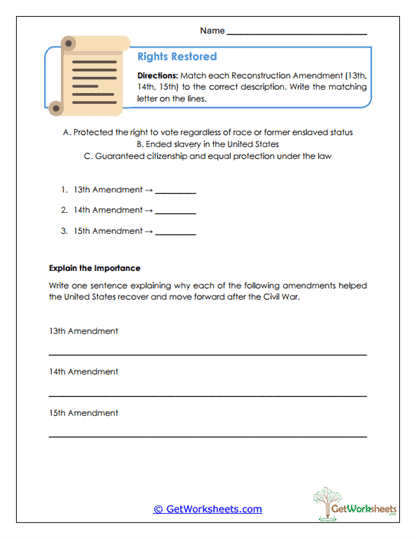
Amendment Match
Learners match the 13th, 14th, and 15th Amendments to their key protections, reinforcing understanding of how each transformed rights for formerly enslaved people. Students review concepts such as citizenship, equality, and voting rights before explaining the historical importance of these changes. The activity strengthens their ability to summarize and interpret constitutional ideas. It also supports clear cause-and-effect reasoning as students connect amendments to Reconstruction goals.
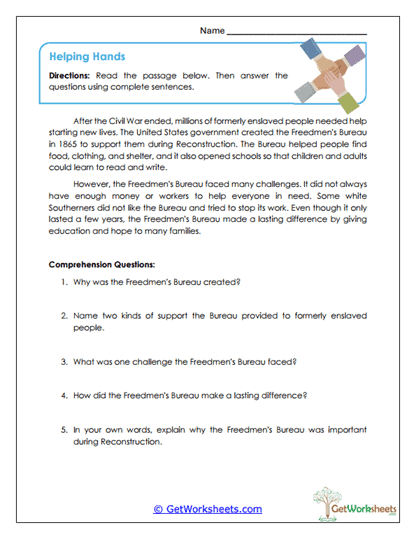
Bureau Beginnings
Students read an informational passage describing the mission and challenges of the Freedmen's Bureau before answering comprehension questions. The worksheet encourages reflection on how the Bureau supported newly freed individuals through food, education, and shelter. Learners practice using evidence to support their answers, strengthening informational reading skills. The activity deepens understanding of early Reconstruction support systems.
Leaders Listed
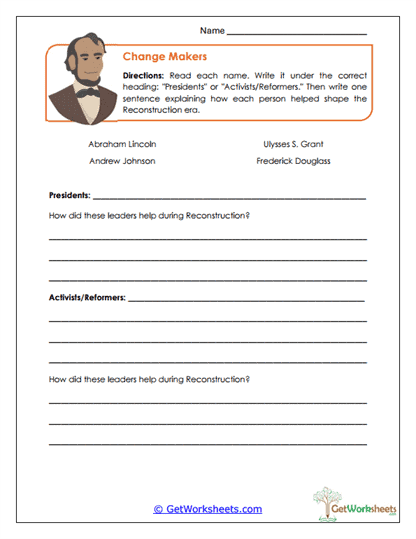
This worksheet asks students to categorize major Reconstruction figures as Presidents or Activists/Reformers. They write brief explanations about contributions from leaders such as Lincoln, Johnson, Grant, and Douglass. The task reinforces classification skills and builds context for understanding differing roles in shaping the era. It supports concise historical writing tied to leadership and decision-making.
Term Trainer
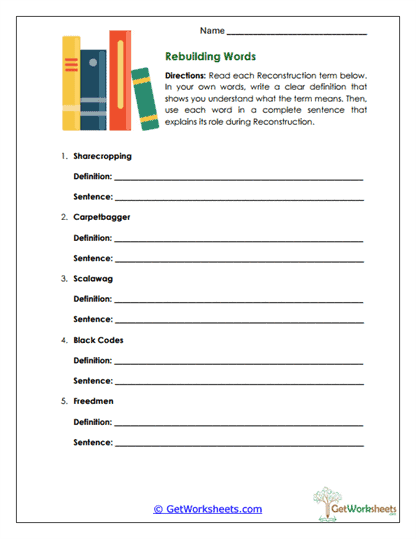
Students define key Reconstruction vocabulary-sharecropping, carpetbagger, freedmen, Black Codes, and more-and use each term in a sentence. This reinforces understanding of essential concepts that shaped postwar society. Writing definitions and sentences supports deeper vocabulary retention. The worksheet builds clarity in explaining social and political change.
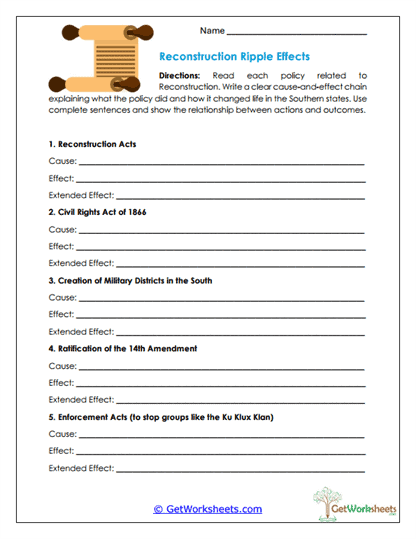
Cause Chains
Learners trace cause-and-effect relationships linked to Reconstruction policies such as the Reconstruction Acts and the Civil Rights Act of 1866. They identify immediate results and extended long-term effects to understand how these laws influenced Southern life. The activity strengthens analytical thinking through structured reasoning. It helps students see connections between government decisions and societal shifts.
Quote Quest
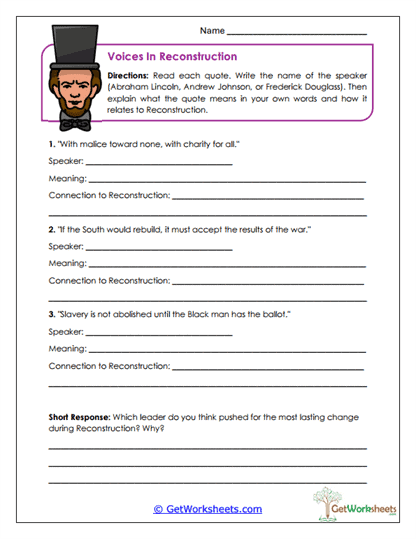
Students read quotes from Lincoln, Johnson, and Douglass and determine which leader said each one. They explain the meaning and connect each quote to key Reconstruction themes. This encourages primary-source interpretation and inference-building. Learners gain insight into how leaders viewed national rebuilding and civil rights.
Law Lens
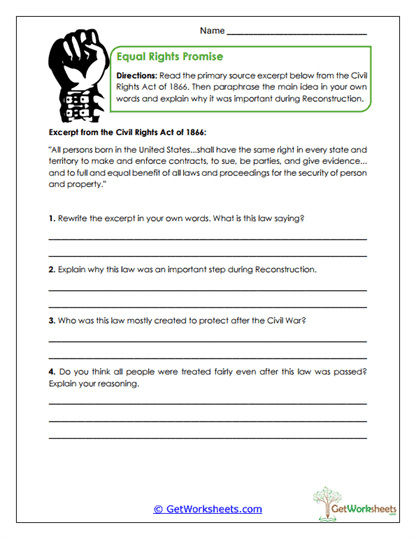
Learners analyze an excerpt from the Civil Rights Act of 1866 and restate its message in their own words. They identify the people the law sought to protect and reflect on ideas of fairness and equality. The task strengthens paraphrasing and comprehension of complex historical language. It also supports meaningful reflection on early civil rights legislation.
Claim Builder
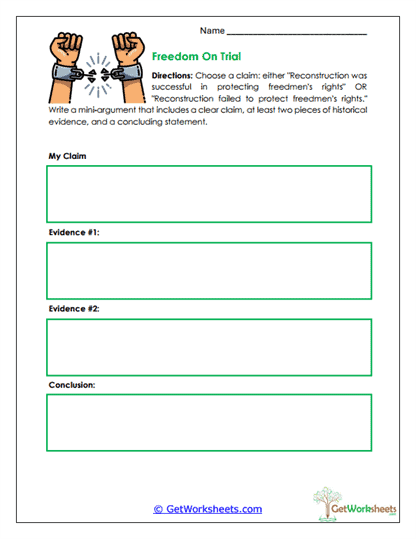
Students choose a position on whether Reconstruction protected freedmen's rights and build a mini-argument using claim, evidence, and conclusion. They support their ideas with historical examples, forming a structured short essay. The activity encourages clear reasoning and confidence in argument writing. It deepens understanding of fairness and justice during the era.
Code Compare
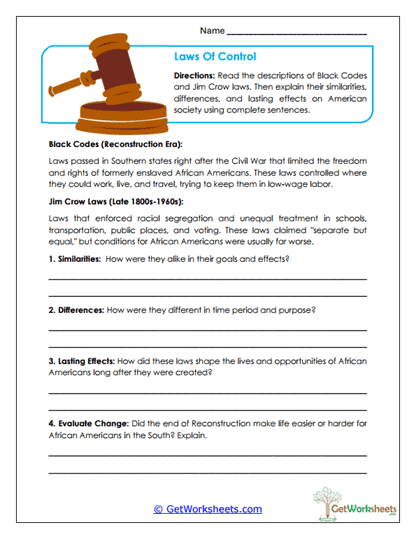
Learners compare Black Codes and Jim Crow laws, identifying similarities, differences, and long-term consequences. They also evaluate whether Reconstruction improved or worsened life for African Americans in the South. The worksheet strengthens compare-and-contrast skills and evidence-based explanation. It helps students analyze historical injustice and inequality.
Speech Rewrite
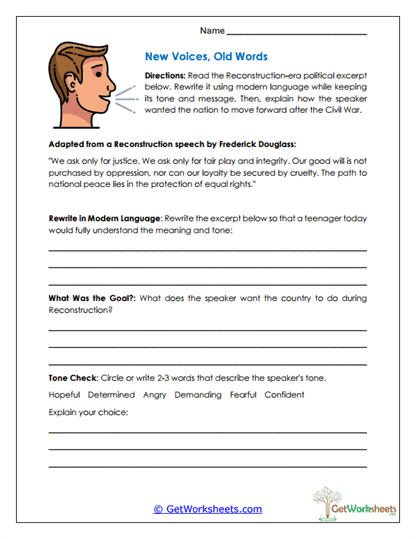
Students modernize a Frederick Douglass speech by rewriting it in accessible language. They identify the speaker's goal, analyze tone, and select descriptive words that capture the message. The activity supports translation of complex primary sources into clearer phrasing. It builds tone recognition and comprehension of persuasive language.
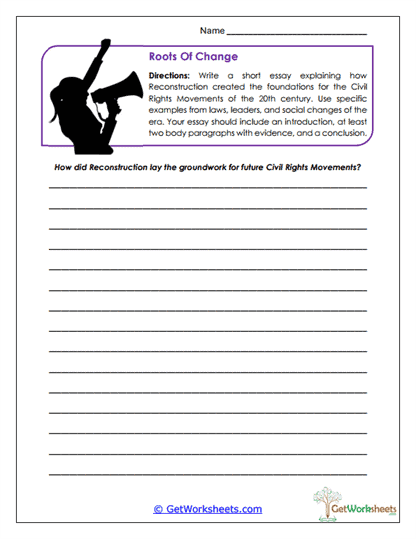
Civil Roots
In this short essay task, students explain how Reconstruction laid the groundwork for later Civil Rights Movements. They support their ideas with evidence from leadership, laws, and social changes. The activity reinforces multi-paragraph writing skills, including introduction, body paragraphs, and conclusion. It builds understanding of long-term historical cause and effect.
Debate Divide
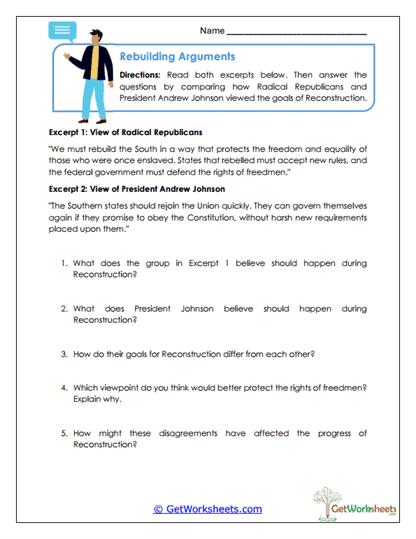
Students read excerpts representing Radical Republican and Andrew Johnson viewpoints, then answer questions comparing their positions. They identify major differences, evaluate which approach better protected rights, and reflect on how disagreements shaped Reconstruction's progress. The activity strengthens close reading and comparative analysis. It encourages students to examine how conflicting ideas influence national policy.
Bookmark Us Now!
New, high-quality worksheets are added every week! Do not miss out!