Rare Words Worksheets
About This Worksheet Collection
This collection of Rare Words worksheets offers a rich set of tools for expanding students' vocabulary through meaningful, context-driven activities. From deciphering unfamiliar words to crafting full narratives that rely on advanced vocabulary, each worksheet invites learners to engage deeply with nuanced language. The diverse mix of matching tasks, creative writing prompts, riddles, analogies, and context-clue challenges ensures students stay engaged while building confidence in handling sophisticated words often found in academic reading.
Throughout the collection, students strengthen skills essential for high-level literacy, including etymological analysis, precise word choice, semantic reasoning, and contextual interpretation. These worksheets encourage students not only to recognize rare words but to understand their origins, apply them in writing, and analyze their function within sentences and passages. By completing these tasks, learners develop stronger reading comprehension, sharper critical-thinking skills, and a broader, more flexible vocabulary.
Detailed Descriptions Of These Worksheets
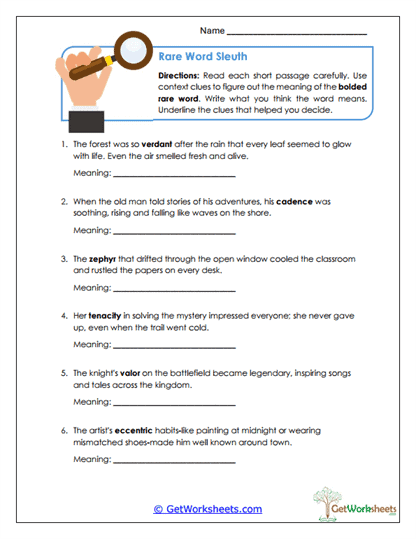
Rare Word Sleuth
Students read short passages featuring bolded rare vocabulary terms and use context clues to infer their meanings. They then underline the specific textual hints that guided their interpretation, reinforcing close-reading habits. This activity deepens comprehension by encouraging students to examine how surrounding details provide insight into unfamiliar words. It also broadens their vocabulary through repeated exposure to expressive language within rich contexts.
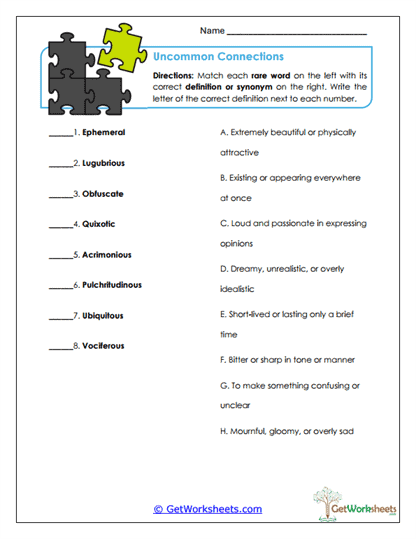
Uncommon Connections
Learners match each rare term with its correct definition or synonym, examining subtle distinctions between similar words. This task calls for careful reasoning, as many options reflect slight shifts in tone or nuance. Through thoughtful comparison, students strengthen both recognition and application of advanced vocabulary. The matching process also promotes long-term retention of uncommon words.
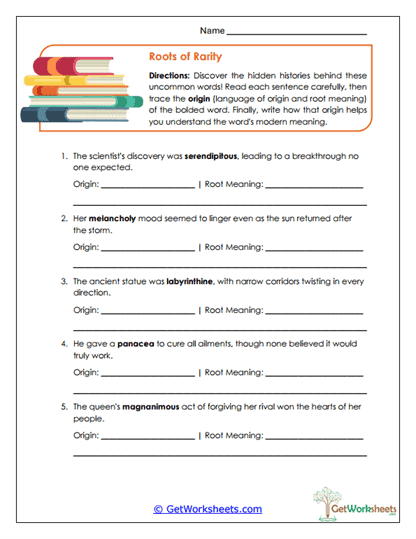
Roots of Rarity
Students investigate the origins of challenging vocabulary by identifying each word's root and language of origin. After analyzing those components, they explain how the root meaning shapes the modern definition. This activity helps learners see the historical threads that run through the English language. By applying etymological reasoning, students develop a deeper and more memorable understanding of rare words.
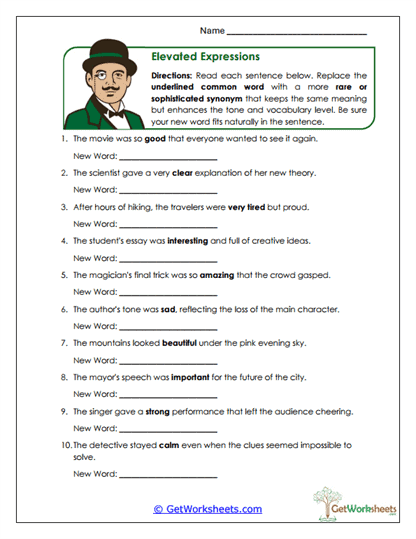
Elevated Expressions
This worksheet asks students to replace basic vocabulary in sentences with more sophisticated synonyms that preserve the original meaning. Learners must consider tone, connotation, and precision when selecting each new word. The exercise highlights how intentional word choice elevates writing quality. It also encourages revision skills and stylistic awareness.
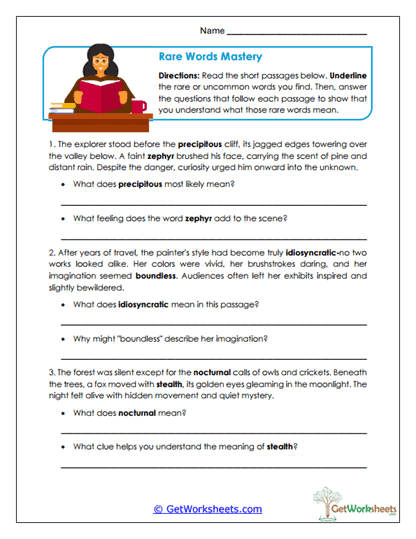
Rare Words Mastery
Students read several short passages and identify advanced or uncommon terms within them. They then answer comprehension questions that require careful attention to vocabulary usage and textual meaning. This dual approach reinforces both reading fluency and contextual word interpretation. Learners build confidence as they analyze how descriptive language shapes tone and imagery.
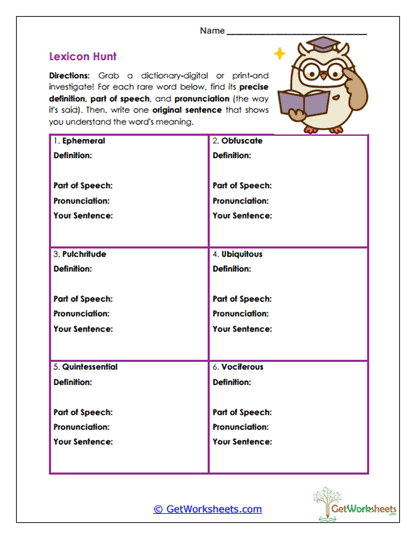
Lexicon Hunt
Students use either digital or print dictionaries to research specific rare words, recording definitions, parts of speech, pronunciations, and original example sentences. This process strengthens reference skills and ensures accurate understanding of vocabulary. By writing their own sentences, learners actively apply their knowledge in meaningful ways. The worksheet supports independent learning and academic vocabulary growth.
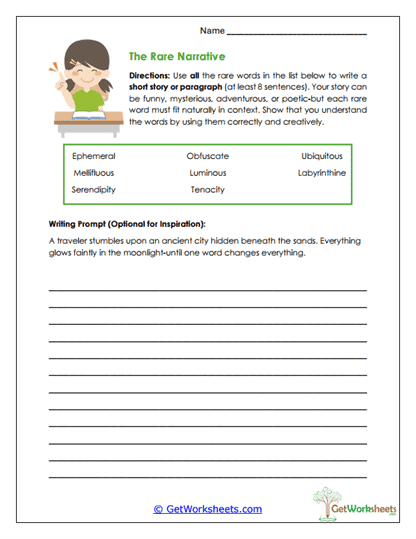
The Rare Narrative
Learners write a short story or paragraph using a list of uncommon words, weaving each one naturally into the narrative. They must pay close attention to meaning, tone, and placement to maintain coherence. An optional prompt helps spark creativity while giving students room for unique ideas. This task develops vocabulary application, narrative structure, and expressive writing.
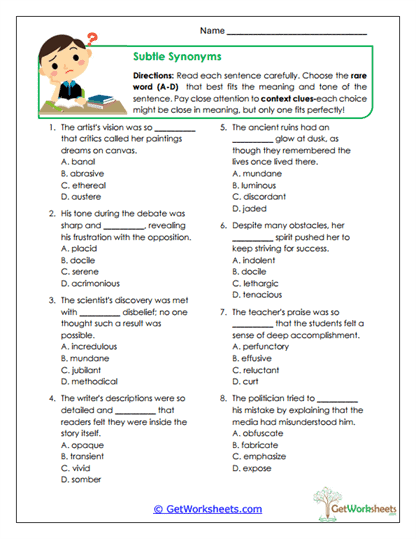
Subtle Synonyms
Students examine a sentence and select the rare word that best fits its meaning and tone from several closely related choices. While each option may appear similar, only one matches the intended nuance. This encourages students to read carefully and evaluate connotative differences between advanced terms. It also fosters strong critical-thinking and inference skills.
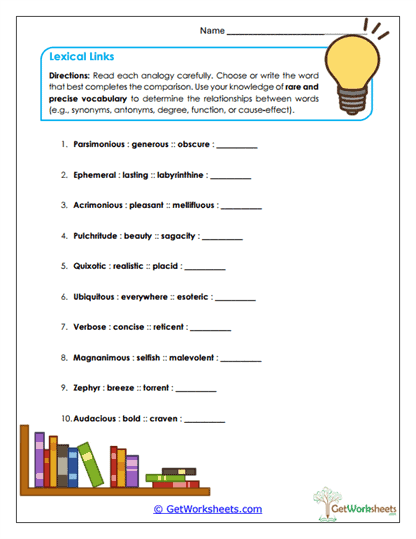
Lexical Links
This analogy-based worksheet challenges students to determine relationships between words by identifying patterns such as synonymy, antonymy, or degree. Learners must analyze how rare vocabulary terms relate to one another to complete each analogy accurately. The activity sharpens logical reasoning and deepens semantic understanding. It also supports long-term vocabulary retention through repeated comparison.
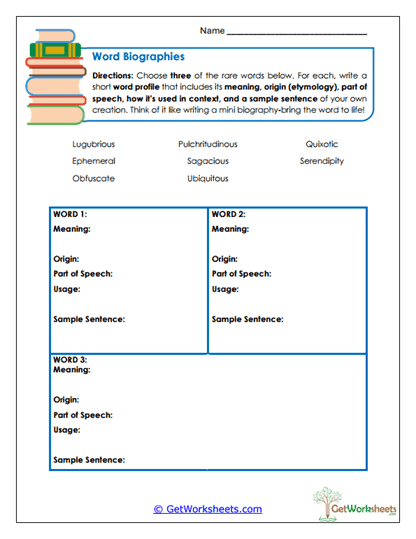
Word Biographies
Students select three rare words and create detailed profiles that include definitions, origins, part-of-speech information, and original example sentences. This format encourages thoughtful exploration of both meaning and history. Learners gain insight into how words evolve over time and how they function in modern usage. The activity also promotes clarity and precision in explanatory writing.
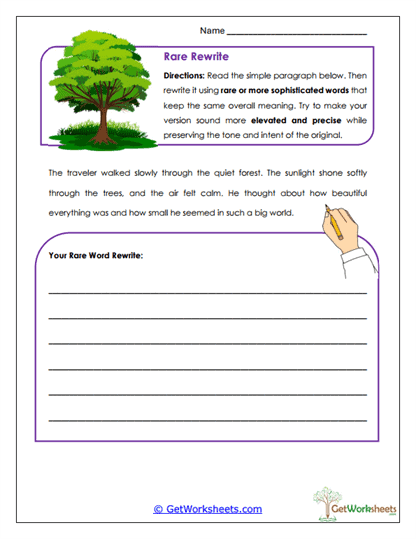
Rare Rewrite
Students transform a simple descriptive paragraph by revising it with elevated vocabulary and more expressive language. They must preserve the original meaning while improving tone and sophistication. This revising process encourages students to think analytically about style and diction. It also gives them practice applying advanced synonyms in a cohesive, polished way.
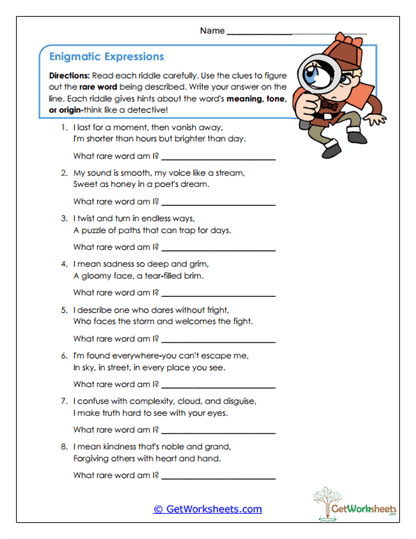
Enigmatic Expressions
Learners solve riddles that each hint at a rare vocabulary word through figurative language, imagery, or tonal clues. To determine the correct term, students must interpret symbolic descriptions and infer deeper meanings. This activity blends critical thinking with creative problem-solving. It strengthens advanced vocabulary recognition by requiring thoughtful analysis of layered clues.
Bookmark Us Now!
New, high-quality worksheets are added every week! Do not miss out!