Proverbs & Sayings Worksheets
About This Worksheet Collection
This collection of Proverbs & Sayings worksheets offers teachers a rich set of activities for helping students explore the deeper wisdom embedded in traditional expressions. Each worksheet presents a different way for learners to interact with proverbs-from matching and completing them to applying them in realistic situations-making the set versatile for whole-class instruction, small groups, or independent practice. The variety of formats keeps students engaged while encouraging them to think critically about familiar sayings and how they function in both literature and everyday conversation.
As students work through these pages, they strengthen essential language-arts skills such as figurative language interpretation, inference, paraphrasing, and theme analysis. Many tasks require students to connect proverbs to narratives, scenarios, or personal experiences, promoting authentic comprehension rather than simple memorization. By the end of the collection, learners gain a deeper appreciation of cultural wisdom, improved analytical thinking, and increased confidence in applying figurative expressions to real-world contexts.
Detailed Descriptions Of These Worksheets
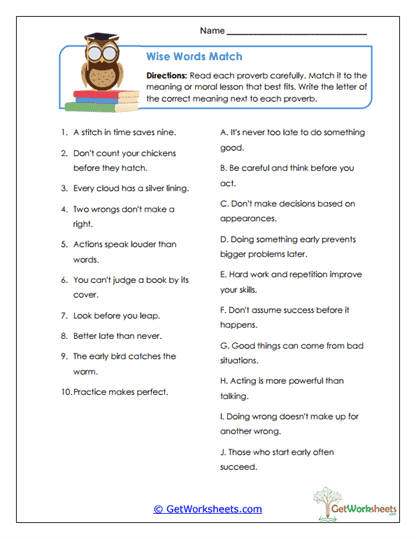
Wise Words Match
Students examine a set of familiar proverbs and select the explanation that best represents each saying's underlying message. This activity pushes learners to look beyond literal wording and focus on the moral or insight the proverb is trying to convey. Through comparison and reasoning, students strengthen their ability to unpack figurative meaning. The matching format offers a straightforward yet thoughtful way to build cultural and linguistic understanding.
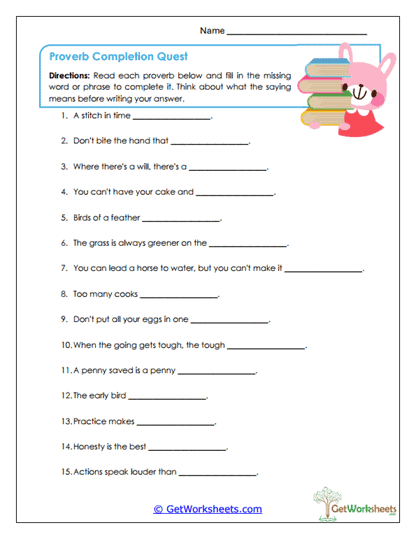
Proverb Completion Quest
This worksheet invites students to recall well-known phrases by supplying the missing word or ending. As they complete each proverb, learners reinforce their memory of traditional sayings and reflect on the broader lesson behind each one. The exercise helps students see how structure and meaning work together in figurative expressions. It also supports vocabulary growth and familiarity with common cultural references.
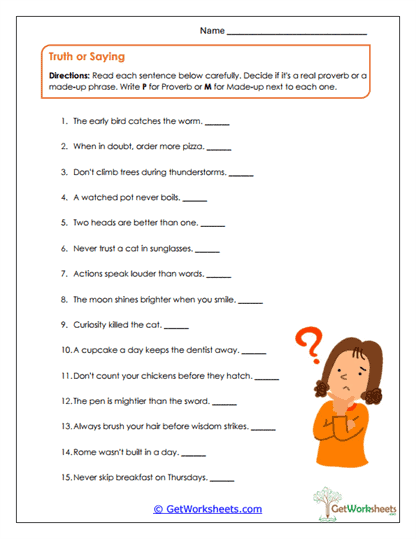
Truth or Saying
Students analyze a series of statements and determine which ones are authentic proverbs and which are playful inventions. This task encourages close reading and careful attention to tone, structure, and phrasing. By distinguishing genuine sayings from fabricated ones, students sharpen their understanding of how traditional expressions typically sound. The activity helps learners develop strong pattern-recognition and critical-thinking skills.
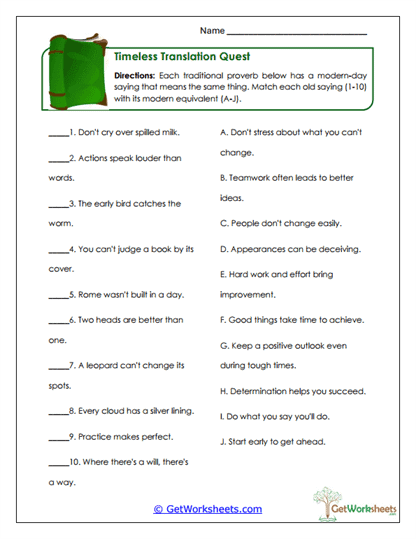
Timeless Translation Quest
In this worksheet, students pair each classic proverb with a contemporary equivalent that expresses a similar idea. They must compare the deeper meaning of both versions to make accurate matches. This type of translation work helps learners see how old wisdom can be rephrased for modern audiences. It also supports theme recognition and strengthens students' ability to interpret figurative language in varied forms.
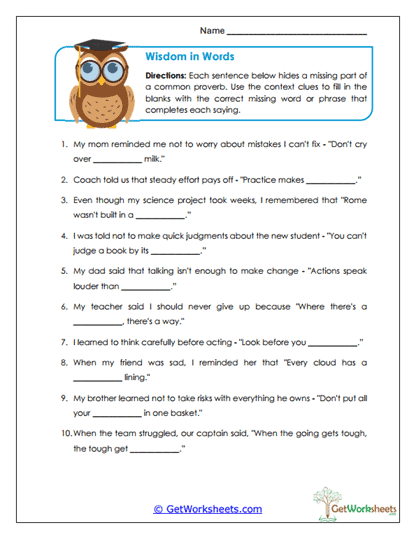
Wisdom in Words
Students read sentences containing partially completed proverbs and use contextual clues to supply the correct missing phrase. This requires them to infer which well-known saying fits the situation. As they work, learners develop stronger comprehension of figurative language and a clearer sense of each proverb's practical meaning. The exercise reinforces both logic and linguistic intuition.
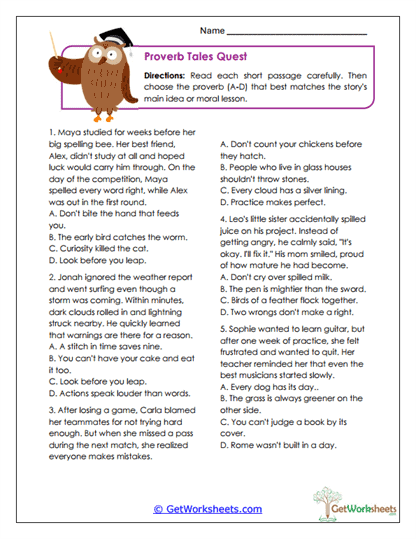
Proverb Tales Quest
Here, students read short narrative passages and identify which proverb best captures the story's main lesson. They must combine inference, comprehension, and thematic analysis to choose the correct match. The activity promotes thoughtful reading and encourages students to see how figurative expressions can summarize complex situations. By connecting stories to sayings, learners deepen their interpretive skills.
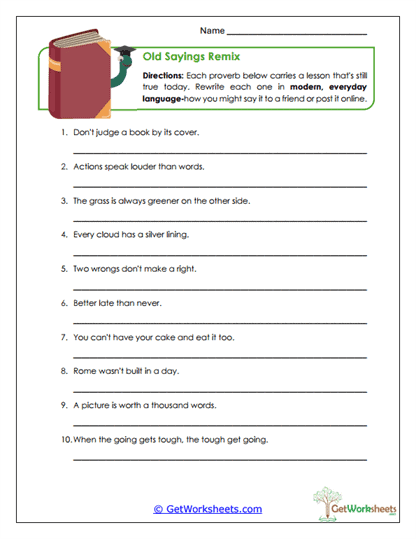
Old Sayings Remix
In this creative task, students rewrite traditional proverbs using wording that feels natural in everyday conversation. They must fully grasp the meaning behind each saying to produce an accurate modern version. This process strengthens paraphrasing abilities and encourages flexible language use. Students also gain a better appreciation of how timeless ideas can be communicated in fresh, accessible ways.
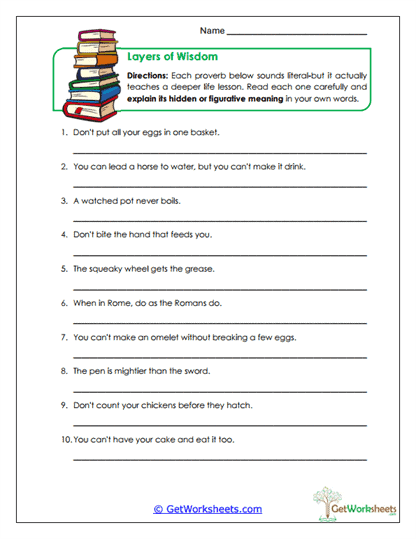
Layers of Wisdom
Students examine proverbs that appear literal on the surface but actually communicate deeper lessons. They then explain each figurative meaning in their own words, encouraging close interpretation. This activity builds students' abilities to unpack metaphor and symbolism. It also helps them understand how these expressions connect to real-life decisions and values.
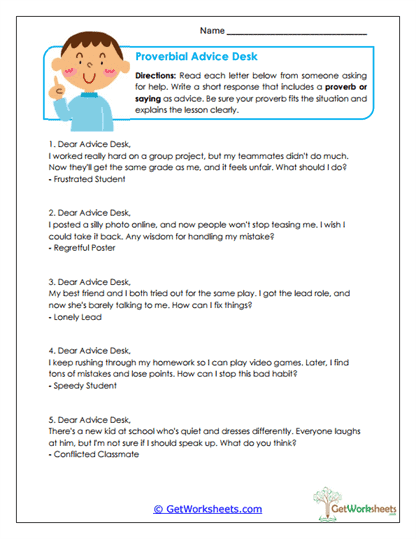
Proverbial Advice Desk
Learners read short letters from fictional individuals seeking guidance and craft written responses that include an appropriate proverb. They must choose a saying that fits the problem and clearly explain how it applies. This writing task blends empathy, reasoning, and figurative interpretation. It also offers meaningful practice in writing clear, purpose-driven responses.
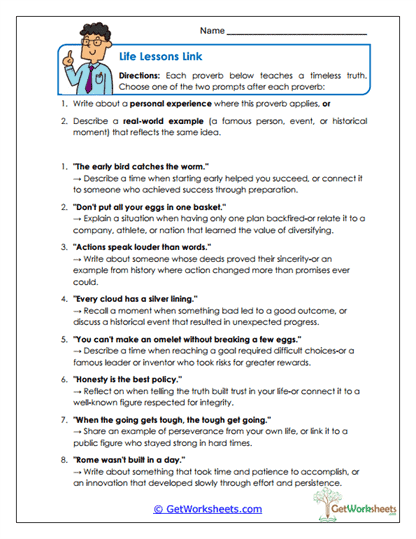
Life Lessons Link
This worksheet invites students to provide a personal or real-world example that reflects the meaning of each proverb. By grounding the figurative expression in a concrete situation, learners demonstrate genuine understanding. The task encourages reflective thinking and meaningful application of moral lessons. It also supports narrative writing and text-to-self connections.
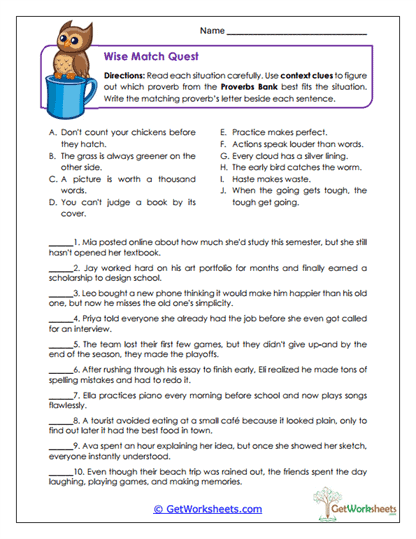
Wise Match Quest
Students read everyday scenarios and decide which proverb from a provided bank best matches each situation. To choose accurately, they must use inference, context clues, and an understanding of figurative meaning. This matching format helps students recognize how traditional sayings apply to real-life events. It also reinforces cultural literacy and problem-solving.
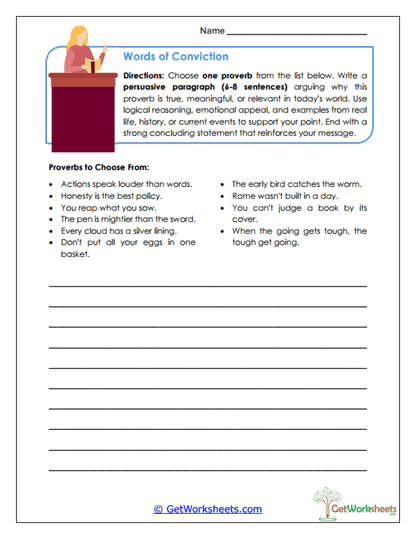
Words of Conviction
In this writing-focused worksheet, students select one proverb and craft a persuasive paragraph defending its relevance in today's world. They support their viewpoint with reasoning and concrete examples, strengthening their argumentation skills. The task encourages clarity, coherence, and purposeful writing. It also deepens students' appreciation of how figurative language expresses enduring wisdom.
Bookmark Us Now!
New, high-quality worksheets are added every week! Do not miss out!