Prohibition Era Worksheets
About This Worksheet Collection
This Prohibition Era worksheet collection offers educators a rich set of activities that illuminate one of the most complex social experiments in U.S. history. Through primary-source reading, ethical decision-making, vocabulary study, creative tasks, comparison charts, and document-based writing, students explore how the 18th Amendment transformed American society-and why the 21st Amendment ultimately reversed it. The worksheets provide accessible entry points for understanding themes such as government regulation, public resistance, organized crime, media influence, and cultural expression during the 1920s.
As learners move through these materials, they strengthen valuable academic skills including summarization, paraphrasing, contextual analysis, argumentative writing, and comparison across time periods. The collection encourages students to engage with historical dilemmas, examine authentic sources, and apply evidence-based reasoning to real social debates. Each worksheet supports deeper thinking about how laws evolve, how society reacts to major policy changes, and how cultural expression reflects public sentiment-skills essential for both social studies learning and civic literacy.
Detailed Descriptions Of These Worksheets
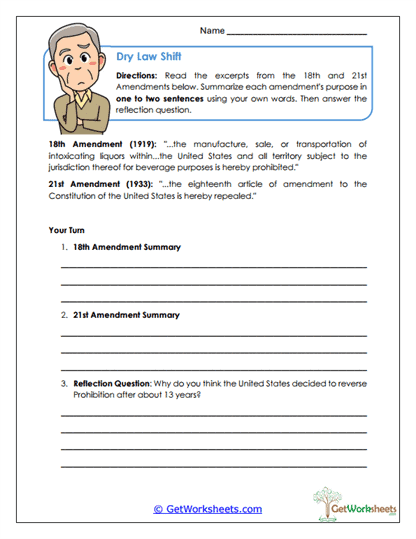
Amendment Summary
Students read excerpts from the 18th and 21st Amendments and summarize the purpose of each one in their own words. They then answer a reflection question analyzing why Prohibition was repealed, encouraging thoughtful consideration of cause and effect. The activity strengthens comprehension of constitutional language and how laws can shift over time. It also builds students' ability to interpret primary sources and write clearly about major policy changes.
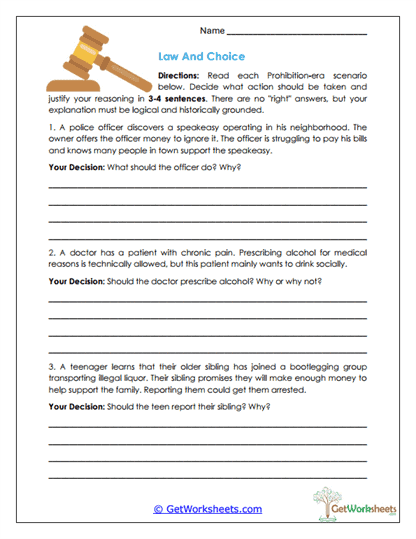
Ethical Decisions
Learners read three short scenarios involving Prohibition-era dilemmas and decide on appropriate actions. Their written explanations require them to weigh legal restrictions, social attitudes, and moral choices of the 1920s. This encourages students to think critically about the historical context that shaped personal decisions. The task also builds argumentative reasoning through supported justification.
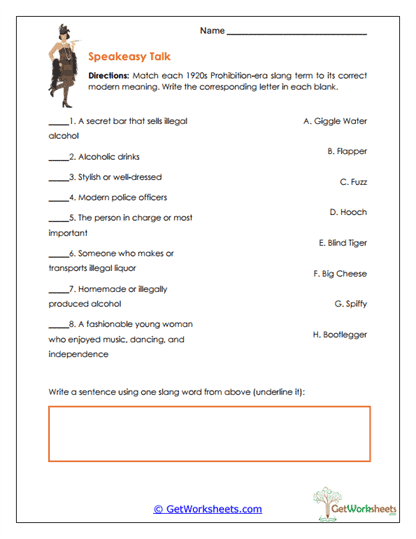
Slang Matching
Students match 1920s slang terms to their modern meanings, exploring how language reflected life during Prohibition. Each match requires careful reading and interpretation of cultural vocabulary. Afterward, students write a sentence using one slang term, reinforcing retention and applied understanding. The activity connects linguistic creativity to broader social behaviors of the era.
Organized Crime Reading
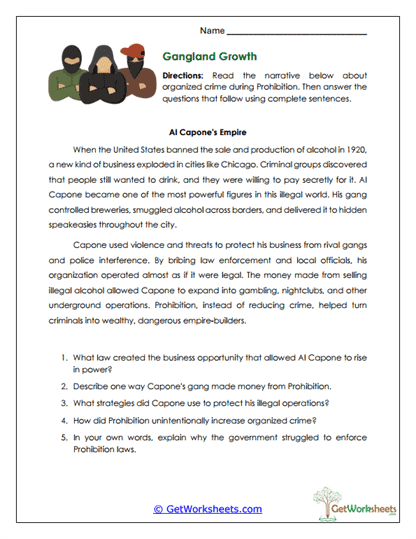
Learners read a narrative describing Al Capone's rise and respond to text-based questions about his operations and the unintended effects of Prohibition. They identify key ideas, analyze cause-and-effect relationships, and explain how illegal markets expanded. This worksheet deepens comprehension of how policy decisions can produce unexpected consequences. It supports clear, evidence-based written responses.
Headline Rewriting
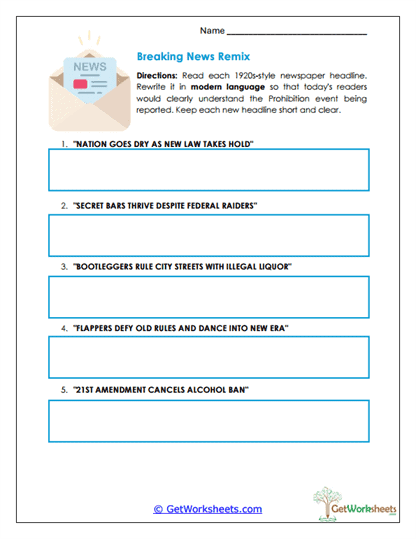
Students translate original 1920s newspaper headlines into modern, easy-to-understand language. The task reinforces comprehension of historical events while strengthening paraphrasing skills. Learners practice reading for meaning and conveying information with clarity and accuracy. It also introduces them to the distinct style of early 20th-century reporting.
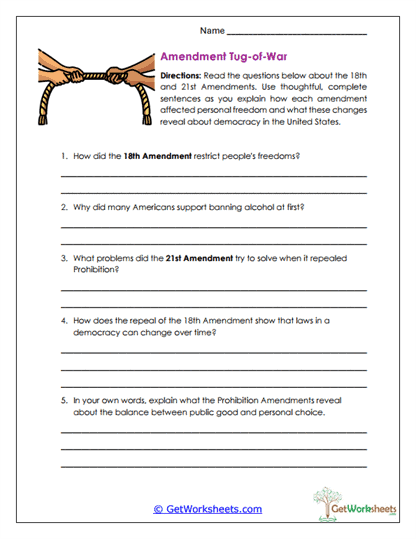
Amendment Analysis
Learners answer questions comparing the 18th and 21st Amendments, examining how each affected personal freedoms, society, and democratic change. Their responses require full sentences grounded in evidence. Students reflect on the tension between public good and individual rights, promoting civic understanding. By evaluating both amendments, they see how societal needs shape constitutional decisions.
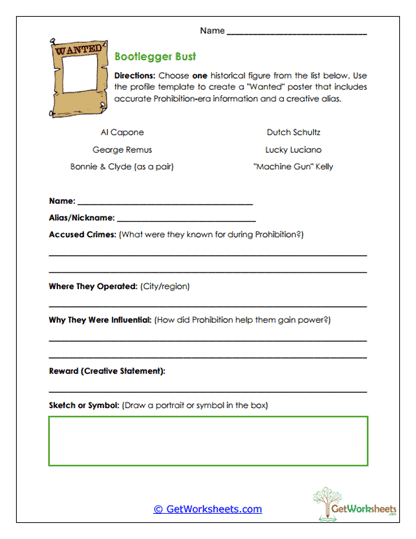
Wanted Poster
Students select a Prohibition-era figure and create a "wanted" profile summarizing the individual's crimes, influence, and geographic reach. The task encourages research-based learning and organization of factual details. Space for a drawing allows students to visually represent their chosen figure. This blend of creativity and historical accuracy helps learners connect with the era's key personalities.
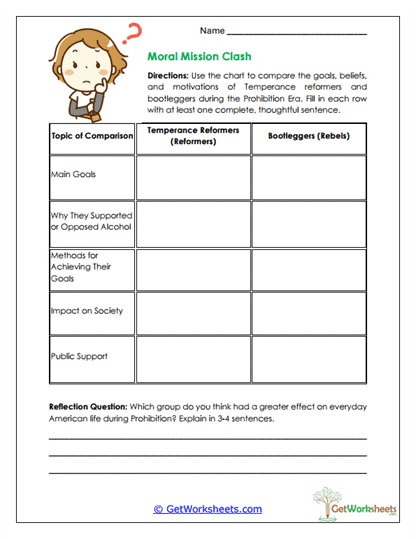
Comparative Chart
Learners compare temperance reformers and bootleggers by completing a structured chart addressing motivations, goals, methods, and societal effects. They then answer a reflection question evaluating which group had the greater impact on daily life. This comparison helps students see contrasting viewpoints and understand competing forces during Prohibition. It builds clear, sentence-level analytical writing.
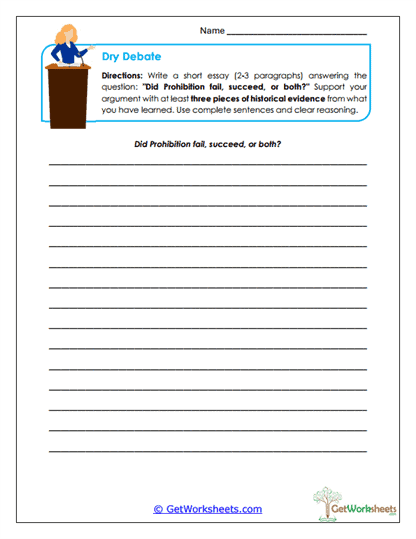
Prohibition Essay
Students craft a multi-paragraph essay determining whether Prohibition succeeded, failed, or achieved both. They support their thesis with historical evidence, emphasizing strong reasoning and well-organized writing. The task promotes synthesis of multiple lessons, readings, or sources. It also sharpens students' ability to argue from historical facts.
Modern Comparison
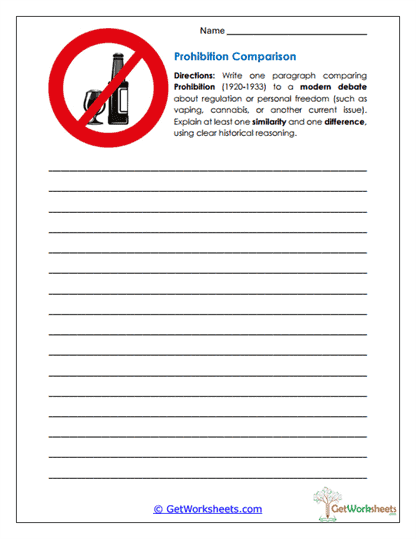
Learners write a paragraph comparing Prohibition to a contemporary debate involving regulation or personal freedom. They identify similarities and differences while grounding their reasoning in historical understanding. This activity encourages students to draw meaningful connections between past and present. It strengthens analytical writing and supports evidence-based conclusions.
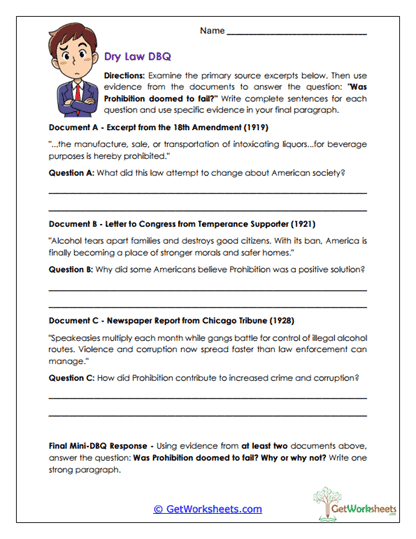
Prohibition DBQ
Students analyze three primary sources and answer targeted questions about viewpoints, purpose, and claims. They then write a mini-DBQ paragraph using evidence from at least two documents to argue whether Prohibition was destined to fail. The task strengthens sourcing, contextualization, and evidence use. It also reinforces structured historical argumentation.
Jazz Interpretation
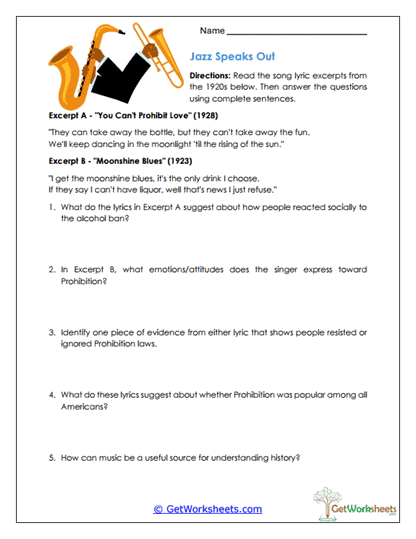
Learners study lyric excerpts from 1920s jazz songs to interpret public reactions to Prohibition. They explain attitudes, resistance, and emotional tones expressed in the lyrics, citing specific evidence. This activity shows how music can serve as a historical source reflecting real social experiences. It builds inferencing skills and deepens understanding of cultural responses to government policy.
Bookmark Us Now!
New, high-quality worksheets are added every week! Do not miss out!