Progressive Era Worksheets
About This Worksheet Collection
This Progressive Era and Reform Movements worksheet collection offers educators a diverse set of resources that highlight the individuals, laws, and ideas that shaped early 20th-century social change in the United States. Through matching tasks, categorization activities, vocabulary practice, perspective writing, debates, and primary source analysis, students engage with the major issues reformers sought to address-from unsafe working conditions to political corruption and from monopolies to unequal voting rights. The collection is designed to support interactive lessons, independent work, and thoughtful class discussion.
Across these worksheets, learners strengthen essential academic skills including critical reading, evidence-based writing, categorization, problem-solving, and comparative analysis. By examining how reformers challenged powerful industries, exposed societal problems, and pushed for greater fairness, students develop both historical understanding and civic awareness. The variety of formats ensures that students practice higher-order thinking while building a strong foundation in Progressive Era history.
Detailed Descriptions Of These Worksheets
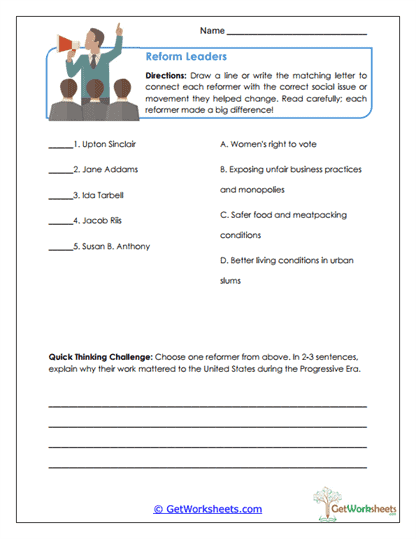
Reform Leaders
Students match well-known Progressive reformers with the social problems they worked to improve, helping them connect individuals to major reform movements. As they make each match, they gain insight into issues such as unsafe food, monopolistic abuse, living conditions, and struggles for expanded rights. A short written reflection encourages students to analyze the importance of one reformer's achievements. This combination of matching and explanation deepens comprehension of individual impact.
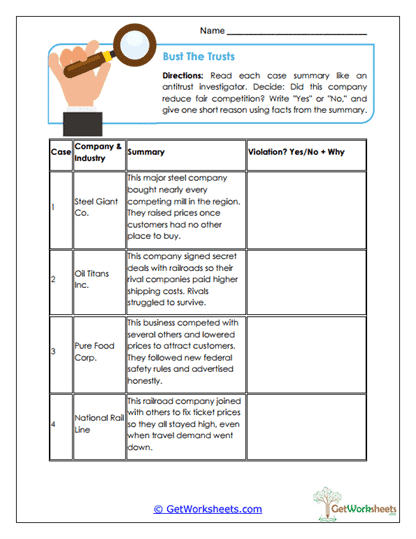
Bust the Trusts
Learners take on the role of "antitrust investigators" by reviewing short case summaries and determining whether each company acted unfairly in the marketplace. They must support each Yes/No judgment with evidence, strengthening their ability to reason from text. The worksheet also reinforces concepts such as monopolies, competition, and Progressive-era regulatory goals. It challenges students to think critically about ethics and fair business practices.
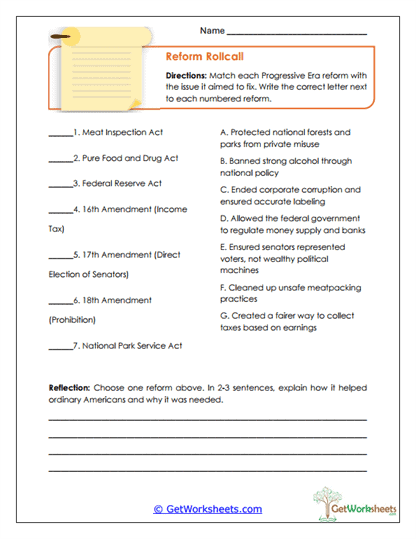
Reform Rollcall
Students match major Progressive Era laws to the social or economic issues they addressed, reinforcing understanding of how reforms attempted to fix real problems. After matching, they reflect on how one law changed daily life for Americans, encouraging deeper historical thinking. This structure blends recall with higher-level analysis. It helps students see the connections between legislation and lived experience.
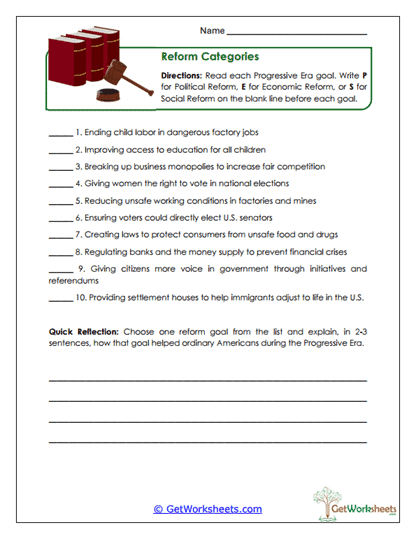
Reform Categories
Learners sort various Progressive Era goals into Political, Economic, or Social categories, sharpening their ability to classify reforms by purpose. The sorting task highlights how the movement tackled a wide range of issues-from labor protections to anti-corruption efforts. Students then explain why one reform mattered, strengthening comprehension through written expression. This worksheet helps clarify the broad scope of Progressive initiatives.
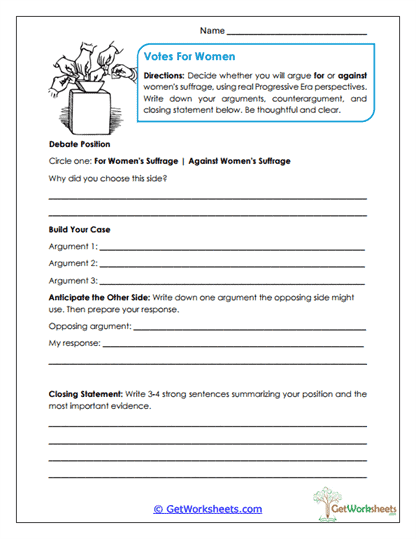
Votes for Women
Students engage in a debate-style writing activity by choosing whether they support or oppose women's suffrage from a historical standpoint. They list arguments, consider counterclaims, and write a concluding statement, practicing persuasive writing skills. The activity promotes historical empathy by asking students to think like people of the era. It also reinforces understanding of the strategies used by women's rights reformers.
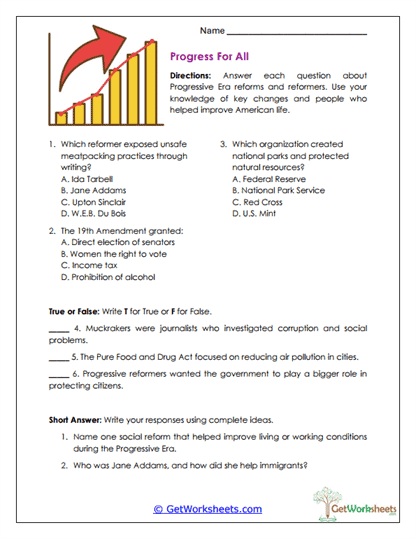
Progress for All
This worksheet combines multiple-choice questions, true/false items, and short-answer prompts to review major reforms and reformers. Topics include muckrakers, conservation, voting rights, and governmental responsibility. Students apply both factual recall and evidence-based reasoning. The mixed format offers a strong assessment tool for measuring understanding of Progressive Era themes.
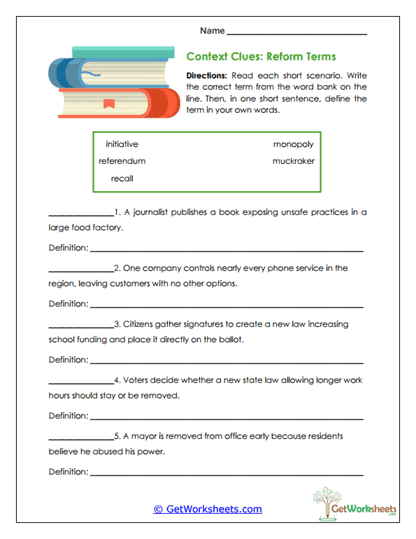
Context Clues: Reform Terms
Students use short scenarios to identify vocabulary terms such as initiative, recall, and muckraker, applying context clues to determine meaning. They then write definitions in their own words, reinforcing comprehension and vocabulary mastery. The worksheet helps learners connect reform terminology to real political and social processes. It strengthens both reading and historical literacy.
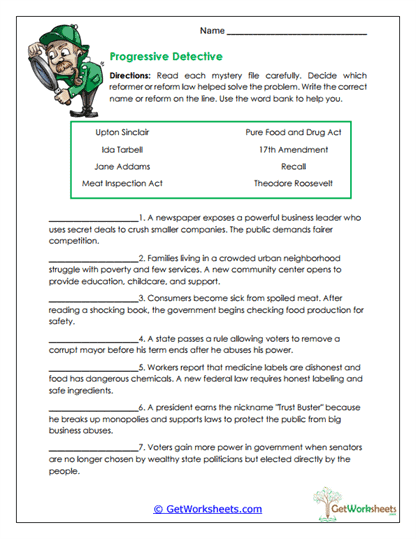
Progressive Detective
Learners read "mystery files" describing social or economic problems and determine which reformer or reform law addressed each one. The task emphasizes cause-and-solution relationships and highlights the wide range of reforms enacted during the period. Students practice analyzing evidence and making informed connections. It offers an engaging problem-solving format tied to real historical challenges.
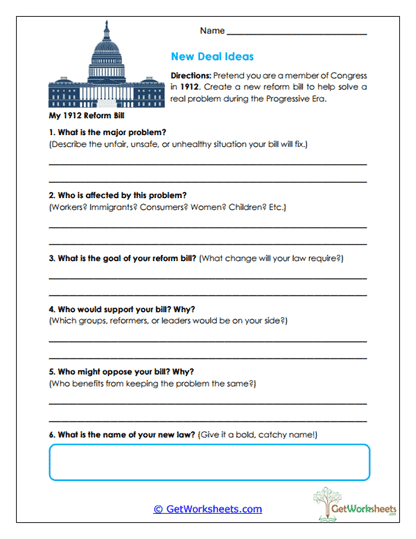
New Deal Ideas
Students imagine themselves as members of Congress in 1912 designing a reform bill to solve a Progressive-era problem. They identify the issue, affected groups, goals, supporters, opponents, and craft an era-appropriate bill name. The activity promotes creativity while grounding students in historical realities. It strengthens understanding of legislative processes and reform motivations.
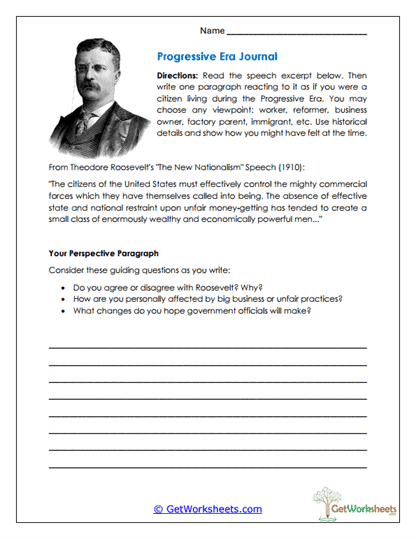
Progressive Era Journal
Learners read a passage from Theodore Roosevelt's New Nationalism speech and write a journal entry from the viewpoint of a specific historical role. They consider concerns such as fairness, economic power, and government regulation. The paragraph response requires evidence from the text and clear historical reasoning. This task fosters empathy and deepens understanding of reform debates.
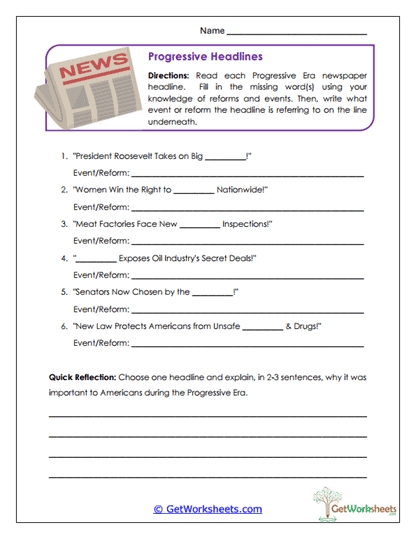
Progressive Headlines
Students complete unfinished newspaper headlines using their knowledge of major Progressive events and reforms. They then identify which event the headline describes, reinforcing recognition of key historical developments. A short reflection helps them explain the significance of one change featured in the headlines. The activity highlights the role of journalism in shaping public awareness.
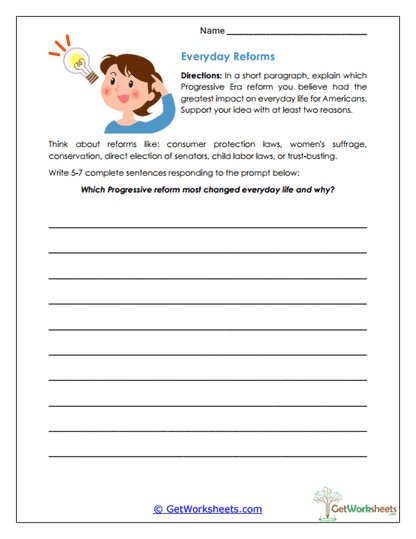
Everyday Reforms
Students write a focused paragraph explaining which Progressive Era reform had the greatest impact on everyday American life. They support their claim with at least two evidence-based reasons. The task encourages thoughtful evaluation of long-term social and political changes. Through structured writing, learners strengthen both historical analysis and explanatory skills.
Bookmark Us Now!
New, high-quality worksheets are added every week! Do not miss out!