Prefixes Worksheets
About This Worksheet Collection
This prefix worksheet collection helps students build strong morphological awareness-the ability to break words into meaningful parts and use those parts to unlock vocabulary. Through identification tasks, word-building challenges, sentence completion, story revision, reading comprehension passages, timed fluency games, etymology exploration, and analytical word breakdowns, learners discover how meaning-bearing word beginnings shape vocabulary and expand word families.
Across this collection, students strengthen essential literacy skills such as decoding multisyllabic words, applying context clues, inferring meaning from word parts, and using structural analysis to enhance reading comprehension. These worksheets foster flexible, confident vocabulary strategies that support success across subjects, especially as students encounter increasingly complex academic language. By exploring both common and less familiar word beginnings, learners deepen their understanding of English word structure and develop lifelong tools for independent vocabulary growth.
Detailed Descriptions of These Worksheets
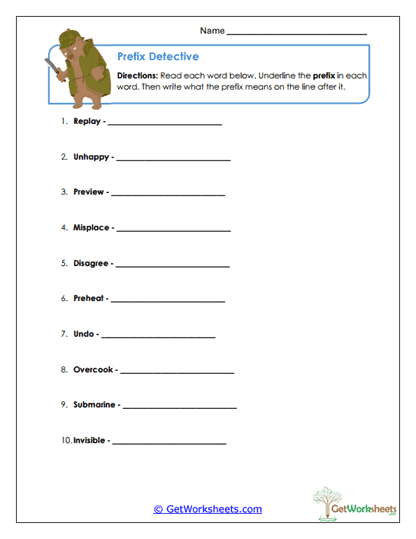
Word Detective
Students examine multisyllabic words, underline the beginning element that changes each word's meaning, and write its definition. This strengthens structural analysis, helps learners understand how small word parts shape meaning, and builds confidence decoding unfamiliar vocabulary by recognizing meaningful components.
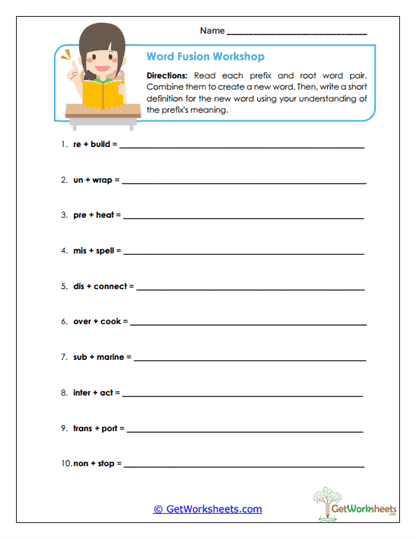
Word Fusion Workshop
Learners combine meaning-bearing word beginnings with base words to create new vocabulary terms, then write definitions that reflect how the added element transforms meaning. This activity deepens understanding of word construction, encourages analytical thinking, and reinforces the idea that English vocabulary is built from meaningful building blocks.
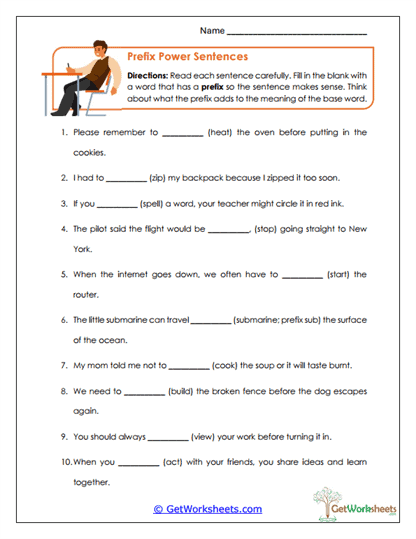
Power Sentences
Students complete sentences by selecting vocabulary words that contain specific meaning-changing beginnings. To choose correctly, they must rely on context clues and structural reasoning. This activity improves comprehension, vocabulary application, and fluency using morphologically complex words in natural contexts.
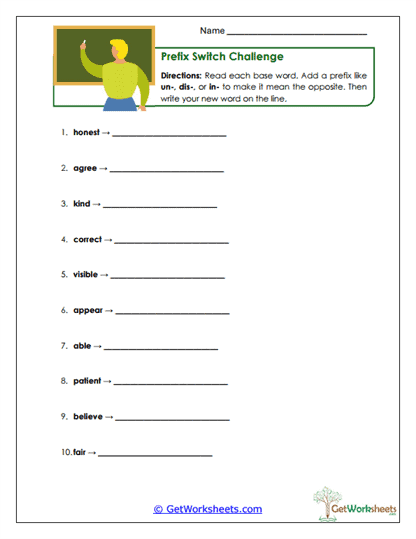
Switch Challenge
Students add meaning-changing word beginnings such as un-, in-, or dis- to base words to form logical opposites. This reinforces understanding of antonyms, strengthens morphological awareness, and helps students recognize how modifying the beginning of a word shifts its meaning entirely.
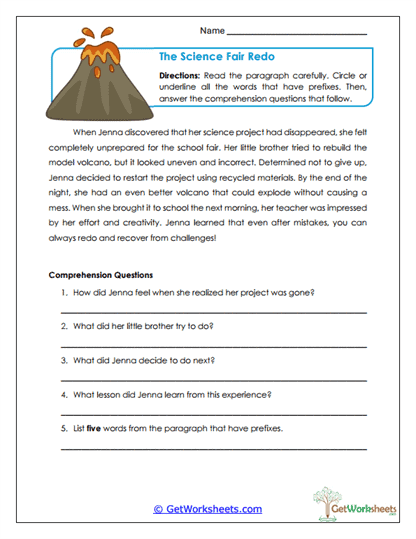
Science Fair Redo
Learners read a narrative passage containing several words with meaning-changing elements, underline each one, and answer comprehension questions. This integration of vocabulary and reading practice helps students observe how these word parts appear naturally in context while deepening comprehension and inference skills.
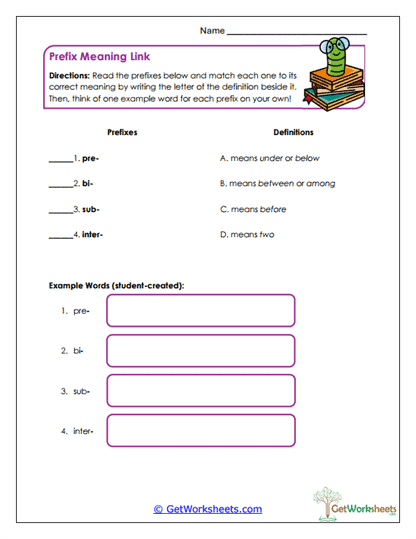
Meaning Link
Students match meaning-bearing word beginnings to their definitions, then generate original example words for each one. This reinforces semantic understanding, builds confident vocabulary creation skills, and encourages independent application of structural analysis strategies.
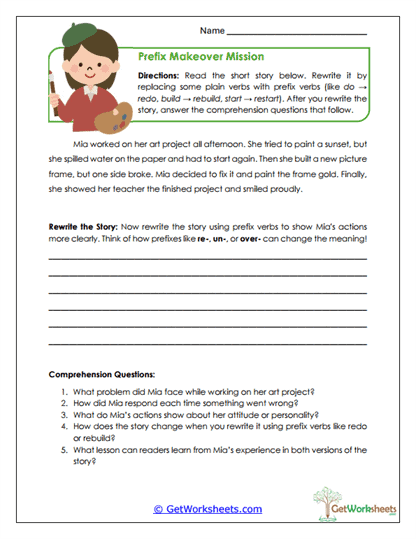
Makeover Mission
Students revise a short story by replacing plain verbs with richer verbs that include meaning-changing beginnings such as re-, un-, or over-. After rewriting, they answer comprehension questions that require analysis of meaning, tone, and character actions. This strengthens revision skills, enhances word choice, and illustrates how structural changes impact narrative clarity.
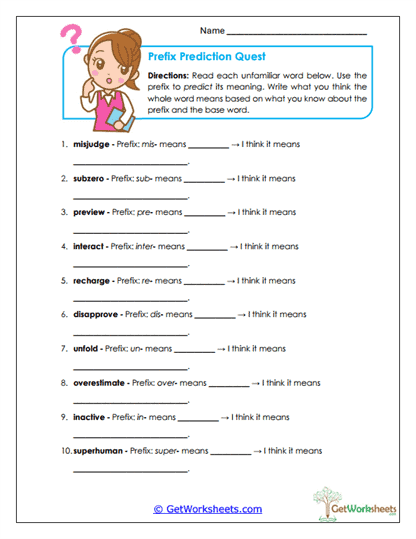
Prediction Quest
Learners analyze unfamiliar words by identifying the beginning element, determining its meaning, and predicting the meaning of the entire word. This teaches a powerful, transferable strategy for decoding challenging vocabulary and builds critical inference skills essential for academic reading.
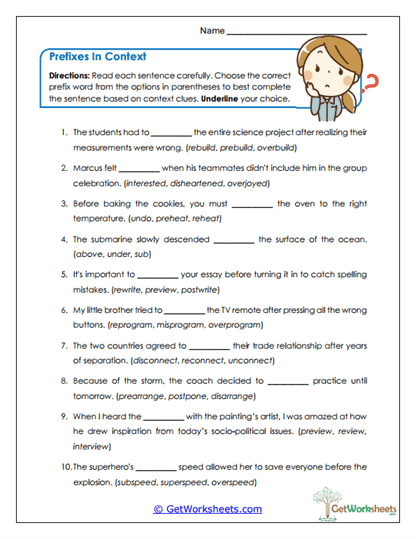
Words in Context
Students select the correct meaning-based vocabulary word from a set of options to complete each sentence. Many options look similar, so learners must rely on context clues and structural reasoning. This promotes precision in word choice, strengthens comprehension, and enhances their understanding of nuanced differences between related words.
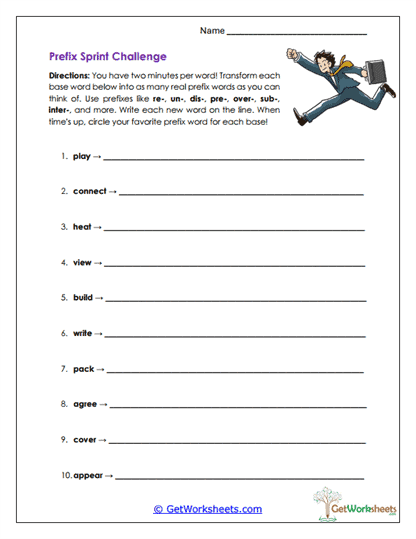
Sprint Challenge
Learners generate as many real vocabulary words as possible by adding different meaning-bearing beginnings to a list of base words. The timed format encourages quick recall, creativity, and flexible thinking. This fluency-building task reinforces morphological patterns and expands students' vocabulary breadth.
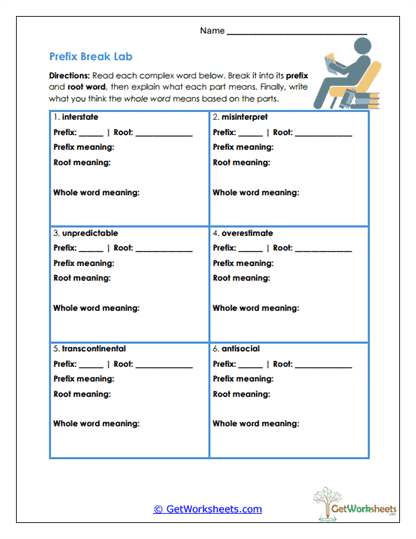
Break Lab
Students break complex words into their beginning element and root, explain the meaning of each, and combine their understanding to determine the complete definition. This strengthens morphological reasoning, supports decoding of advanced vocabulary, and prepares students to tackle challenging academic texts.
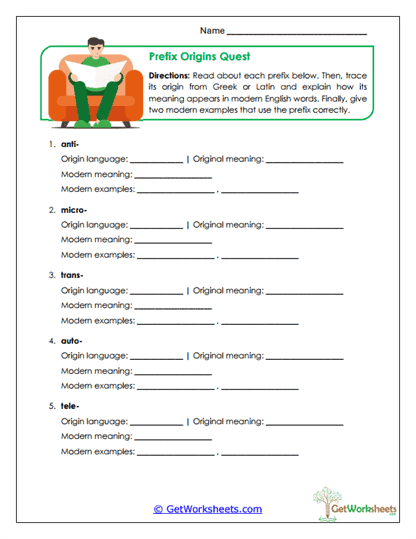
Origins Quest
Learners explore the Greek and Latin origins of common meaning-bearing word beginnings and connect these historical meanings to modern English usage. They also produce example words that reflect this evolution. This deepens understanding of etymology, reinforces academic vocabulary development, and helps students appreciate how ancient languages continue to influence English today.
Bookmark Us Now!
New, high-quality worksheets are added every week! Do not miss out!