Pollution Worksheets
About This Worksheet Collection
This pollution-themed worksheet collection provides a wide range of activities that help students explore how different pollutants form, spread, and impact ecosystems. From case studies and vocabulary work to sorting tasks and reflective writing, the materials give teachers versatile tools for introducing environmental science concepts in meaningful ways. The collection blends concrete real-world scenarios with structured analytical tasks, making complex ideas accessible to learners.
As students work through the pages, they develop essential skills such as tracing cause-and-effect relationships, analyzing examples, interpreting informational text, and proposing solutions to environmental challenges. They gain a clearer understanding of how pollution affects air, water, soil, wildlife, and communities, while also learning to distinguish natural processes from human-driven contamination. The variety of worksheet formats encourages deeper thinking, practical application, and environmental awareness.
Detailed Descriptions Of These Worksheets
Cause-and-Effect
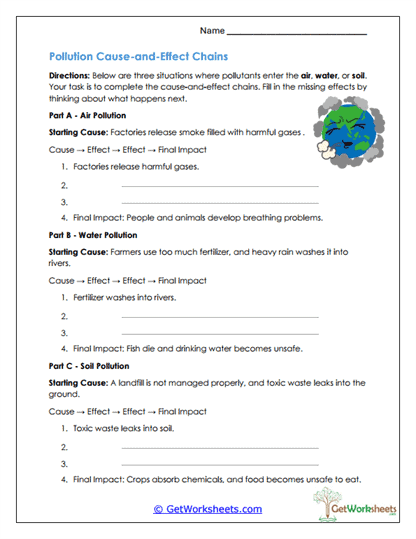
Students examine how air, water, and soil pollution each follow a chain of causes and consequences. They complete missing steps to show how pollutants move through ecosystems and influence living things. This activity helps learners understand both immediate damage and long-term environmental effects. It also reinforces sequencing skills and builds foundational environmental science knowledge.
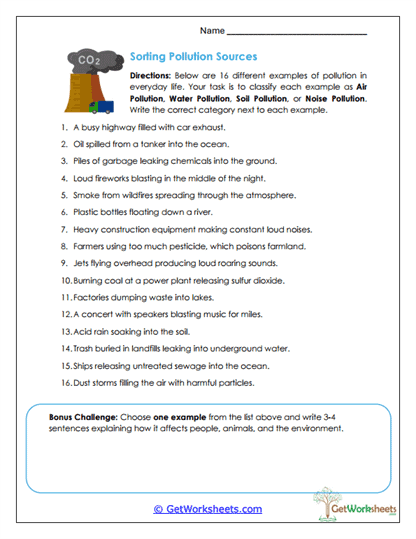
Sorting Pollution Sources
Learners classify examples of pollution into categories such as air, water, soil, and noise. Each item requires careful reading to determine the correct type of contamination. By recognizing real-world examples, students connect classroom learning to everyday experiences. A bonus task encourages reflection on how pollution affects both natural systems and human health.
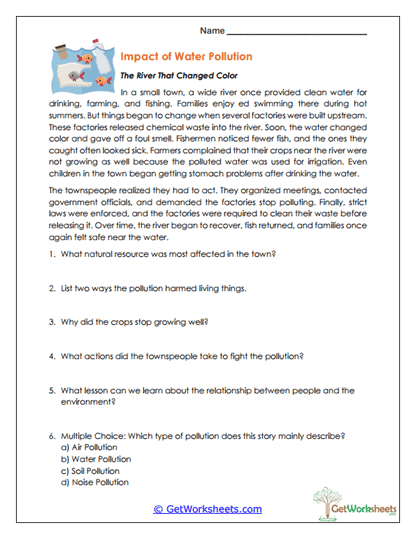
Water Pollution Case Study
Students read about a river impacted by factory waste and respond to questions analyzing the situation. They identify affected resources, describe consequences for wildlife and people, and review community responses. This case study helps students see how pollution disrupts ecosystems and why responsible environmental choices matter. It also strengthens comprehension of informational text.
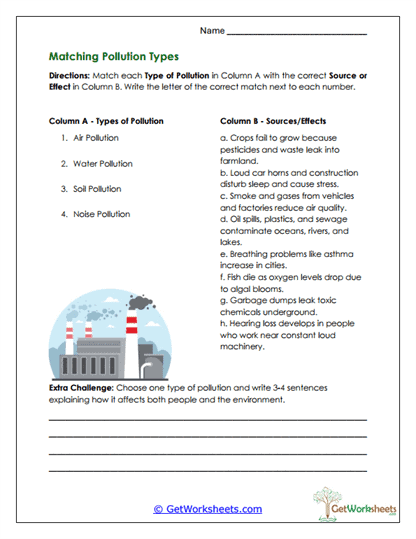
Type Matching
Learners match pollution types with their related sources or effects. The activity requires close reading to identify how different pollutants behave and what damage they can cause. Students improve their ability to classify environmental problems accurately. A challenge prompt invites deeper explanation of one pollution type.
Facts or Myths
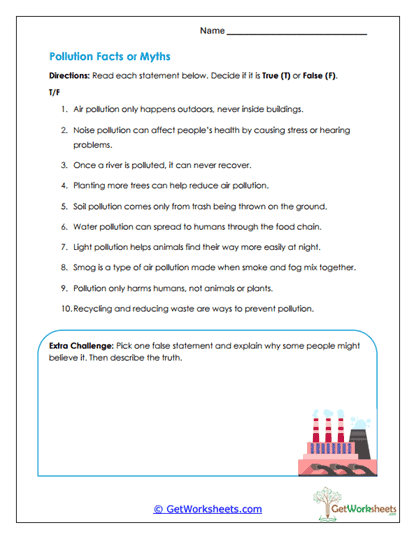
Students decide whether statements about pollution are true or false, confronting common misconceptions. They analyze claims about how pollutants spread, affect health, and influence ecosystems. This encourages critical thinking and helps clarify misunderstandings. The bonus question promotes reflection on why false statements may seem believable.
Case Study
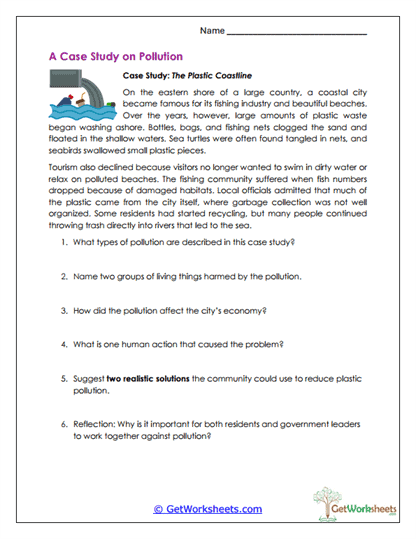
This worksheet presents a scenario involving coastal plastic pollution and asks students to analyze its impacts on marine life, tourism, and local communities. Learners examine human actions, identify harmed groups, and propose solutions. The activity builds connections between scientific concepts and social responsibility. It also encourages thoughtful problem-solving.
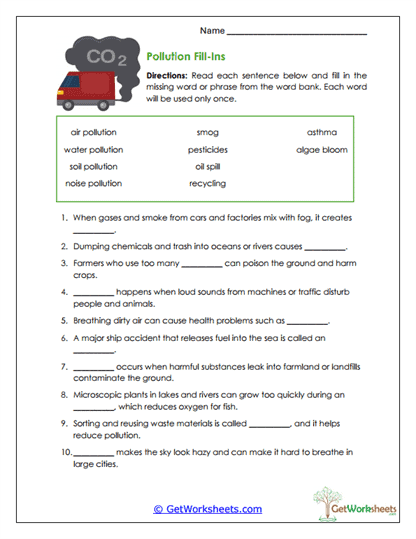
Word Fill-Ins
Students use a word bank to complete sentences describing pollution processes and effects. Vocabulary such as smog, pesticides, noise pollution, and recycling is applied in context. This reinforces scientific terminology and strengthens comprehension of environmental issues. Learners gain clarity about how pollutants form and spread.
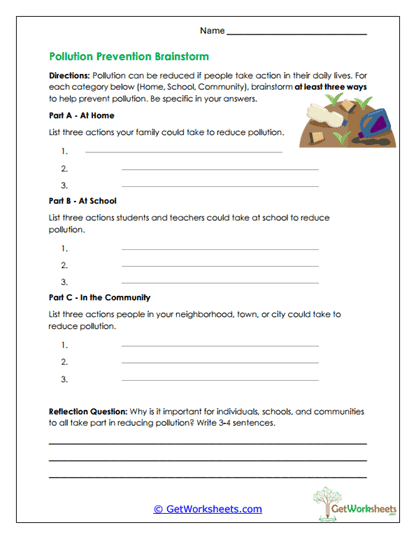
Prevention Brainstorm
Students list ways to reduce pollution at home, in school, and in the community. The activity encourages practical thinking and personal responsibility. By generating realistic ideas, learners strengthen creativity and civic awareness. A reflection prompt highlights the importance of shared environmental stewardship.
Cause Identification
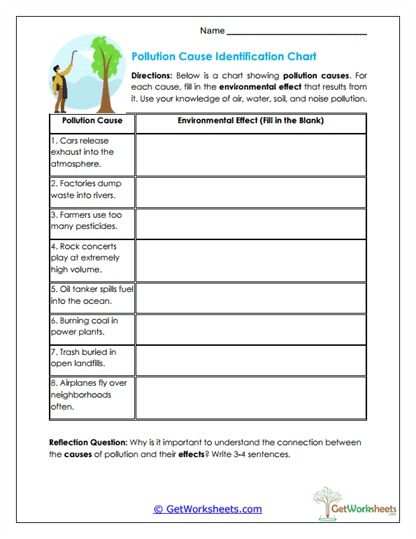
Learners fill in a chart showing how specific pollution causes-such as oil spills or pesticide use-lead to ecological harm. The task reinforces understanding of how human actions create environmental challenges. Students practice connecting causes to realistic effects. A reflection question emphasizes why recognizing these links matters.
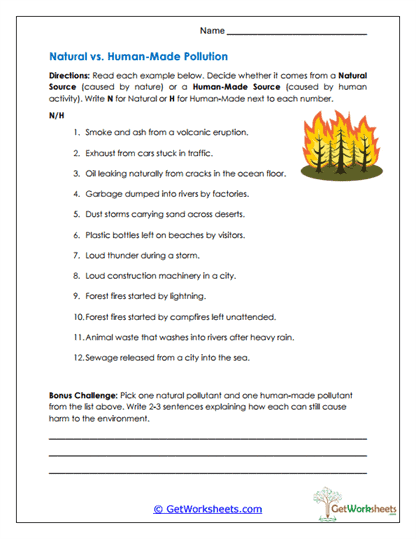
Natural vs. Human Pollution
Students classify pollution examples as natural or human-made, learning to distinguish environmental processes from human-driven impacts. They analyze scenarios such as volcanic eruptions and traffic exhaust to determine their origins. This strengthens categorization skills and supports broader environmental literacy. A bonus prompt invites comparison of one natural and one human-made pollutant.
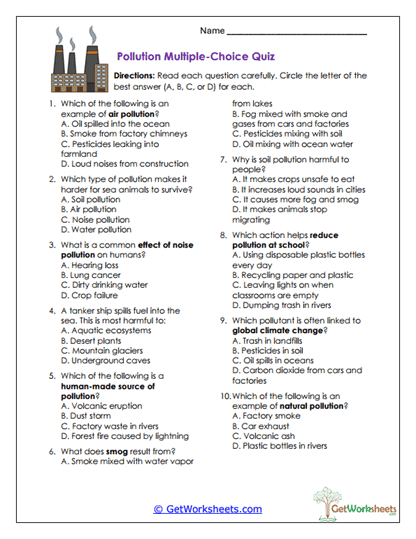
Multiple-Choice Quiz
This quiz assesses student understanding of major pollution types, contamination sources, and harmful effects. Learners interpret examples and identify correct explanations. The activity supports test-taking skills while reinforcing scientific concepts. It also helps teachers evaluate student mastery of the unit.
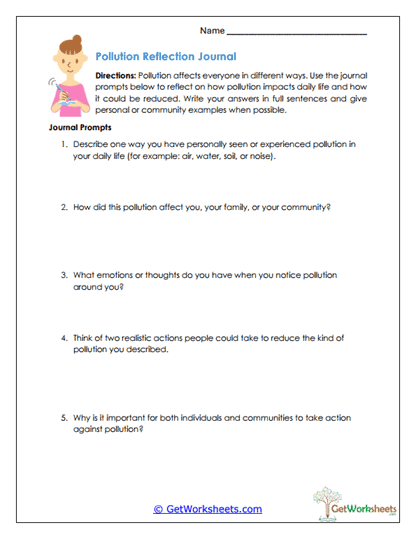
Reflection Journal
Students respond to reflective prompts that connect pollution to personal experiences and community issues. They consider emotional reactions, propose actions, and explore the importance of shared responsibility. This activity develops thoughtful writing and encourages deeper environmental awareness. It allows students to apply scientific understanding to real-world contexts.
Bookmark Us Now!
New, high-quality worksheets are added every week! Do not miss out!