Plot Development Worksheets
About This Worksheet Collection
The Plot Development Worksheets collection offers teachers a wide range of structured activities centered on helping students understand how stories work. These worksheets guide learners through essential elements of plotting-sequencing, transitions, rising and falling action, conflict, problem-solving, and more. Each activity presents a clear, manageable task that strengthens both comprehension and writing skills, giving students repeated opportunities to see how narratives are built and refined.
As students move through the collection, they practice analyzing story structure, identifying gaps or missing elements, expanding brief outlines into full narratives, and making thoughtful revisions. They also develop vocabulary associated with plot, learn to evaluate cause and effect within a story, and recognize how authors use techniques such as foreshadowing and pacing. By engaging with these activities, students improve their ability to read narratives analytically and construct stories with stronger flow, coherence, and purpose.
Detailed Descriptions Of These Worksheets
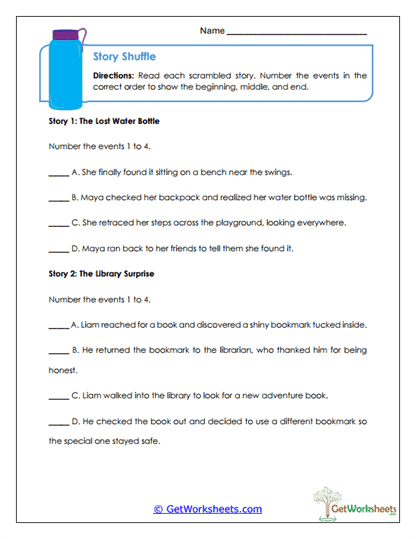
Story Order Shuffle
Students read two scrambled four-sentence stories and rearrange the events into proper beginning, middle, and end order. By analyzing small context clues, they identify how moments fit together logically. This exercise strengthens comprehension of story flow and the relationships between events. Learners also build accuracy and attention to detail as they reconstruct mini-narratives.
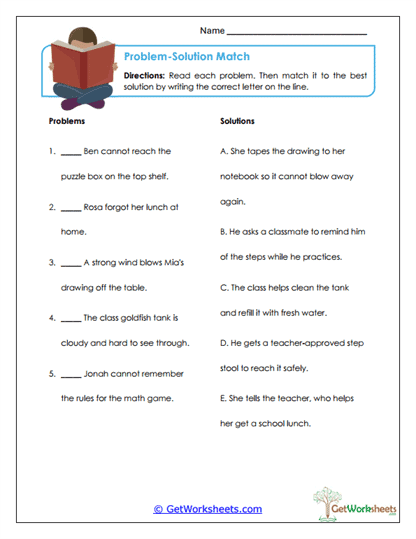
Problem-Solution Match
Learners read short problems and match each one with the most logical solution, reinforcing understanding of narrative problem-solving. The activity encourages students to compare multiple possibilities and determine which outcome fits best. By analyzing cause-and-effect relationships, they sharpen reasoning and comprehension skills. This prepares them for writing stories with clear and meaningful resolutions.
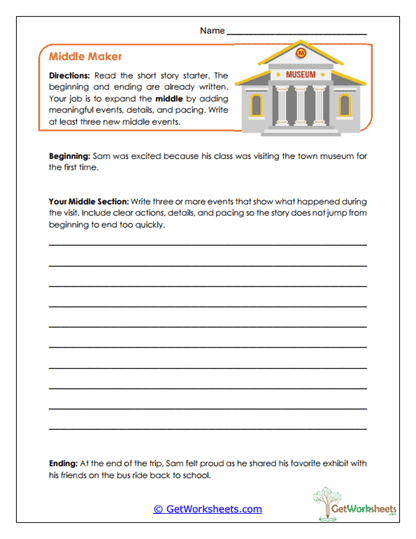
Middle Expansion Builder
Students are given a story beginning and ending and must create the missing middle section. As they invent events, details, and pacing, they develop an understanding of how the middle drives a plot forward. The exercise prevents abrupt storytelling by teaching the importance of gradual progression. Learners practice sequencing, creativity, and elaboration in narrative writing.
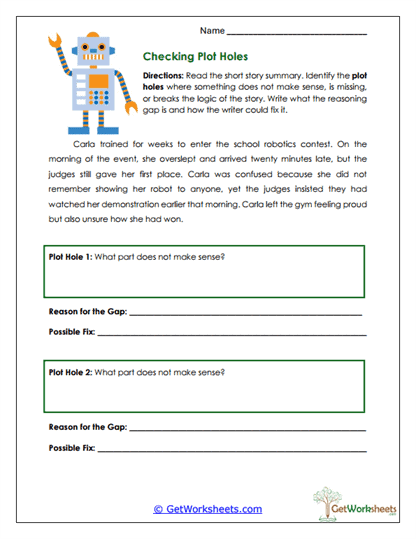
Plot Hole Checker
This worksheet asks students to read a short summary and identify two logical gaps or inconsistencies. They must explain why each gap weakens the story and propose a thoughtful fix. By evaluating coherence, learners strengthen revision strategies and narrative analysis. The activity builds awareness of how writers maintain clarity and consistency.
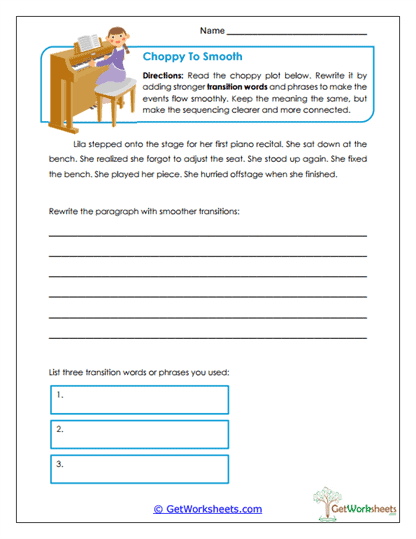
Transition Smooth-Out
Students take a choppy paragraph about a piano recital and revise it using smoother transitions. They maintain the original meaning while improving clarity and pacing. The activity highlights how transitions shape flow in narrative writing. Learners also reflect on the transitions they used, reinforcing conscious editing techniques.
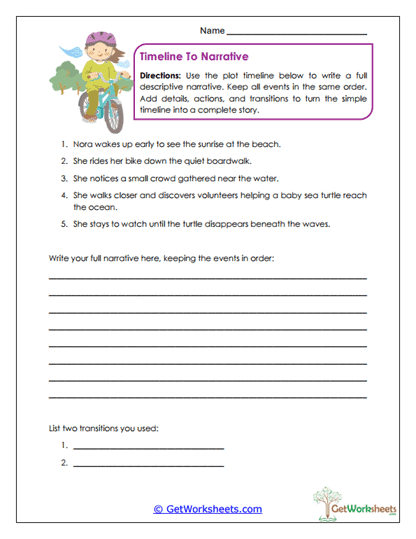
Timeline to Story
A five-step timeline about a girl helping a baby sea turtle reach the ocean serves as the foundation for a full narrative. Students convert the simple sequence into a descriptive story with actions, transitions, and detail. This teaches them how to expand brief notes into fully realized writing. Listing transitions used further strengthens their understanding of narrative flow.
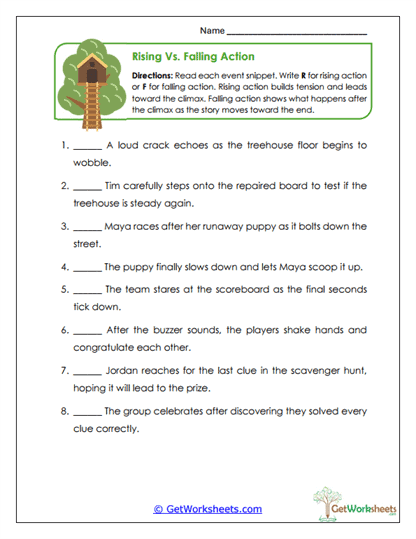
Rising or Falling Action
Students read short snippets and label each one as rising action or falling action. The task helps them distinguish between tension-building and resolution moments within a plot. By identifying each snippet's role in the story arc, they deepen understanding of narrative movement. The activity strengthens vocabulary and conceptual knowledge of plot structure.
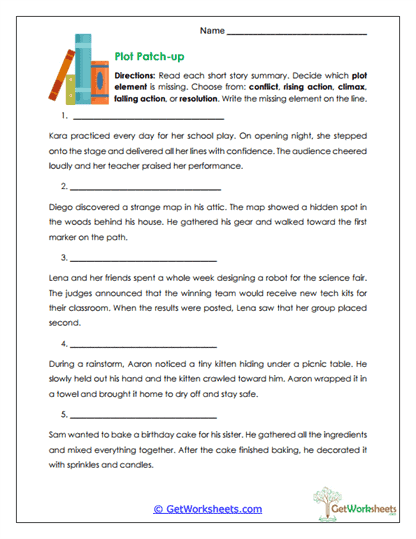
Plot Element Finder
Learners examine short summaries to determine which key plot element-such as climax or resolution-is missing. This analysis helps them understand what each component contributes to a complete story. By identifying omissions, students sharpen structural awareness and narrative reasoning. The worksheet supports stronger planning and writing of their own stories.
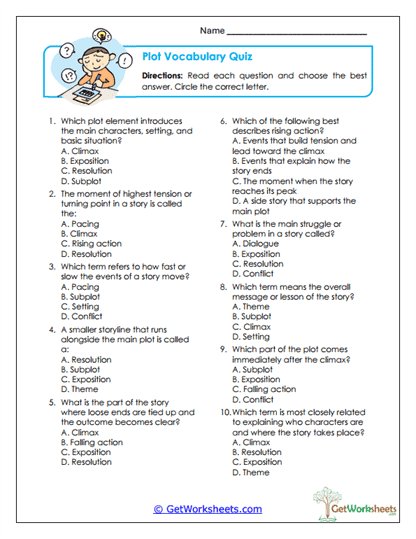
Plot Vocabulary Quiz
Students answer multiple-choice questions on plot terms including pacing, exposition, climax, and resolution. The quiz reinforces academic vocabulary tied to narrative understanding. Learners strengthen comprehension of how plots develop and how specific terms function in literary discussion. This practice prepares them for deeper analysis in future reading.
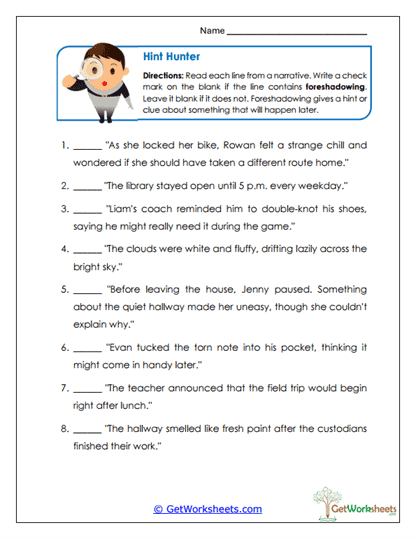
Foreshadowing Identifier
Students read several narrative lines and check off those that include foreshadowing. The task teaches learners to spot subtle clues that hint at future events. By distinguishing ordinary description from purposeful suggestion, they develop stronger interpretive skills. This worksheet supports deeper analysis of author craft and storytelling techniques.
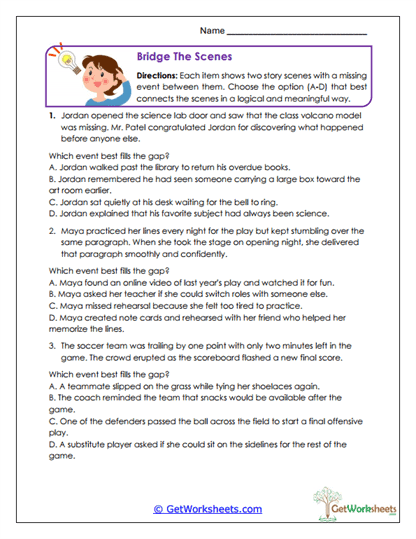
Scene Connection Builder
Students review pairs of story scenes with a missing link and choose the best event to connect them logically. They analyze context clues and continuity to determine which option maintains narrative sense. This exercise strengthens understanding of sequencing and plot cohesion. Learners gain insight into how transitions support story flow and cause-and-effect relationships.
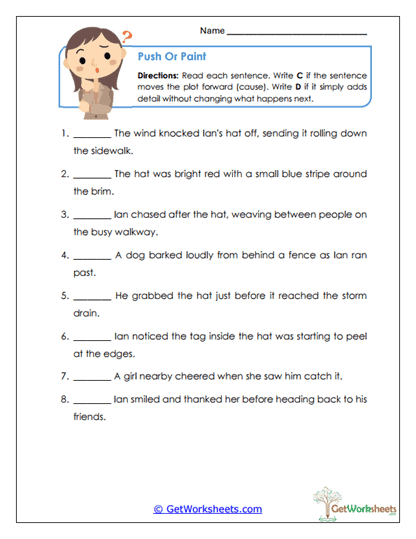
Cause or Detail Sort
This worksheet requires students to label each sentence as either a plot-moving cause or a descriptive detail. Through this sorting, learners deepen their understanding of how action advances a narrative while detail enriches it. They practice evaluating the purpose of individual sentences and how each contributes to a story. The activity strengthens both reading comprehension and intentional writing.
Bookmark Us Now!
New, high-quality worksheets are added every week! Do not miss out!